
Written by Afsheen Sharifzadeh, a graduate of Tufts University focusing on Iran and the Caucasus. After a brief orientation to the historical development of Persian, this article draws attention to a number of everyday words whose Indo-European ancestry remains readily recognizable when set beside their English cognates. These words are a reminder of the shared history of the Indo-European language family, despite millennia of geographic separation and independent linguistic development.
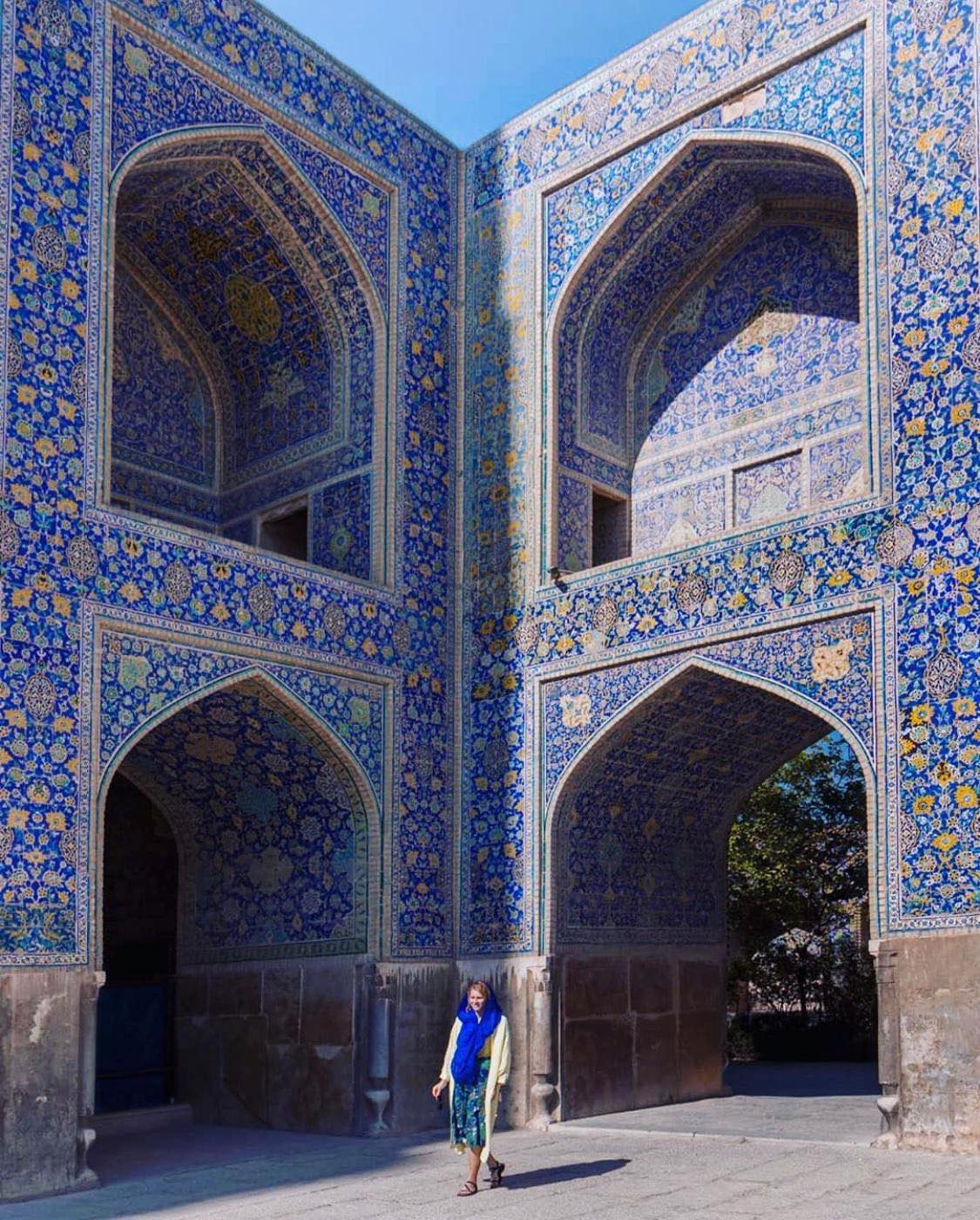
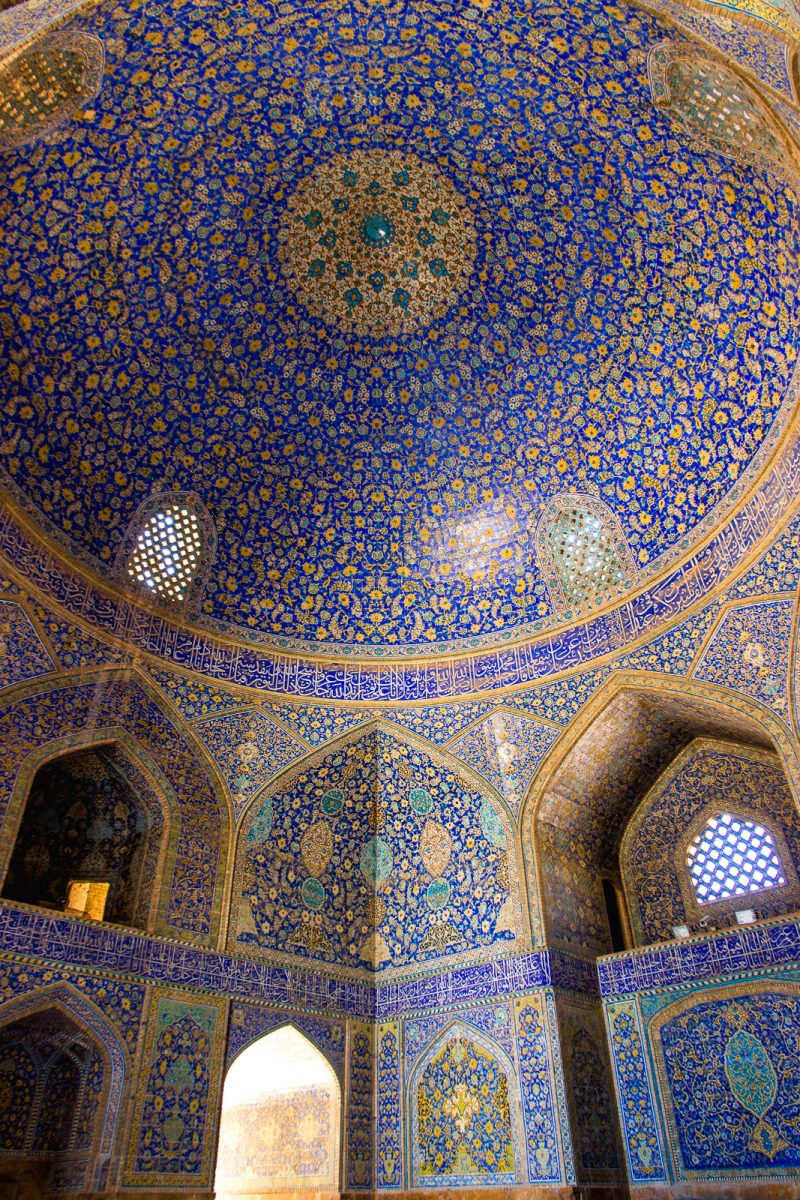

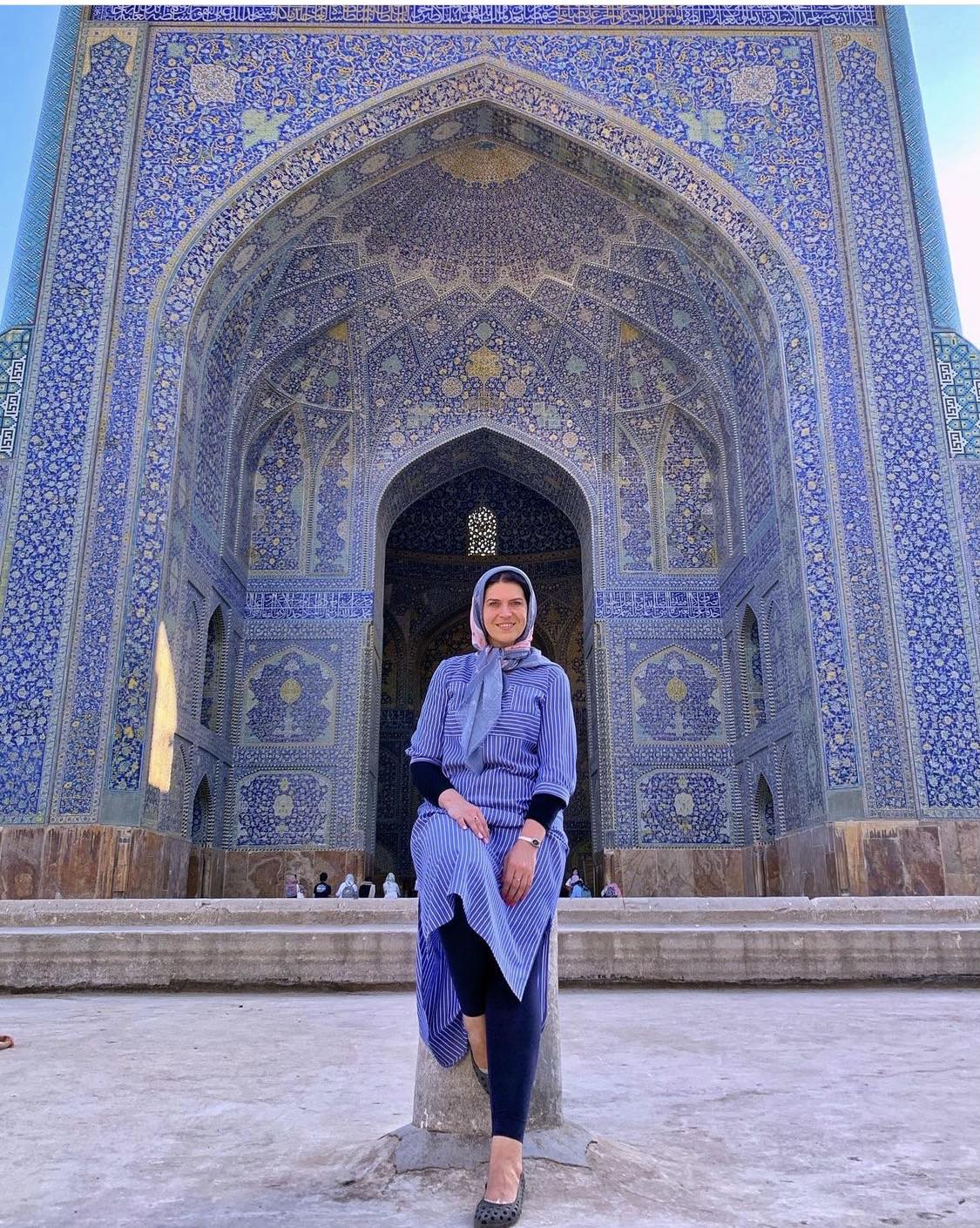
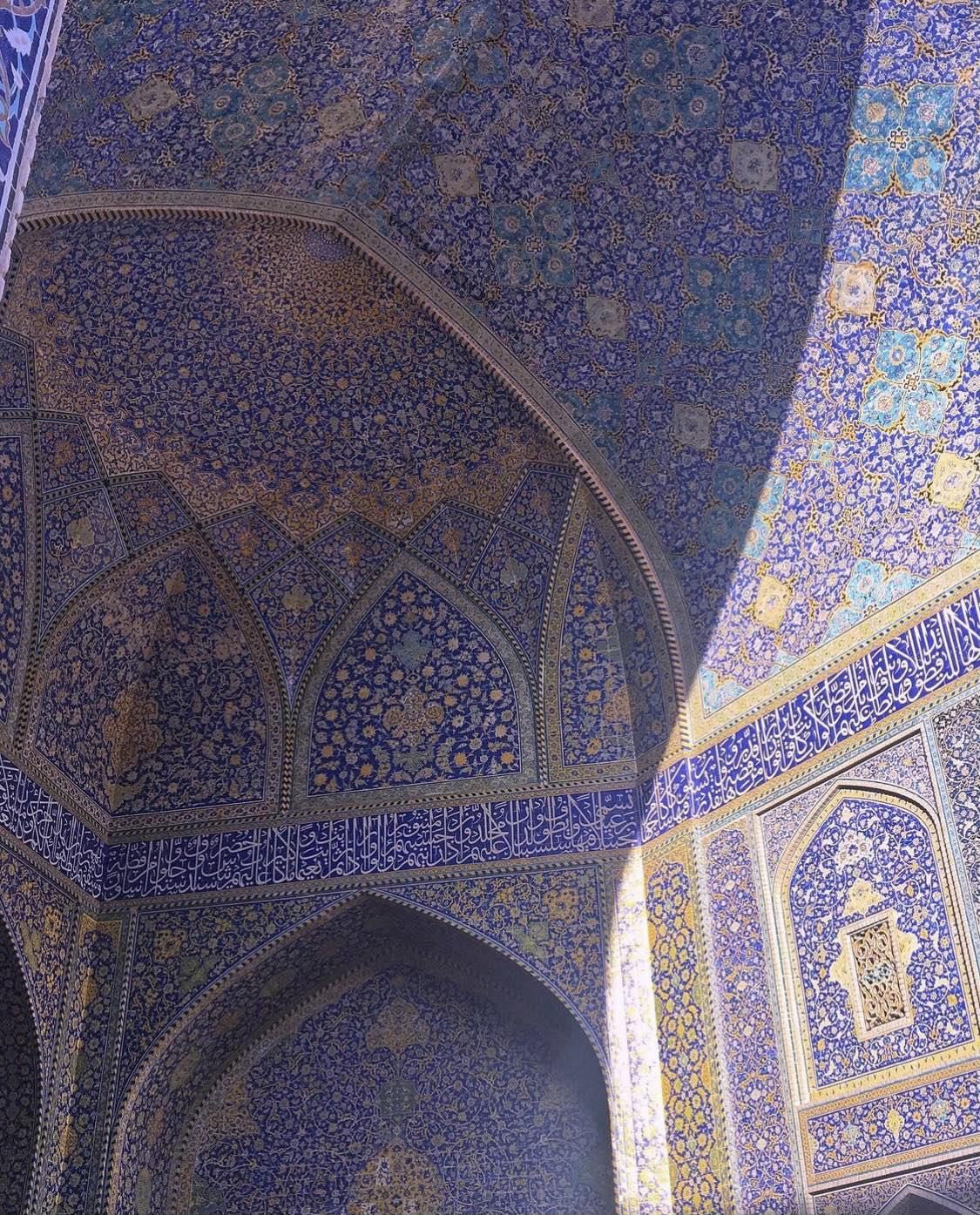

(1) Two-story arched niches decorated with polychrome glazed tiles enclose the central courtyard, Masjed-e Shāh, Isfahan (c. 1629 A.D.) (2) Interior of the northwestern domed chamber. The surface is completely covered with polychrome majollica tiles depicting floral and vegetal motifs which are a metaphor for the idyllic gardens of Paradise, above a continuous marble dado (3) Details of the northwestern dome, of a smaller scale than the dome of the main sanctuary. Floral and vegetal motifs emanate in a sunburst pattern from a turquoise gem at the apex (4) A woman seated before the massive-scale ayvān to the main chamber (5) Details of polychrome glazed tilework in the corridor connecting the portal ayvān to the courtyard (6) The rear portal to the complex, decorated with a stalactite vault and tiles with floral and geometric designs
A Brief History of the Persian language
Persian (endonym Fārsi, Pārsi; frequently Tājiki in Central Asia and Dari in Afghanistan) is an Indo-European language belonging to the Iranic branch of that family. Of note, it is not related to Semitic (Arabic, Hebrew, etc.) or Turkic at any discernible time point. Among its relatives, the Indic branch is genetically closest to Iranic, however, observers are often surprised by the presence of easily recognizable cognates between Persian and the genetically more distant Germanic, Slavic and Romance branch languages (e.g. Persian دختر dokhtar, English daughter; Persian سپاس sepās “thanks”, Russian спасибо spasibo “thank you”; Persian لب lab, Spanish labio “lip”). In a manner not dissimilar to that of French in pre-modern Europe, at its zenith, New Persian became a prestige language in a vast zone spanning from the Balkans and Crimea to Western China and Bengal. It was selected as the official court, administrative, educational and diplomatic language by various Islamic dynasties such as the Seljuk, Ottoman, Safavid, Timurid, and Mughal dynasties, and emerged as a global vehicle of high literature, poetry, scholarship and intellectual discourse whose effects are still felt today. Some of the world’s most famous pieces of literature from the Middle Ages, such as the Shahnameh by Ferdowsi, the works of Rumi, the Rubáiyát of Omar Khayyám, the Panj Ganj of Nizami Ganjavi, The Divān of Hafez, The Conference of the Birds by Attar of Nishapur, and the miscellanea of Gulistan and Bustan by Saadi Shirazi, are written in Persian.

Today, Persian is spoken primarily in Iran, Afghanistan, Uzbekistan and Tajikistan, however due to prolonged ages of cultural contact, Persian has supplied the lion’s share of foreign elements in Turkish, Azerbaijani, Turkmen, Uyghur, Uzbek, Iraqi and Gulf Arabic dialects, Urdu, Hindi, Kashmiri, Punjabi, Gujarati, Bengali, Armenian, Georgian, among other languages. Dozens of Persian words reached more distant languages such as Mandarin, Thai, Malay, Swahili, French and Russian through direct historic exchanges. It was indeed the Persian brand of Islam—and Persianized Arabic, or Arabic through the medium of Persians—that evangelized most of the Muslim world (e.g. every Muslim language in Eurasia uses derivatives of Persian words for religious concepts such as “prayer”, نماز namāz, rather than Arabic صلاة ṣalāh; “prophet”, پیغمبر payġambar, rather than Arabic نبى nabiyy; “ablution”, آبدست âbdast, rather than Arabic وضوء wudu’, indicating the medium of the religion’s transmission). In the words of the British-American historian Bernard Lewis, “the Ottoman Turks brought a form of Iranian civilization to the walls of Vienna.” The role of the Persian language in human history has been expansive, yet it has remained curiously underacknowledged.

The Iranic and Indic branches share a more recent common ancestor with each other than with the rest of Indo-European. Under the Kurgan hypothesis, the speakers of this unattested language—conventionally termed Proto-Indo-Iranian—emerged along the northeastern fringe of the Middle Dnieper cultural horizon (ca. 3200–2300 BC) in what is now Ukraine. Toward the end of this period, they appear to have moved eastward from the Pontic–Caspian steppe into the Sintashta region, where the archaeological record points to copper mining, bronze metallurgy, and large-scale animal sacrifice. It is at this stage that they are thought to have referred to themselves by the ethnonym *Áryas “Aryan; lit. esteemed, noble” (later Old Persian 𐎠𐎼𐎡𐎹 (a-r-i-y /ariyaʰ/ → Middle Persian 𐭠𐭩𐭥𐭠𐭭 ʾērān, “of the Aryans” → New Persian ایران irān). Over a period of centuries, they gradually migrated southward where they interacted with the sophisticated Bactria–Margiana Archaeological Complex (BMAC), also known as the Oxus civilization, a non-Indo-European Bronze Age civilization centered around Marv (Margiana) and Balkh (Bactria) which influenced the Indo-Iranians. From the unknown language of BMAC, the ancient Indo-Iranians appear to have adopted a number of words and associated cultural concepts, including Persian šotor > BMAC *uštra ‘camel’; Persian khišt *ištya ‘brick, clay’; Persian nān > BMAC *nagna ‘bread’; Persian pezešk > BMAC *bʰiš- ‘medicine, healing’. Then, during the second millennium BCE, the Indo-Iranian community differentiated into Indo-Aryan and Iranian branches, the former moving gradually southward into the Indian subcontinent, with an offshoot apparently traversing as far as Syria and becoming the masters of the Kingdom of Mitanni. The Proto-Iranians then swept into the Iranian Plateau after 1800 BC through a series of migrations likely spanning several centuries. From the northeastern margins of this world, a population of Iranians appears to have back-migrated from Khwārazm into the Eurasian steppe, there becoming the Scythians of classical sources.


(1) A Persian poem inscribed on a band of glazed azure tiles adorns the Kalta Minor in Khiva, Uzbekistan (c. 1851 A.D.) (2) The pictured couplets read: به جنت کرد نادرش عرضه خاک / رسیده چون ستون بر كاخ گردون / ز وصفش قاصر آمد عقل و ادراک / از این در آگهی سال بنایش “be jannat kard nāderash ‘arze-ye ḵāk / Raside chun sotūn bar kāḵ-e gardūn / ze vaṣfash qāṣer āmad ‘aql-o-edrāk / Az in dar āgahi-ye sāl-e banāyash…” (see here for a complete transcription). Persian served as the official, court, literary, high culture and administrative language of the Sāmānid Empire (f. 819 A.D.) and all successive Muslim polities in Central Asia for over a millennium until the region’s incorporation into the U.S.S.R. in 1923.
Old Persian is first attested in cuneiform in the Achaemenid royal inscriptions of Darius I (r. 522–486 BC), most famously at Behistun in Kermānshāh, though the language itself was native to Persis (modern Fārs). New Persian, by contrast, appears in written form more than a millennium after the Behistun carvings, having followed a circuitous historical route: first through Mesopotamia during the Middle Persian period, then eastward into Central Asia, before ultimately re-entering the Iranian plateau in its classical form.
In the Old Persian stage, Persian can be regarded as a conservative Indo-European language with three grammatical genders, complex noun inflections and a largely synthetic morphology. Yet the vernacular appears to have undergone a vast simplification within a comparatively short period–a development difficult to explain by ordinary intergenerational language transmission alone. Instead, this evolution likely reflects the sociolinguistic conditions of the Achaemenid heartland. There, widespread multilingualism and large-scale settlement of non-Iranian adult populations—such as artisans and laborers drawn from across the empire and employed on the monumental building projects at Persepolis and Susa—created an environment conducive to imperfect language acquisition and structural leveling. Moreover, when the next attested stage of the language, Middle Persian, entered the historical record several centuries later, written in a modified imperial Aramaic script in Sasanian-period inscriptions from Ctesiphon, it was profoundly different from Old Persian. This literary language, which appears to reflect the contemporary vernacular of the Persian administration at Ctesiphon, lacks grammatical gender and noun declensions altogether, and features a more analytic morphology with re-elaborations in lieu of many inherited Proto-Indo-European forms. This scenario closely parallels the development of Middle English from Old English on the British Isles over a millennium later.

Later in the Sassanian period, elites from Mesopotamia who presumably spoke a Middle Persian vernacular (Pārsīk) settled in the northeast of the empire, particularly in the urban centers of Khorāsān and Transoxiana, including Merv, where the Middle Persian language took hold at the expense of the local Iranic Parthian and Sogdian languages. The presence of garrisons and state administrators further strengthened Middle Persian in the region. With the conquest of the Sassanian empire by Arab-Islamic troops between 632 and 651 A.D. and the flight of yet more Sassanian aristocrats there, it was these Pārsīk vernaculars that had transplanted from Seleucia-Ctesiphon to Khorāsān and Transoxiana that served as the basis of Muslim (New) Persian. In the centuries thereafter, varieties of the new Islamized Persian language, written in a modified Arabic script, spread retrograde into Iran proper, even Fārs (Persis), where it came to coexist with distantly related vernaculars that had continued uninterrupted since the Middle Iranian stage and largely escaped Arabicization (e.g. Lārestāni; for more, see here). These various Western Iranian languages, akin to Persian, also possess etyma that recall quite distant Indo-European relatives (Māzanderāni mi mar o ti per, Spanish mi madre y tu padre “my mother and your father”).


(1-2) Onlookers behold the colossal statue of King Shapur I (c. 240–272 A.D.), chiseled in situ from a single stalagmite in the 3rd century A.D., in a cave overlooking a royal Sassanian polo field (čōgān), Kāzerun, Iran. Shapur I is depicted with his idiosyncratic thick, wavy locks and crenellated crown (3) A large relief depicting the triumph of Shapur I over the Roman emperors Valerian and Philip the Arab (genuflected before him), Naqsh-e Rostam, Iran (c. 3rd century A.D.)
A list of Persian words inherited from Proto-Indo-European and recognizable cognates are listed below. These words are a reminder of the shared ancestry of the Indo-European language family, despite several thousand years of separation and Persian’s development in a diverse geographic milieu surrounded by many non-Indo-European languages into present times.
Of note, Persian preserves an ancient stratum of Indo-European prepositional material whose forms will be immediately familiar to readers of Latin and Greek, both sister languages of Persian. Fossilized prefixes such as far(ā)- (cognate with Latin pro-, English for-), (a)bar– (Greek hyper-), ā- (Latin ad-), af- (Greek apo- or hypo-), dosh- (Latin dis-, Greek dys-), pirā– (Greek peri-), pari/pār- (Latin pre-), ham– (Greek homo-), and ne– (Latin in-) remain embedded in countless everyday words, as evidenced by the list below. These elements reveal a conserved Proto-Indo-European word-building system that, though no longer productive, remains discernible in Persian.
Word List and Indo-European Etymologies
Abar “super-, over-” (e.g., abartavān “superpower”): inherited from Middle Persian ʾp̄l /abar/, (whence also bar “on, upon” and bartar “more superior”), from Proto-Iranian *upári, from Proto-Indo-Iranian *upári, from Proto-Indo-European *upér. Cognates include German über, Ancient Greek ὑπέρ hupér, whence English hyper-, over
Abrū “eyebrow”: from Middle Persian (blwk’ /brūg/), from Proto-Indo-Iranian *HbʰrúHs, from Proto-Indo-European *h₃bʰruH-. Cognates include Kurmanji birû, Ossetian ӕрфыг (ærfyg), Sanskrit भ्रू (bhrū), Ancient Greek ὀφρύς (ophrús) English brū > English brow, eyebrow
Afrāshtan “to raise, elevate; erect”: from Middle Persian ʾplʾstn’ abrāštan, “to lift, raise”), is a compound verb, so the elements are *af- from Proto-Iranian *Hápa “off, away, from” (cognate with Latin ab-, Greek apo-) or Proto-Indo-European *upó (cognate with Greek hypo-) “under, below, towards” + *rāš- (cognate with English right, Latin rectus) from Proto-Indo-Iranian *Hraštás “straightened, right”. Literally, “to set upright”
Afruxtan “to kindle, burn”: from Middle Persian ʾplwhtn’ abrōxtan, “to light, kindle, illuminate, polish”, is a compound verb, so the elements are *af- from Proto-Iranian *Hápa “off, away, from” or Proto-Indo-European *upó “under, below, towards” + *rōx- from Proto-Indo-European *lewk- “bright, to shine, to see” (cognate with Latin lux, English light). Literally, “to set alight from beneath, kindle”
Āmādan, “to prepare” and Āmāde “ready, prepared”: inherited from Middle Persian mʾdg /āmādag/, “ready, prepared”, from Proto-Iranian *āmaH-, from Proto-Iranian prefix *ā– “toward, to” (cognate with Latin ad-) + *maH– (“to measure”), from Proto-Indo-European *meh₁- (“to measure”). Cognate with English admeasure
Āmixtan “to mix, mingle”: from Middle Persian ʾmyhtn (āmēxtan), ultimately from Proto-Indo-European *h₂éd “to, at” (cf. Latin ad) and *meyḱ-, whence also English admix
Andar “in, within”: from Middle Persian 𐭡𐭩𐭭 (BYN /andar/), from Old Persian 𐎠𐎫𐎼 (aⁿtar, “among, within”), from Proto-Iranian *Hántarah, from Proto-Indo-Iranian *Hántaras, from Proto-Indo-European *h₁énteros (“inner, what is inside”). Cognate with English enter, inter–
Angusht “finger”: from Middle Persian ʾngwst’ from Proto-Indo-Iranian *Hangúštʰas, from Proto-Indo-European *h₂eng- (“joint”). Related to Latin angulus, English angle
Ārāstan “to decorate, adorn, arrange”: from Middle Persian ʾlʾstny /ārāstan/, prefixed form of Proto-Iranian *Hraz-, ultimately from Proto-Indo-European *h₂éd “to, at” (whence Latin ad) plus *h₃reǵ- (“to straighten”). Cognate with Latin arrectus “raise, erect” and related forms; cf. English rectify, erect
Arg “citadel”: from Middle Persian (arg), from Proto-Indo-European *h₂erk-. Cognates include Old Armenian արգել (argel, “obstacle”) and Ancient Greek ἀρκέω (arkéō), Latin arx (“citadel”)
Arm “upper arm (archaic)”: Middle Persian arm, from Proto-Indo-Iranian *HrHma-, from Proto-Indo-European *h₂rH-mo-. Cognate to Sanskrit ईर्म (īrma), Armenian արմունկ (armunk, “elbow”), Latin armus, English arm
Ārugh “belch”: ultimately from Proto-Indo-European *h₁rewg- (“belch, roar”). Cognate with Latin erugo (“belch”), English eruct
Arre “saw”: from Proto-Indo-European *sers- (“to cut off”). Compare Latin serra “saw”, whence English serrated
Arziz “tin” (archaic): from Middle Persian ʾlcyc (arzīz, “tin, lead”) (Manichaean Middle Persian ʾrzyz). Perhaps ultimately from Proto-Iranian *arjata- (“silver”), from Proto-Indo-European *h₂erǵ-. Cognate to Greek άργυρος árgyros “silver”, Latin argentum “silver”
Āshoftan “to agitate, disturb”, Āshub “riot, turmoil”: inherited from Middle Persian ʾšwptn’ /āšuftan/, derived with the preverb *aH– (cognate with Latin ad-) from the root Proto-Iranian *xšawb– (“to rustle, tremble”), from Proto-Indo-European *k⁽ʷ⁾sewbʰ– (“to rock, tremble”), reflecting a semantic shift from application of physical force to states of agitation and disorder. Cognate with English shove
Āvāz “voice, sound”, Vāzhe “word”, Pezhvāk “echo” and Vāk “voiced”, Navākhtan “to play music”: from Middle Persian ʾwʾz (āwāč, āwāz, “voice, sound, tune”), the second element from 𐭥𐭠𐭰 (wāč, wāz, “word, speech”), from Proto-Iranian *wā́xš, from Proto-Indo-Iranian *wā́kš, ultimately from Proto-Indo-European *h₂éd “to, toward” (cognate with Latin ad-) + *wōkʷs (ultimately related to forms like Latin advocāre < ad– “to” + vocāre “to call”, thus English advocate). Cognate with Sanskrit वाच् (vā́c) and Latin vōx, English voice
Āvordan “to bring”: inherited from Middle Persian ʾʾwrd /awurdan/, from Proto-Iranian *ā- + *bárati- “to bear”, from Proto-Indo-European *h₂éd “to, at” (cf. Latin ad-) and Proto-Indo-Iranian *bʰárati “to bear, carry” respectively. Cognates include Latin adferre “to bring forth”, whence English offer, afferrent
Awj (owj) “apex, zenith”: from Arabic أَوْج (ʔawj), from Persian اوگ (owg), from Middle Iranian, ultimately Proto-Indo-European *h₂ewg- (“related to increasement”). Cognate with English augment, august
Bāftan “to weave; braid; knit”: from Middle Persian waf– “to weave”, from Proto-Iranian *wabdi, Proto-Indo-Iranian *wabdʰi, ultimately from Proto-Indo-European *webʰ-. Compare Greek υφαίνω yfaíno “to weave”, English weave, web
Band “band, tie; to close (pres. stem)”: from Proto-Iranian *bandah, from Proto-Indo-Iranian *bʰandʰas, ultimately from Proto-Indo-European *bʰendʰ-. Cognate with English band, bind
Bandeh “slave”, Bandegi “bondage, slavery”: from Middle Persian bndk’ /bandag/, from Old Persian 𐎲𐎭𐎣 badaka, ultimately from Proto-Indo-European *bʰendʰ-. Cognate with English bond, bondage
Barādar “brother”: from Middle Persian (brād, brâdar), from Old Persian 𐎲𐎼𐎠𐎫𐎠 (brātā), from Proto-Iranian *bráHtā, from Proto-Indo-Iranian *bʰráHtā, from Proto-Indo-European *bʰréh₂tēr. Cognate with English brother
Bār “burden, load; sorrow, grief”: from Middle Persian bʾl (bār, “load, burden; duty; fruit”), ultimately from the Proto-Indo-European root *bʰer-. Cognate with English bear, burden
Bereshtan “to roast, fry; to toast”: from Middle Persian blyštn’ brištan, “to roast”, ultimately from a Western Iranian derivative of Proto-Indo-Iranian *bʰr̥ȷ́yáti, from Proto-Indo-European *bʰr̥ǵ-yé-ti, from *bʰerǵ ~ *bʰreǵ “to roast, fry”. Cognates include Latin frigo “to fry”, English fry, fritter, friction
Bimār “sick, ill person”: from Middle Persian 𐭥𐭩𐭬𐭠𐭫 (wēmār, “sick, ill”), from Proto-Indo-European *wemh₁- (“to spew, vomit”) + ār (agent suffix). Cognate with Latin vomō (“be sick, vomit”). Cognate with English vomit
Bir “hero, champion”: from Middle Persian wyl (wīr), from Proto-Indo-European *wiHrós “man, husband; hero”. Cognate to Lithuanian výras “man”, English wer “man (obsolete)” > werewolf “man-wolf”; Latin vir “man, hero; husband” > English virile “manly”
-Bod/-bad “Lord, master”: from Middle Persian -pt’ –bed, from Proto-Indo-Iranian *pátiš, from Proto-Indo-European *pótis (“master”). Cognate with English potent, despot
Bon “bottom, foundation, root”: from Middle Persian bwn’ bun, from Proto-Iranian *buHnáh, from Proto-Indo-Iranian *bʰudʰnás, from *bʰudʰmḗn. Cognate with English bottom and Latin fundus “bottom” > English foundation
Bordan “to take; to bear, carry”: from Middle Persian bwltn (bortan, “carry, take”), from Proto-Iranian *bárati, from Proto-Indo-Iranian *bʰárati, from Proto-Indo-European *bʰéreti. Cognate to Latin ferre, English bear
Boz “goat”: from Proto-Iranian *bujáh, from Proto-Indo-Iranian *bʰuȷ́ás, from Proto-Indo-European *bʰūǵ-o-s, from *bʰuǵ- (“buck, he-goat”). Cognate with English buck (“male goat”)
Būdan (1) “to be” and Ast (2) “he/she is”: (1) from Middle Persian (būdan, baw-), from Old Persian 𐎲𐎺- (bav-), from Proto-Iranian *báwati, from Proto-Indo-Iranian *bʰáwHati, from Proto-Indo-European *bʰewH- (“to be, become”), *bʰew- (“to grow”). Cognate with Russian быть bytʹ “to be”, English to be (2) from Middle Persian 𐭠𐭩𐭲𐭩 (ast), from Old Persian 𐎠𐎿𐎫𐎡𐎹 (astiy), from Proto-Indo-European *h₁ésti “to be”. Cognate with Latin est, German ist, English is
Burj “tower; fort, castle”: Arabicized form of Classical Syriac ܒܘܪܓܐ (burgāʾ), from Middle Persian (burg), ultimately from Proto-Indo-European *bʰerǵʰ- (“high”), with cognates including Persian برز (borz), Sanskrit बृहत् (bṛhát, “lofty, high, tall”), Old Armenian բարձր (barjr, “high”) and Old English burg
Būs “kiss”: from imitative Proto-Indo-European *bu, compare Latin basium (“kiss”), Welsh bus (“kiss, lip”), and English buss (“kiss”).
Chand “how much, how many”: inherited from Middle Persian 𐭰𐭭𐭣 (čand), from Proto-Indo-European *kʷíh₂-onts, from *kʷíh₂, neuter of *kʷís. Cognate with Avestan 𐬗𐬎𐬎𐬀𐬧𐬙 (cuuaṇt), Sanskrit कियत् (kiyat), Latin quantus
Chāneh “chin”: from Proto-Iranian *jánukah, from Proto-Indo-Iranian *ȷ́ʰánuš, from Proto-Indo-European *ǵénus (“chin, jaw, cheek”), cognate with English chin
Dādan “to give”: from Old Persian 𐎭𐎭𐎠𐎬𐎢𐎺 (d-d-a-tu-u-v /dadātuv/), from Proto-Indo-Iranian *dádaHti, from Proto-Indo-European *dédeh₃ti. Cognates include Avestan 𐬛𐬀𐬛𐬁𐬌𐬙𐬌 (dadāiti), Polish dać, Ancient Greek δίδωμι (dídōmi), Latin dare, datum (lit. “given”) and thereby English data
Dām “livestock”: from Middle Persian dʾm /dām/ “tame animal”, ultimately from Proto-Indo-European *demh₂- “to tame, dominate”. Cognate with English tame
Dandān “tooth”: from Middle Persian KKA, dnd’n’ /dandān/, “tooth”, from Proto-Iranian *Hdantán-, from Proto-Indo-Iranian *Hdánts, from Proto-Indo-European *h₃dónts (“tooth”). Cognate with Greek δόντι (dónti), Latin dēns > English dental
Dar “door”: From Middle Persian 𐭡𐭡𐭠 dar, “gate, court, palace”, from Old Persian 𐎯𐎺𐎼𐎹𐎠 duvar-, “door, gate”, from Proto-Iranian *dwar-، from Proto-Indo-Iranian *dwar-, from Proto-Indo-European *dʰwer- “gate, door”. Cognate to German Tür, Armenian դուռ (duṙ), Irish doras, English door
Dār “tree, wood”: from Middle Persian (dʾl, “tree, gallows; wood”), from Old Persian 𐎭𐎠𐎽𐎢𐎺 (d-a-ru-u-v /dāruv/), from Proto-Iranian *dā́ru, from Proto-Indo-Iranian *dāru, from Proto-Indo-European *dóru. Cognate with English tree
Daridan “to ravage, attack, bite”: from Proto-Indo-Iranian *dar-, from Proto-Indo-European *der-. Cognate with Ancient Greek δέρω (dérō, “I skin, I flay”) and English tear
Din “religion”: from Middle Persian dyn’ /dēn/, from Old Persian 𐎭𐎠𐎡𐎴 (d-a-i-n /*daina-/, “a religious-informed or conscientious way of life”, already influenced by Avestan 𐬛𐬀𐬉𐬥𐬁 (daēnā, “religion, vision”), ultimately from Proto-Indo-Iranian *dʰayHanā- compare Sanskrit ध्यान dhyāna “meditation, contemplation, thought, reflection, especially profound and abstract religious meditation” > Chinese 禅 chán > Japanese 禅 zen > English zen
Div “demon, devil”: from Middle Persian dēw /ŠDYA/, “evil spirit”, from Old Persian 𐎭𐎡𐎺 (daiva-), from Proto-Iranian *daywáh, from Proto-Indo-Iranian *daywás, from Proto-Indo-European *deywós. Cognate to Latin deus, dīvus and English devil
Do “two”: from Proto-Iranian *dwáH, from Proto-Indo-European *dwóh₁. Cognate with Spanish dos, English two
Dokhtar “daughter; girl”: from Middle Persian dwhtl /duxtar/, oblique case of dwht’ /duxt/, from Old Persian *𐎯𐎧𐏂𐎡 *duxçī-, from Proto-Iranian *dugdā, from Proto-Indo-Iranian *dʰugʰdʰā, from Proto-Indo-European *dʰugh₂tḗr. Cognate with German Tochter, English daughter
Dord “The sediment settled at the bottom of a container of unfiltered wine; the worst or lower part”: from Proto-Iranian *dr̥ti- “manure, feces”, from Proto-Indo-European *dʰṛ-to-, from Proto-Indo-European *dʰreyd– “to have diarrhea”. Cognate with English dirt
Dorugh “lie, deception”: from Middle Persian drōg, from Old Persian 𐎭𐎼𐎢𐎥 drauga, from Proto-Indo-Iranian *dʰráwgʰas, from Proto-Indo-European *dʰrówgʰos, from *dʰrewgʰ-. Cognate with German Trug “deception, delusion”, Dutch bedrog “deception, fraud”; Welsh drwg “bad, evil”, English dream (via Proto-Germanic *dʰrowgʰ-mos “falsehood, illusion”)
Doshman “enemy, foe; hostile entity”: from Proto-Indo-Iranian *dušmánas, from Proto-Indo-European *dusménes. Equivalent to *duš- (“bad”) + *mánah (“mind, thought”). Compare Ancient Greek δυσμενής dusmenḗs “enemy, hostile” and English from cognate Greek components dys– + –manía: dysmania
Doshnām “insult”: from Middle Persian (dwšnʾm /dušnām/), from Proto-Iranian *dušHnā́ma (“insult”), from Proto-Indo-European *dus- (“bad”) + *h₁nómn̥ (“name”). Within Persian, compare دشمن (došman, “enemy”), نام (nâm, “name”). Compare English from cognate Greek components dys– + –nómos: dysnomy, dysnomia
Dūst “friend; liking, pleasure”: from Middle Persian 𐭣𐭥𐭮𐭲𐭩 (dwst’ /dōst/), from Old Persian 𐎭𐎢𐏁𐎫𐎠 (d-u-š-t-a /dauštā/), from Proto-Indo-European *ǵews- (“to taste, to try”). Cognates with Sanskrit जुष्ट (juṣṭa), Avestan 𐬰𐬎𐬱𐬙𐬀 (zušta), Latin gustus, Spanish gusto
Farjām “end, conclusion; result”: from Middle Persian plcʾm /frazām/, from Proto-Iranian *fra– (from Proto-Indo-Iranian *pra-, from Proto-Indo-European *pro-) + Proto-Iranian *ǰám– (from Proto-Indo-European *gʷem– “to come”, hence cognate with English come). Cognate with English forthcome “approaching or about to take place”
Farmān, Farmudan “decree, order; command”: from Middle Persian plmʾn’ /framān/, “order, command”, from Old Persian framānā, “command”, from Proto-Indo-Iranian *pramaHnam, from Proto-Iranian *fra- (“forward, pro-”) and the second element from Proto-Indo-European *meh₁nom, from *meh₁- “to measure”, cognate with English measure, metric. The compound thus encodes the notion of an outcome conceived in advance, something “measured out” or determined beforehand. While not a direct lexical cognate, the semantic logic closely parallels English formations such as premeasure, though Persian far- is cognate with Latin pro– rather than pre-.
Farzand “child, offspring”: From Middle Persian [script needed] (prznd /frazand/, “child, son”), from Proto-Iranian *frazanti-, from Proto-Iranian *fra- (“forward, pro-”) + a root descended from Proto-Indo-European *ǵenh₁- (“to produce, give birth”). Via Greek, cognate with English progeny
Ferestādan “to send”: from Middle Persian plyst-ʾtn’ /frēstādan/ “to send,” composed of the prefix *fra- “before, forward,” (cognate with pro-) and ē̆stādan “to stand” (cognate with English stand), from Proto-Indo-European steh₂- “to stand”, thus literally “to set forth, to put forward”. Related to English forestand (lit. “to stand in front”) and Ancient Greek *pro-hístēmi, whence prostatēs (lit. “one who stands before, guardian”) and English prostate (so named because the gland lies anterior to the rectum)
Galū “throat”: from Proto-Indo-European *gʷel- (“throat”). Cognate with Russian глотка (glotka, “throat”) Latin gula (“throat”) and English gullet, glutton
Garm “warm”: from Proto-Iranian *garmáh, from Proto-Indo-Iranian *gʰarmás, from Proto-Indo-European *gʷʰer- (“to warm, heat”), cognate with Khotanese garma- (“hot”), English warm
Gāv “cow”: from Middle Persian (TWRA /gāw/), from Old Persian𐎥𐎢 (g-u), from Proto-Iranian*gā́wš, from Proto-Indo-Iranian*gāuš, from Proto-Indo-European*gʷṓws. Cognate with English cow
Gerd, “round, circular” and Gardidan “to turn, revolve, spin, circulate”: from Proto-Iranian *wart- (“to turn, spin, rotate; to writhe”), ultimately from Proto-Indo-European *wert-. Latin vertere (“to turn”), German werden (“to turn (into), become”), English weird
Gerān “expensive; heavy (archaic)”: from Middle Persian glʾn’ (garān), from Proto-Indo-European *gʷréh₂us (“heavy”). Cognate to Latin gravis (“heavy”), English grave
Gereftan “to grab, grip”: from Middle Persian (/griftan/), from Old Persian [Term?] [Term?] (/grab-/, “to seize”), from Proto-Indo-European *gʰrebh₂- (“to grab, seize”). Cognates include Central Kurdish گرتن (girtin), Baluchi گرگ (girag), Sanskrit गृह्णाति (gṛhṇāti, “he seizes”), Russian гра́бить (grábitʹ), German greifen, and English grab, grip
Gostardan “to spread, extend”: inherited from Middle Persian wstltn’ wistardan, from Proto-Indo-Iranian *str̥náHti plus a prefix, ultimately from Proto-Indo-European *sterh₃-. Compare Latin sternō “I bestrew, sprinkle”, English strew
Haft “seven”: from Middle Persian hp̄t’ haft, “seven”, from Proto-Iranian *haptá, from Proto-Indo-Iranian *saptá, ultimately from Proto-Indo-European *septḿ̥. Cognate with Ancient Greek ἑπτά heptá > English hepta-
Ham “same”: from Middle Persian hm (ham, “also, same”), from Old Persian 𐏃𐎶 (h-m /ham(a)/, “same, together”), from Proto-Iranian *hamHáh, from Proto-Indo-Iranian *samHás, from Proto-Indo-European *somHós (“same”). Compare Sanskrit सम (sama), Greek homo-, whence English compounds such as homonym (cf. Persian hamnām “homonym”)
Istādan “to stand up; to stay”: from Middle Persian (istātan), from Old Persian, from Proto-Indo-European *steh₂- (“to stand”). Cognate with English stand
Jang “war”: from Middle Persian jnng /ǰang/, from Proto-Indo-European *ǵʰengʰ- “to walk, to stride”. Cognate with English gang (the semantic development would seem to parallel other Indo-European cases in which verbs of movement come to denote organized advance or armed conflict)
Javān “young”: from Middle Persian (yw’n /ǰuwān/), from Proto-Iranian *HyúHā, from Proto-Indo-Iranian *HyúHā, from Proto-Indo-European *h₂yéwHō. Cognate to Latin iuvenis (Italian giovane, French jeune, or Spanish joven) > English juvenile
Javidan “to chew”: from Middle Persian ywtn’ /jūdan/, from Proto-Indo-European*ǵyewh₁-. Cognate with English chew
Joft “pair, couple”: from Middle Persian (ǰuxt /ywht/), from Proto-Iranian *yuxtáh, from Proto-Indo-Iranian *yuktás, from Proto-Indo-European *yugtós. Cognate with Latin iuxtā, English juxtapose
Kal “bald”: from Proto-Indo-European *gelH- (“naked, bald”) or *kl̥H-. Cognate with English callow and Latin calvus
Kāv “concave, hollow”: from Proto-Indo-European *ḱówH-. Cognate with English cave
Kerm “worm”: from Proto-Iranian *kŕ̥miš, from Proto-Indo-Iranian *kŕ̥miš, from Proto-Indo-European *kʷŕ̥mis (“worm”). Cognate with Sanskrit कृमि (kṛ́mi, “worm”), Proto-Slavic *čьrvь (“worm”), Lithuanian kirmìs (“worm”), English worm, wyrm
Kharāshidan “to scratch, scrape”: from Proto-Iranian *xrā́š– “to scratch”, from Proto-Indo-European *greds– “to scrape”. Cognates include German kratzen “to scratch” and English scratch
Khoftan, Khʷāb “sleep, dream”: from Middle Persian 𐭧𐭥𐭠𐭡 hwʾb /xvāb/, from Proto-Iranian *hwápati, from Proto-Indo-Iranian *swap-, from Proto-Indo-European *swep- “to dream”. Cognate with Greek Ancient Greek ὕπνος húpnos “sleep”, whence English hypnosis
Kherad “wisdom, intelligence; understanding”: inherited from Middle Persian (hlt /xrat, xrad/, “wisdom, understanding, intelligence”), from Proto-Indo-Iranian *krátuš (“intelligence, mental power”), from Proto-Indo-European *krét-us “intelligence, strength”. Cognate with Ancient Greek κρατύς kratús, “strong”, κράτος krátos “strength, power, dominion” > English autocrat, democrat
Khers “bear (animal)”: from Proto-Iranian *Hŕ̥šah (compare Avestan 𐬀𐬭𐬴𐬀 (arṣ̌a), Ossetian арс (ars)), from Proto-Indo-Iranian *Hŕ̥ćšas, from Proto-Indo-European *h₂ŕ̥tḱos. Cognate to Latin ursus,
Khor “sun”: from Proto-Iranian *húHar, from Proto-Indo-Iranian *súHar, from Proto-Indo-European *sóh₂wl̥. Cognate with Greek helios, Latin sol
Khūk “pig, hog”: from Middle Persian (HZWLYA) /(hwk’ /hūg/), from Proto-Iranian *huHkáh, from Proto-Indo-Iranian *suH-, from Proto-Indo-European *suh₂kéh₂, from *suH-. Cognate with English hog
Kord “Kurdish; herder (obsolete)”: from Middle Persian (kwrt /kurd/), assumed from Proto-Indo-European *kerdʰ- (“herd”). Cognate with English herd
Kuh “hill, mountain”: from Middle Persian 𐭪𐭥𐭯 kōf, “hill, mountain”, ultimately from Old Persian 𐎣𐎢𐎳 kaufa, “mountain”, from Proto-Indo-European *kewHp “heap; a hollow”. Cognate with Latin cūpa “tub, cask, vat” > English cup, cupula
Lab “lip, edge”: from Proto-Indo-European *leb-. Cognate with English lip
Lang “lame, crippled”: from Proto-Iranian *langa-, from Proto-Indo-Iranian *langa– “lame”, from Proto-Indo-European *(s)leh₁g– “weak, feeble”. Cognate with Latin languēo “to be faint, weak”, whence English languid “lack of energy, slow; weak or faint from illness or fatigue”
Leng “leg”: from Proto-Indo-European *lekʷs-, *lewks- (“groin”). Cognate with English leg
Lis “lick”: from Proto-Iranian *rijáti, from Proto-Indo-Iranian *riȷ́ʰáti, from Proto-Indo-European *leyǵʰ- (“to lick”). Cognate with Latin lingō (“lick”), English lick
Mādar “mother”: from Middle Persian 𐭬𐭠𐭲𐭥 (mādar), from Old Persian 𐎶𐎠𐎫𐎠 (mātā), from Proto-Iranian *máHtā, rom Proto-Indo-European *méh₂tēr; compare Armenian մայր (mayr), Italian madre, English mother
Mammeh “breast, boob”: an onomatopoeic baby-talk common in Indo-European languages, ultimately must descend from Proto-Indo-European. Cognate with Ancient Greek μάμμη mámmē, Latin mamma, whence English mammal
Man “I”: from Middle Persian 𐫖𐫗 (man, “me (early), I (later)”) from Old Persian 𐎶𐎴 (m-n /mana/, “me”) from Proto-Iranian *máHm from Proto-Indo-Iranian *máHm (“accusative singular of *aȷ́ʰám”). Cognate with Ancient Greek ἐμέ (emé, “accusative of “ἐγώ””), and Latin me (“accusative of “ego””), English me
Māndan “to remain, to stay”: from Middle Persian KTLWNtn’ māndan, KTLWN mān-, from Old Persian, from Proto-Iranian, from Proto-Indo-European *men- “to stay, stand still”. Cognate with Ancient Greek μένω ménō, “I remain”, Latin maneō “I remain” > remain, maintain
Mard “man” and Mardom “people”: from Middle Persian mlt’ /mard/, GBRA /mard/, from Old Persian 𐎶𐎼𐎫𐎡𐎹 martiya, from Proto-Iranian *mŕ̥tah, from Proto-Indo-Iranian *mŕ̥tas, and ultimately from Proto-Indo-European *mr̥tós (“dead, mortal”), from *mer- (“to die”). Cognate to Latin mortuus > English mortal
Marz “border, delineation”: from Middle Persian (mlc /marz/, “boundary, march; (astronomy) term”), from Proto-Indo-European *merǵ- (“edge, boundary, border”). Cognate with Avestan 𐬨𐬀𐬭𐬆𐬰𐬀 (marəza, “frontier”), Proto-Germanic *markō (> English march), and Latin margo. Akin to English mark, margin
Mey “wine; alcoholic beverage”: from Middle Persian mdy /may/, “wine”, from Old Persian *𐎶𐎯 *m-du /*madu/, from Proto-Indo-European *médʰu (“honey, mead”). Cognate with Greek μέθη méthi, “drunkenness”; English mead
Mixtan “to urinate”: inherited from Middle Persian myc, ultimately from Proto-Indo-European *h₃meyǵʰ. Cognate with English micturate “urinate”
Miyān “middle, center”: from Middle Persian mdyʾn’ (mayān), from Old Persian *madyānaʰ, from Proto-Iranian *mádyānah, composed of *mádyah + *-anah, from Proto-Indo-Iranian *mádʰyas, ultimately from Proto-Indo-European *médʰyos. Cognate with English middle, median
Mordan “to die”: from Middle Persian YMYTWNtn’ (murdan), from Old Persian (mar-), from Proto-Iranian *márti, from Proto-Indo-Iranian *márti, ultimately derived from Proto-Indo-European *mer- (“to die”). Cognate with Latin mortuus, English murder
Mūsh “mouse”: from Middle Persian mwšk’ (mušk, “Mouse, rat”), from Proto-Iranian *múHs, from Proto-Indo-Iranian *múHs, from Proto-Indo-European *muh₂s. Cognate with English mouse
Na or Ne “no”: from Middle Persian 𐭫𐭠 / 𐭭𐭩 (nē), from Proto-Iranian *ná, from Proto-Indo-Iranian *ná, from Proto-Indo-European *ne (“not”). Cognate with English no
Nāf “navel, bellybutton”: from Proto-Indo-European *h₃nebʰ (“navel”). Cognate with English navel
Nākhon “nail”: inherited from Proto-Iranian *Hnāxunah, a derivative of *Hnā́xš, from Proto-Indo-Iranian *Hnā́kš, from Proto-Indo-European *h₃nṓgʰs. Cognates include Latin unguis “nail”, Greek ὄνῠξ ónŭx “nail”, whence English onycho– “relating to nails” (e.g. onychoschizia “splitting of the nail”, a compound whose elements are both cognate in Persian nākhon “nail” + shekasteh “broken, split””)
Nām “name”: from Middle Persian ŠM (/nām/), from Old Persian 𐎴𐎠𐎶 (n-a-m /nāma/), from Proto-Iranian *Hnā́ma, ultimately from Proto-Indo-European *h₁nómn̥ (“name”). Cognate with Italian nome, English name
Nar “man, virile”: from Middle Persian 𐭦𐭪𐭫 (ZKL), 𐭭𐭫 (nl /nar/, “male”), from Proto-Indo-Iranian *Hnā́, from Proto-Indo-European *h₂nḗr. Cognate to Ancient Greek: ἀνήρ anḗr “man”, Proto-Italic *nēr “man” > Oscan: 𐌍𐌉𐌉𐌓 niir “man” and Latin neriōsus “firm, vigorous”, Nerō (personal name; lit. “masculine”)
Nāv “ship”: from Middle Persian nʾw (nāw, “ship”), from Proto-Iranian (compare Ossetian нау (naw) / науӕ (nawæ)), from Proto-Indo-Iranian *náHuš, from Proto-Indo-European *néh₂us (“boat”) (compare Ancient Greek ναῦς (naûs, “ship”), Latin nāvis (“ship”). Cognate with English navy
Navākhtan “to play an instrument, play music; to caress”: from Proto-Iranian *ni + *wač– “to say, speak”. The prefix is from Proto-Iranian *ní “into, down” (cognate with in-), while the second component is from Proto-Indo-European *wekʷ– (“to speak, sound out”). Directly cognate to Latin invocāre “to call upon”, whence English invoke “to conjure up or summon with incantations; to call upon” (the semantic development in Persian extends toward sound and music rather than speech)
Naveh “nephew”: from Middle Persian np (nab, “grandson”)، Old Persian 𐎴𐎱𐎠 (napā), from Proto-Iranian *napāth, from Proto-Indo-Iranian *nápāts, from Proto-Indo-European *h₂népōts, *népōts. Cognate with English nephew
Neveshtan “to write”: from Middle Persian npštn’ nibištan “to write”, from Proto-Indo-Iranian *ní “downwards, into” (cognate with in-) + Middle Persian *pištan-, the latter from Old Persian *pi⁽ⁿ⁾θ-, from Proto-Iranian *pais- (“to adorn, paint, write”), from Proto-Indo-European *peyḱ- (“to cut out; to stitch; to paint, mark”). Cognate with Russian napisatʹ “to write” and the second component with English paint, poikiloderma
Neshastan “to sit”: from Middle Persian nšstn’ nišastan “sit on”, a compound from Proto-Indo-European *ni- (“in”) / *na– + Middle Persian *šstn’ *šastan-, the latter from Proto-Iranian *had- (“to sit, be seated”), from Proto-Indo-European *sed- (“to sit”). Cognate with English nest, inset
Now “new”: from Middle Persian 𐭭𐭥𐭪𐭩 (nōg), from Old Persian 𐎴𐎺 (n-v), from Proto-Iranian *náwah, ultimately from Proto-Indo-European *néwos. Cognate to Greek νέος (néos), Russian но́вый (nóvyj), Italian nuovo and English new
Nūn (archaic, poetic; more commonly aknūn) “now”: from Proto-Indo-European *nu (“now”). Cognate with English now
Ostoxān “bone”: ultimately from Proto-Indo-European *h₃ésth₁ (bone). Cognate with Ancient Greek ὀστέον ostéon “bone”, English osteopathic
Pā “foot”: from earlier پای (pây), from Middle Persian (pāy), from Old Persian 𐎱𐎠𐎭 pād(a), from Proto-Iranian *pā́dah, from Proto-Indo-Iranian *pā́ts, from Proto-Indo-European *pṓds (“foot”). Cognate with Spanish pie, Greek: πόδι pódi > English -pod, foot
Pahn “wide, broad”: inherited from Middle Persian pʾhn’ /pahn/, “wide, broad”, from Proto-Iranian *páθana-, from Proto-Indo-European *peth₂- “to stretch out, to spread out”. Cognate with Latin pandere “to spread out”, whence English expand
Pand “advice, counsel, guidance”: from Middle Persian pnd (pand, “path; counsel, advice”) (compare Parthian pnd (pand, “counsel”), pndʾn (pandān, “path”)), from Proto-Indo-European *pent- (“to go, walk; way, path”). Cognate with Ancient Greek πάτος (pátos), πόντος (póntos), Latin pons “bridge”, English path
*Note archaic Persian meaning “trick, knack” → Arabic fann “art” (Semantic development resembles Ancient Greek τέχνη (tékhnē “cunning, wile”) and Latin ars “cunning, stratagem”)
Panj “five”: from Middle Persian (pnc /panǰ/), from Proto-Iranian *pánča, from Proto-Indo-Iranian *pánča, from Proto-Indo-European *pénkʷe. Cognate with Greek πέντε pénte > English penta-
Par “feather, wing, leaf”: from Proto-Indo-Iranian *parnám, from Proto-Indo-European *pornóm (“feather, wing”), from *perH- (“to fly”). Cognate with Avestan 𐬞𐬀𐬭𐬆𐬥𐬀 (parəna, “feather”), Lithuanian spar̃nas (“wing”), Old Church Slavonic перо (pero, “wing, feather”), Albanian fier (“fern”), English fern
Pāre “torn; piece, part, portion (archaic); money (archaic)”: From Middle Persian pʾlk’ pārag, “piece, part, portion”, also meaning “gift, offering, bribe”, from Proto-Iranian *pāraka “piece, part”, from Proto-Iranian *par– “to separate, divide into parts”, from Proto-Indo-European *per– “to sell, exchange”. Cognate with Latin pars “part, portion” > English part, portion
Part “far away, remote”: ultimately from Proto-Indo-European *pr̥to-. Cognate with Dutch voort, English forth “away, beyond a certain boundary; forward”
Pas “after, behind; so, therefore”: from Middle Persian 𐭯𐭮 (ps /pas/, “then, afterwards, behind”), from Old Persian 𐎱𐎿𐎠 (p-s-a /pasā/), from Proto-Indo-Iranian *pasčáH, from Proto-Indo-European *pos-(sḱ)-kʷéh₁. Cognate with Latin post “after”, whence Spanish pues, después, English post-, posterior
Pedar “father”: from Middle Persian (pidar), from Old Persian 𐎱𐎡𐎫𐎠 (pitā), from Proto-Iranian *pHtā́, from Proto-Indo-Iranian *pHtā́, from Proto-Indo-European *ph₂tḗr. Cognate with English father
Pesar or Pos (dialectal) “son, boy”: from Middle Persian (BREl) / (pwsl /pusar/, “son”), formed from 𐭡𐭥𐭤 (pus [BRE], “son”), from Old Persian 𐎱𐎢𐏂 (p-u-ç /puça/), ultimately from Proto-Indo-European *peh₂u- “few, little; smallness (semantic development to “small man”). Cognate with Latin paucus “little, small”, puer “boy, lad” > English puerile “childish, silly”
Pir “old, aged”: from Middle Persian pyl /pīr/, “old, aged, ancient”, from Proto-Iranian *paru– “ash-gray, pale gray, hoary”, from Proto-Indo-Iranian *parHušás “gray”;. Cognates include English pale, poliosis
Pokhtan “to cook, bake; broil”: from Proto-Iranian *pačati, from Proto-Indo-Iranian *páčati, from Proto-Indo-European *pekʷ– (“to cook, become ripe”). Cognate with Latin coquo “to cook”, English cook
Pol “bridge”: from Middle Persian 𐭯𐭥𐭧𐭫𐭩 (puhl, “bridge”), ultimately from Proto-Indo-European *pértus (“crossing”) (compare English ford, German Furt, and Latin portus
Raftan “to go, leave, depart”: from Middle Persian (SGYTWN-tn’ /raftan/, “to move, proceed”), from Proto-Indo-European *h₁reh₁p-. Compare Latin rēpō (“I creep; I crawl”), Latvian rãpât, râpt, Middle High German reben (“to move, steer”), English reptile (lit. “creeper, slinker”)
Rāndan “to ride, steer; to run, manage”: from Proto-Iranian *Har- “to set in motion”, from Proto-Indo-European *h₃er- “to move, set in motion”. Cognate with English run
Rāst “straight, right”: from Middle Persian rāst, from Old Persian 𐎼𐎠𐎿𐎫 (rāsta, “right”), from Proto-Iranian *Hraštáh, from Proto-Indo-Iranian *Hraštás, from Proto-Indo-European *h₃reǵtós (“having moved in a straight line”), from *h₃reǵ- (“to straighten, direct”). Cognate with English right
Rombidan “to collapse”: from Proto-Iranian *Hrum-, from Proto-Indo-European *h₃rew-. Cognate with English ruin.
Ruz “day، daylight” and Rokhsh “light”: inherited from Middle Persian 𐭩𐭥𐭬 yʿm, from Old Persian 𐎼𐎢𐎨𐏃 r-u-c-h, from Proto-Iranian *ráwčah, from Proto-Indo-Iranian *ráwčas, from Proto-Indo-European *lewk– and *-os. Cognate with Latin lux “light, daylight”, English light (of note, compounds such as pari-ruz “the day before yesterday,” composed of the Indo-European elements pari– “pre-, prior” + ruz, literally “prior-day”)
Sad “hundred”: from Middle Persian 𐭰𐭲 (čat, sad), from Old Persian *θata-, from Proto-Iranian *catám, from Proto-Indo-Iranian *ćatám, from Proto-Indo-European *ḱm̥tóm. Cognates include Latin centum, French cent
Sar “head; topmost part”: from Middle Persian 𐭫𐭥𐭩𐭱𐭤 LOYŠE /sar/, from Proto-Iranian *cŕ̥Hah, from Proto-Indo-Iranian *ćŕ̥Has, from Proto-Indo-European *ḱerh₂-. Cognate with first component of Latin and English cerebrum
Sepordan “hand over, deposit”: from Middle Persian abespurdan, abespār- “to commit, entrust, consign”, from Proto-Iranian *upa– + *spar “to hand over, entrust”, which according to Cheung is from Proto-Indo-European *sper– “to deliver, secure”. Cognate with English spread, spore, disperse
Setabr “thick, firm; strong”: from Middle Persian stpl stabr, “strong, firm”. From Proto-Indo-European *stóbʰ–o-s “staff”, from *stebʰ– “to stand still; to harden”. Cognate with Ancient Greek στιβαρός stibarós “firm”, Icelandic stafur “cane, stick; a magic stave”, English staff, stave
Setāk “stalk, stem”: from Middle Persian 𐮍𐮑𐮀𐮄 stʾh /stāx/, ultimately from Proto-Indo-European *(s)teyg- “to be sharp, to stab, to goad, to puncture”. Cognate with English stalk, stick
Setāre “star”: from Middle Persian stʾlk’ /stārag/, stl /star/) from Old Persian 𐎠𐎿𐎫𐎼 (star-), from Proto-Iranian *Hstā́, from Proto-Indo-Iranian *Hstā́, from Proto-Indo-European *h₂stḗr. Cognate with English star
Setize “quarrel, dispute; enmity”, doublet of tiz “sharp”: inherited from Middle Persian styck’ /stēzag/, “strife”, from Proto-Iranian *staiǰ-, ultimately from Proto-Indo-European *(s)teyg- (like setāk, see above). Cognates include English stick, instigate, stigma
Setorg “stark, tough; powerful, great, strong”: From Middle Persian stwlg /sturg/, from Proto-Iranian *stūrakah, ultimately from Proto-Indo-European *(s)terg– “rigid, stiff”. Cognate with English strong, stark
Sharm “shame”: from Middle Persian 𐭱𐭥𐭬 (šarm), from Avestan 𐬟𐬱𐬀𐬭𐬆𐬨𐬀 (fšarəma), from Proto-Indo-European *ḱormo- (“suffering, pain”). Cognate with Khotanese (kṣär-, “be ashamed”) and English harm “insult, damage”
Shegeft “wonder, amazement; surprise”: from Middle Persian škypt’ škeft, “astonishing, extraordinary, hard”, from Proto-Indo-European *skep-, possibly from *speḱ– via metathesis. Cognate with Ancient Greek σκέπτομαι sképtomai, “to look at, to examine”, whence English skeptic.
Shikastan “to break”: from Middle Persian škastan “to break”, from Proto-Iranian *sčand / *skand– “to break, cleave”, from a blend of Proto-Indo-European *(s)ke(n)dh₂ “to shatter, scatter” and Proto-Indo-European *skeyd- “to split, tear”. Cognate to Greek σχίζω skhízō “to split”, whence English schism, schizophrenia
Shesh “six”: from Middle Persian (šaš), from Proto-Iranian *šwáš, from Proto-Indo-Iranian *šwáćš, from Proto-Indo-European *swéḱs. Cognate with german Sechs, English six
Shūr “salty”: from Parthian 𐫢𐫇𐫡 šwr /šōr/; compare with Middle Persian swr /sōr/, perhaps from Proto-Iranian *sauraH “salty”, from Proto-Indo-European *súHros “sour; salty”. Cognate with English sour
Sotuh “distressed, fatigued; overwhelmed, struck by a negative emotion”: from Middle Persian stwb’ /stō/ “distressed, defeated”, ultimately an extension from Proto-Indo-European *(s)tewp- “to push, hit”. Cognate with english stupid, stupor
Sotur “beast of burden, pack animal; horse”: from Middle Persian stwl /stōr/, “horse, mount; large cattle”, from Proto-Iranian *stáwrah, from Proto-Indo-Iranian *stáwras (“large domestic animal, cattle”), from Proto-Indo-European *(s)táwros (“wild bull, aurochs”). Cognates include English steer, taurus
-(e)stān “country, land” (e.g., Pakistan, lit. “land of the pure people” in Persian): from Middle Persian -stʾn’ –estān, from Old Persian 𐎿𐎫𐎠𐎴 s-t-a-n /stānaʰ/, from Proto-Indo-Iranian *stáHnam, from Proto-Indo-European *steh₂- (“to stand”). Cognate with German stadt, English state
Tab “fever”, and Tāb “heat, radiance, illuminating”: from Middle Persian (tp /tab/, “fever”), ultimately from Proto-Indo-European *tépos (“heat, warmth”). Cognate with English tepid
Tāj “crown”: from Arabic تَاج (tāj), from Parthian (tʾg /tāg/, “crown”), attested in 𐫟𐫀𐫡𐫤𐫀𐫃 (xʾrtʾg /xārtāg/, “crown of thorns”), from Old Iranian *tāga-, ultimately from Proto-Indo-European *(s)teg- (“to cover”). Cognate with Latin tegō “cover” (tegaderm), toga “a garment; roof”, English thatch “straw covering”
Tanidan “to spin, weave; pay attention”: from Middle Persian tn- /tan-/, present stem of ttn’ /tadan/, “to weave”; the verb was regularized according to the present stem. Ultimately from Proto-Indo-Iranian *tanáwti, from Proto-Indo-European *tn̥néwti, from *ten– (“to stretch, draw”). Cognate with Latin tenēre “to hold (on), grasp; have”, Old English þennan “to stretch out, spread out; make an effort”, English tenacious, tenable, maintain
Tarāshidan “to scrape, carve”: from Middle Persian tʾšytn /tāšīdan/, “to cut, cleave”, with intrusive -r- from contamination with خراشیدن (xarâšidan, “to scratch”), from Proto-Iranian *tā́šti (“to cut”), from Proto-Indo-Iranian *tā́ćšti, from Proto-Indo-European *tetḱ– (“to create; to cut”). Cognates in Ancient Greek tékhnē, “art, craft” and Latin texō “to pleat; to weave”, whence English technical, text, textile
Tars, tarsidan “fear, terror”: from Middle Persian tlsyt’ (tarsēdan, “fear”), from Proto-Iranian *tr̥ŝáti, from Proto-Indo-Iranian *tr̥sćáti, from Proto-Indo-European *tres-. Cognates include Latin terreō, English terror
To “you”: from Middle Persian 𐭫𐭪 (LK /tō/, “you, thou”), from Old Persian (compare 𐎬𐎺𐎶 (tuvam)), from Proto-Iranian *tuHám (compare Northern Kurdish tu, Pashto ته (tə), Avestan 𐬙𐬏𐬨 (tūm)), from Proto-Indo-Iranian *tuHám, from Proto-Indo-European *túh₂. Cognate with Spanish tu, English thou
Tondar “thunder”; from Middle Persian (tndr /tundar, tundur/), from Proto-Indo-Iranian *stánati, from Proto-Indo-European *(s)tenh₂-. Cognate with with Parthian (tndwr /tandur/), Sogdian (twntr /tundar/), Sanskrit स्तनति (stanati, “to resound; to thunder”) English thunder
Tūdeh “masses, people; heap”: from Proto-Iranian *taw(H)táH, from Proto-Indo-Iranian *taw(H)táH (“people, folk, crowd”), from Proto-Indo-European *tew(H)téh₂ (“people, tribe, men-at-arms”). Cognates include Lithuanian tautà, Welsh tud, Latin tōtus and English total
Vānestan “to conquer, to triumph”: from Middle Persian wānist, wān-, (“to conquer”), from Proto-Iranian *wan– (“to triumph, win”), from Proto-Indo-Iranian *wan-, from Proto-Indo-European *wenh₁-. Cognate with Sanskrit वन् van, English win
Vāl “whale (archaic)”: from Proto-Indo-Iranian *(s)káras, from Proto-Iranian *(s)káras, from Proto-Indo-European *(s)kʷálos. Cognate with English whale
Varz “agriculture; craft, trade” and Varzesh “exercise”: from Middle Persian wlc (warz, “work, agriculture”), from Proto-Iranian *warj-, from Proto-Indo-European *werǵ-. Cognate with English work
Vāy “ woe, alas, oh dear!” From Proto-Iranian *wáy, from Proto-Indo-Iranian *wáy, eventually from Proto-Indo-European *wai. Cognate with Latin vae, English woe
Vis “clan”: from Old Persian 𐎻𐎰 viθ- “house(hold), clan, royal court”, from Proto-Indo-European *weyḱ- “settle, settlement”. Cognate with Latin vicus “”village, hamlet; neighborhood, quarter” > English vicinity; –wick, -wich (e.g. Warwick, Norwich)
Yūgh “yoke” from earlier جغ (joğ), from Middle Persian ywg (juğ, “yoke”), from Proto-Iranian *yugám, from Proto-Indo-Iranian *yugám, from Proto-Indo-European *yugóm. Cognate with English yoke
Zan “woman; wife”: from Middle Persian zan, from Proto-Iranian *ǰánHh, from Proto-Indo-Iranian *ǰánHs, from Proto-Indo-European *gʷḗn. Cognates include Russian жена (žena), Greek γυναίκα (gynaíka), English queen, gynecology
Zānū “knee”: from Proto-Iranian *jā́nu, from Proto-Indo-Iranian *ȷ́ā́nu, from Proto-Indo-European *ǵónu. Cognate with Latin genū, English knee
Zarmān “decrepit old man; old age” From Middle Persian (zlm’n’ /zarmān/). Cognate with Sanskrit जरिमन् (jariman, “old age, decrepitude”). from Proto-Indo-European *ǵerh₂- (“to grow old”), Cognate with English geriatrics
Zesht “ugly, heinous”: from Middle Persian (zyšt’ /zišt/, “hateful, ugly”), a loanword from Avestan 𐬰𐬀𐬉𐬱𐬀 (zaēša) from Proto-Indo-Iranian *ȷ́ʰáyždas, from Proto-Indo-European *ǵʰéysd-os, from *ǵʰeysd- (“anger, agitation”). Cognate with Proto-Germanic *gaistaz (“ghost, mind”), English ghost, ghastly
-ande “a suffix that makes agent nouns”: from Middle Persian (-ntk’ /-andag/), from (-nt’ /-and/) + (-k’ /-ag/), ultimately from Proto-Indo-European *-onts. Cognate to Latin -undus/unda/undum
 borderlessblogger