Al-Maqām al-‘Irāqi in the Baghdadi Jewish Tradition

Written by Afsheen Sharifzadeh, a graduate of Tufts University focusing on Iran and the Caucasus.
This article examines the maqām in the Baghdadi tradition, first paying attention to the origin of the repertoire and then focusing on the role of Baghdadi Jews in its evolution and propagation. In doing so, the authors proposes that Iraqi Jewish musicians played a capital role in the development of the standard Iraqi maqām style, and later served as “international agents” of the Iraqi repertoire–that is, as exponents of their host country’s musical heritage–in a fashion not dissimilar to the Sephardic Jewish financiers of Ottoman Istanbul and the Armenian silk merchants of Safavid Isfahan. They disseminated their tradition through contact with foreign musicians and absorbed foreign aspects into the Iraqi repertoire. Indeed this bi-directional model of musical appropriation carried into the Israeli and Indian diaspora communities.
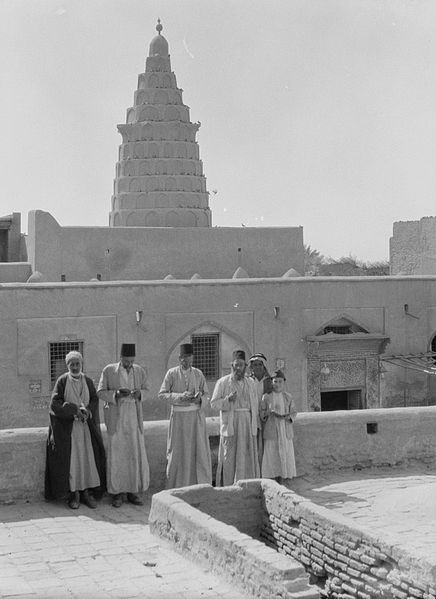
436px-Ezekial's-Tomb-at-Kifel
Iraqi Jews by Ezekiel’s tomb, Baghdad, 1932. Before 1948, Jews made up a burgeoning one-third of Baghdad’s population and had lived in Iraq for over 2,000 years. Today, there are less than 10 Jews left in the country. 

Al-maqām al-‘Irāqi

Except in Iraq, maqām has three levels of meaning: a degree of sound, a theoretical scale, and the modal organization of the Arab-Islamic area. In Iraq, the former three are known as nagham, while maqām is the main urban vocal repertoire. Currently the origin of the Iraqi maqām remains poorly characterized—while some contemporary Iraqi specialists posit that the repertoire dates back to the Abbasid era, (750-1258 A.D.), others believe that it may be a relatively new phenomenon dating back only four to six centuries. Nonetheless, I propose a development in an Iranian environment that may have reached its present state through cultural contact between Persian and Baghdadi Jews.

http://www.youtube.com/watch?v=Lz31EJIA5NM
Farida performing a Baghdadi pesteh, “Yumm al-‘Oyoun al-Soud”, with chālghī Baghdādī accompaniment in Amsterdam 

In enumerating the underlying Iranian elements of the Iraqi maqām, we can count the following: the seven main modes or maqāmāt of the Iraqi Maqām are identical to those of the Persian āvāz or dastgāh repertoire; most of the maqāmāt have Persian names; and instruments such as the santūr and joza further suggest appropriation from an Iranian milieu. Many of the Iraqi maqāmāt sung with Classical verses are found in the Persian tradition as well, particularly the Mukhālif, Mansūrī, Dashtī, Awshār, Bakhtiyār, and Mathnawī. Another distinguishing trait of the Iraqi maqām among Arab musical repertoire is that each maqām has a distinct vocal introduction (badwa or tahrīr), the lyrics of which are usually in Persian: Sigāh has “Lilay, lilay…”; Rāst has “Yār, yār…”; Humāyūn and Dashtī have “Amān, amān…”; whereas Bayāt and Hijāz have “Faryād-e man…” (“Oh my wails” in Persian.) Thus conceivably, Iraqi musicians absorbed elements of Persian style through the performance of what Iraqi musicians have called “Persians songs”—although not the classical Persian repertoire.

While it would be a futile exercise to attempt to ascribe these cultural transformations to a single musician or host throughout the centuries, it is important to note that Persia lost control of Baghdad in the 16th century and sporadically regained control until the 19th century. And while there has existed a minority Muslim Persian population within Baghdad for many centuries, the vast majority of Persian-speakers in that city have been Jews of Persian extraction with surnames such as Shīrāzī, Shahrabānī, Irānī, Bābāyī, Āghāsī, Lārī, ‘Ajamī, Āghā-Bābā and the like. Thus the role of Jews—many of whom lived intermittently between Iran and Iraq as traders, artisans and merchants—as agents in the propagation of these influences is probable if not imperative, as Jews were also traditionally disposed to musical professions in Persia. Indeed, in one episode contact between Iraqi Jewish musicians and a Persian professional musician even resulted in Iran’s adoption of the qānūn repertoire. Thus communication between Baghdadi Jewish musicians and their Persian coreligionists is a reasonable medium of musical acculturation between the two societies that still remains to be studied definitively.

Interview (in Iraqi Arabic) with Farida, a renowned Iraqi maqām vocalist based in the Netherlands 

Nonetheless, the chālghī Baghdādī ensemble has traditionally performed at secular and religious occasions for Muslims, Jews, Christians, Mandaeans, and Yezidis in Iraq. The central instruments of the ensemble or al-chālghī al-baghdādī are the santūr, the al-kamāna [al-baghdādīyya], the joza, the daff, and the dumbag, while the ‘ūd, santūr, and nāy as well as Western Classical instruments such as the violin and cello are popularly considered to be later additions that were appropriated from either an Egyptian or Maslāwi Christian milieu. There exist some fifty individual maqāmāt and three regional traditions: namely, those of Baghdad, Mosul, and Kirkuk. While the Baghdadi repertoire is typically performed in Arabic, Persian, or Hebrew, the traditions of northern Iraq are most often in the regional Turkoman (South Azerbaijani), Neo-Aramaic, and Kurdish languages and are distinguished by incorporation of a number of regional instruments in addition to the standard chālghī Baghdādī ensemble. When performed in the Arabic language, the poem at the center of the lyric can take the form of mawwāl or zhayrī, which is colloquial or hybrid, or the qasīda which is strictly a monorhyme ode based on Classical Arabic prosidy. The former type of maqāmāt amounts to twenty-five, according to al-Wardī, while the latter includes forty-one.

A maqām preformed in the Turkoman (South Azerbaijani) language of northern Iraq, particularly Kirkuk and Erbil. 

A standard Iraqi maqām begins with the badwa or tahrīr, which is the opening melody/main theme that is repeated throughout the maqām; qitā ‘ (sing. qita‘a) and awsal (sing. wusla), or secondary melodies, which form the building blocks of the composition; the meyāna, or climax, which is usually a qita‘a or a wusla sung in the high register; a small cadence known as a jelsa, which precedes the meyāna; a qarār, or a descent into the lower register; and the taslīm, which is the final, closing cadence that signals the end of the maqām and the coming pesteh (from Persian “baste” via Ottoman Turkish “beste”). Pestāt are in turn rhythmic songs with repetitive melodies that often contain simple, humorous, texts dealing with cotidian matters and various aspects of society. These, while not a part of the maqām repertoire, are popular, light-hearted urban songs typically in Arabic and Persian.

Iraqi female vocalist Zuhuur Hussein performing the pesteh “Ya ‘Aziz al-Ruh” in Arabic and Persian

Jews in al-Chālghī al-Baghdādī Ensemble

As in most mashriqī Arab musical traditions, maqām singers (mughannīn or even mutribūn) have traditionally been Muslims, and many are reciters or chanters of the Qur’ān for Islamic rituals and ceremonies. They are rarely professionals. In Iraq, the singers have traditionally belonged to the Arab, Kurdish, and Turkoman ethnic communities and most often belong to the lower urban social classes of merchants and craftsmen. However, central to our discussion here is the curious fact that until 1950, almost all the instrumentalists of the Iraqi maqām (daggagāt, ālātīyya) were Jews.

In explaining this phenomenon, a number of ethnomusicologists propose a class-based theory. Of course Islam has traditionally been unfavorably disposed towards music, so professional musicians have necessarily held low rank in society. Yet music has been an indispensable component of Muslim social life, so naturally a reasonable resolution was to regulate musical functions to ethnic minorities in order to preserve the cultural tradition in the face of opposing social and religious attitudes. Moreover, in explanation of this trend, scholars suggest that it is precisely musicians’ low rank that allows them to be enjoyed. As low-ranking persons they are a negligible element of society; they simply are not to be taken seriously as social beings deserving of interaction. As providers of a social service, their rank is assumed; therefore they can be admired solely for their musical product.

Consistent with these societal attitudes, many musicians were blind or handicapped and were recruited by the Jewish vocational institute in Baghdad in the 20th century. However it should be noted that the majority of mughannīyūn or vocal performers of the maqām have been Muslims. Jews in turn attribute this to the Muslims’ “superior” pronunciation of Arabic, or at least concede that the Muslim dialect is the highbrow, prestige dialect of that city. A brief survey of the two dialects reveals considerable phonological, lexical, and morphological differences, even impairing mutual intelligibility in some instances. The outspoken differences between the Muslim, Jewish, and Christian dialects of Baghdad arise from conflicting origins: while the Muslim dialect is of Bedouin provenance, the latter two descend from Medieval Baghdadi Arabic which was a sedentary dialect with considerable Aramaic and Persian substrate. Furthermore, the Jewish dialect includes a sizeable inventory of Hebrew vocabulary that further distinguishes this mode of speech to linguists as “Judeo-Baghdadi”. Resultantly, Jewish maqām readers (qurrā’) were not appreciated due to their outspoken “Jewishness” which manifested itself in their peculiar mode of speech. It was only in the form of vocalists such as Salīma Murād–a Jewish qāri’a who converted to Islam and displayed a marked attempt in her songs to imitate the Muslim Baghdadi dialect—that Jews could be universally appreciated and she in turn became one of the most famous mughannīyūn of the 20th century.

A sample of the Jewish Baghdadi dialect of Arabic, now only spoken by the diaspora in Israel and abroad

As the preferred musical performers of Baghdad, Jews served as domestic and international flag-bearers of the Baghdadi maqām repertoire. Jews had to become familiar with widespread musical systems— the chālghī baghdādī, rīfī folk songs, abūdhiyya poetry with rabāb accompaniment as well as synagogue repertoire in the maqām system. Due to their knowledge and mastery of Muslim repertoire, Jewish instrumentalists and qāris were hired to sing for Muslim holiday services, such as Ramadan evening parties and radio-broadcasts during the holy month. As a result of Jewish hegemony in the Iraqi music industry by the early-mid 20th century, many Muslims were not satisfied as there was virtually no music to be enjoyed during Jewish holidays. An attempt was even made in 1936 to close down the broadcasting station’s music program that was directed by Jews until Muslims learned to play Iraqi music, although after several months the Iraqi officials ceded control back to Jewish musicians in defeat. As agents of the a diverse range of repertoires, the Jews were successful in soliciting acclaimed Muslim vocalists such as Rashīd al-Qundarchī and ‘Abdallah Fāris to sing in the Judeo-Baghdadi Arabic as an ode of appreciation to the Jewish pioneers of the Iraqi maqām. In sum, Jewish masters of the maqām became highly-regarded musicians in Baghdad and exerted their influence over their Muslim counterparts.

However the influence of Baghdadi Jewish musicians was not limited to the urban centers of Iraq. Indeed, Iraqi Jewish musicians as members of a diaspora served as “international agents” in a similar fashion to the Sephardic Jews of Ottoman Istanbul and the Armenian community of Safavid Isfahan by disseminating their tradition through contact with foreign musicians and absorbing foreign aspects into Iraqi repertoire throughout the 20th century. They were responsible for introducing foreign elements unfamiliar to their society due to close ties with foreign musicians, primarily Egyptian. For example, the violin was probably adopted from Egypt under the influence of Ezra Aharon, a Baghdadi Jew who was an outspoken proponent of Egyptian musical trends. This very Ezra Aharon traveled with Iraqi Jewish music delegation, which was led by the acclaimed Iraqi musician Muhammad al-Gubbānchī, to the Congress of Arab Music held in Cairo in 1932. After emigrating to Israel following the Farhūd persecutions of 1950, he is known for fashioning his Iraqi radio ensemble to follow the Egyptian mainstream style.
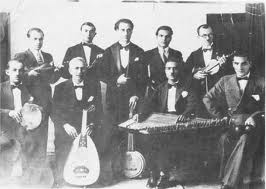
Unknown
Ezra Aharon and Muhammad al-Gubbānchī with the Iraqi Jewish music delegation to the Congress of Arab Music, Cairo, 1932

But the influence felt between Iraqi and other Arab musicians was reciprocal, as Iraqi musicians were acclaimed masters of their art and thus served as points of reference for their Arab counterparts. For example the Jewish composer Salah al-Kuwaytī taught Umm Kulthūm a composition and taught Abd al-Wahhāb the maqām lāmi, which he later utilized in a composition. Within in Iraq itself, it so happened that Arabs unknowingly sang many traditional Jewish melodies whose Hebrew text had been changed to Arabic by Jews. Additionally, at least one maqām was recorded in Hebrew in 1920 and sporadically after that, indicating that there must have been some demand for Hebrew renditions of maqāmāt. But perhaps the most conspicuous vestige of Jewish hegemony in Iraqi maqām is observed in the badwa of maqām al-țāhir, which begins with the Hebrew word “Hallelujah.” Evidently Jewish Baghdadi musicians were able to exert their influence on their Muslim counterparts both inside and outside of Iraq, and they left a distinct Jewish imprint on the Iraqi maqām repertoire alongside loans from Egypt and the West.

In conclusion, Iraqi Jewish musicians have played a capital role in the development of the standard Iraqi maqām style, and later served as “international agents” of the Iraqi repertoire–that is, as beneficiaries of their host country’s musical heritage–in a fashion not dissimilar to the Sephardic Jewish financiers of Ottoman Istanbul and the Armenian silk merchants of Safavid Isfahan. They disseminated their tradition through contact with foreign musicians and absorbed foreign aspects into Iraqi repertoire. While the Baghdadi Jewish diaspora in Israel has remained markedly more operative and prolific in the continuation of the Iraqi maqām tradition than its Indian and Javanese counterparts, it too struggles to define its identity in the face of an ever-homogenizing host society. With the emigration of all of the Jews of Iraq out of the country in the mid twentieth century and pressures towards assimilation in their host countries, the Iraqi maqām faces a difficult and defining future.

Sources

Eli Timan. “Menashi Somekh Recollections on Iraqi Maqams.” 4 April 2013. Youtube. April 15th. <https://www.youtube.com/watch?v=FcXsCgS_YQ8&feature=player_embedded> 

Esther Warkov. “Revitalization of Iraqi-Jewish Instrumental Traditions in Israel: The Persistent Centrality of an Outsider Tradition.” Asian Music. University of Texas Press: Vol. 17, No. 2, Music in the Ethnic Communities of Israel (Spring – Summer, 1986), pp. 9-31.

Gen’ichi Tsuge. “A note on the Iraqi Maqam.” Asian Music. University of Texas Press: Vol. 4, No. 1, Near East-Turkestan Issue (1972), pp. 59-66.

“Jews of Iraq in Recent Generations.” Journal of the Babylonian Jewry Heritage Center. Nehardea: No.14, Autumn 2003. <http://www.babylonjewry.org.il/new/english/nehardea/14/7.htm&gt;

Scheherazade Qassim Hassan. “Iraq.” Grove Music Online. Oxford Music Online. Oxford University Press. Web. 10 April. 2013. <http://www.oxfordmusiconline.com/subscriber/article/grove/music/13899&gt;

Virginia Danielson; Scott Marcus; Dwight Reynolds. “The Iraqi Maqām and Its Transmission.” Garland Encyclopedia of Music. Routledge: Vol. 6 (Aug 2001) 1200 pp.


The Nestorian Legacy: Aramaic, Mongolian Christians, and the Persian Church of the East

Written by Afsheen Sharifzadeh, a graduate of Tufts University focusing on Iran and the Caucasus. This is the story of the modern Assyrian-Chaldean-Syriac people, and the legacy of their ancient language and faith in the pre-modern world. 

Assyrian_New_Year_Syria1
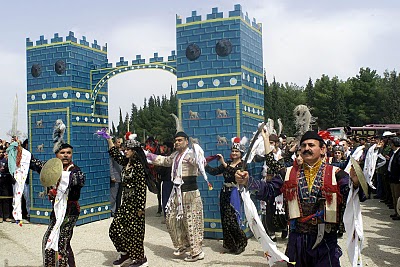
Modern Assyrians celebrating ancient Akitu (New Years), al-Hasakah, Syria (2002)

The Nestorian Creed
The year is 431 A.D., and cataclysmic events are afoot in Constantinople. As the Byzantine emperor frantically prepares for a cosmic confrontation with the Sassanian Persians to the East, the Church finds itself in a threatening predicament of its own. The 3rd ecumenical council has convened for over a month now in the Aegean port of Ephesus, where 150 of the Christian World’s most prominent theologians and ecclesiastical dignitaries have been feuding over pressing issues of church and doctrine. The Archbishop of Constantinople, a man by the name of Nestorius, is the main topic of discussion here. Nestorius had daringly argued in his sermons that Christ’s human and divine natures were distinct—a doctrine known as dyophysitism, literally “two natures;” as opposed to mono- or miaphysitism, “one nature.” As a result, Nestorius declared that the Virgin Mary must be referred to by the Greek title Christokos “Christ-bearer,” in place of the suggestively monophysite Theotokos, or “God-bearer.” Perhaps all of this seems like much fuss over a technicality to the 21st century reader, but indeed these very assertions were fighting words in the early Christian world.

After a series of tempestuous deliberations, the synod makes its decision. Nestorius is officially condemned in five separate canons produced at the council, declared a heretic, excommunicated from Christianity, and exiled from the realm. The deposed Patriarch gathers his followers and embarks on an exodus to the East, all the time insisting his ideals were in fact “orthodox.” But Nestorius was not alone–the Council’s findings were rejected by many of the attendees from the fringes of the Byzantine Empire, including the Syriacs, the Egyptians, the Ethiopians and the Armenians, all of whom heretoforth became alienated from Western Christendom. These dramatic events in the 5th century AD amounted to the “Nestorian Schism,” which gave birth to the Persian Church (the Church of the East) and resulted in the dissemination of Nestorius’ creed from Egypt in the west to China in the east. Within a short period, the Nestorians would reach the T’ang court at Chang’an (Xi’an), and would enjoy evangelical success among Mongol tribesmen, Sogdian merchants, Chinese sailors, and South Indian farmers along the way.  

800px-Church_of_the_East_in_the_Middle_Ages.svg
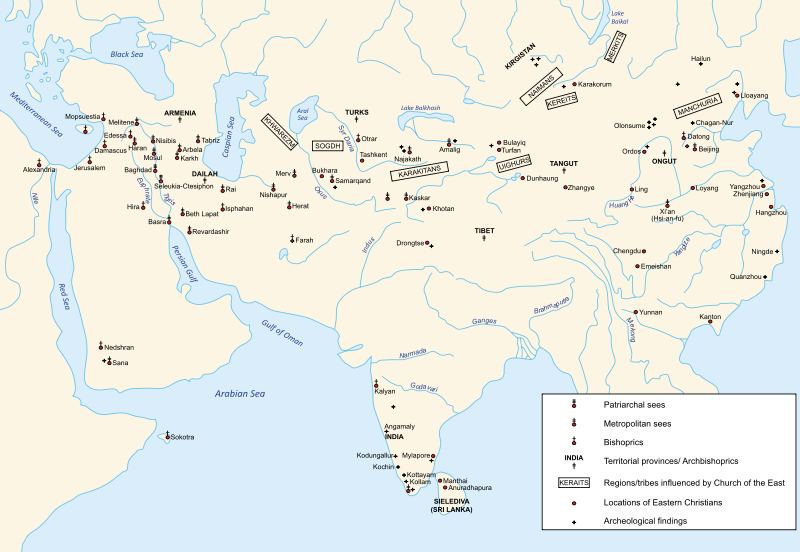
Extent of the Nestorian Church (Church of the East) based in Persia in the Middle Ages

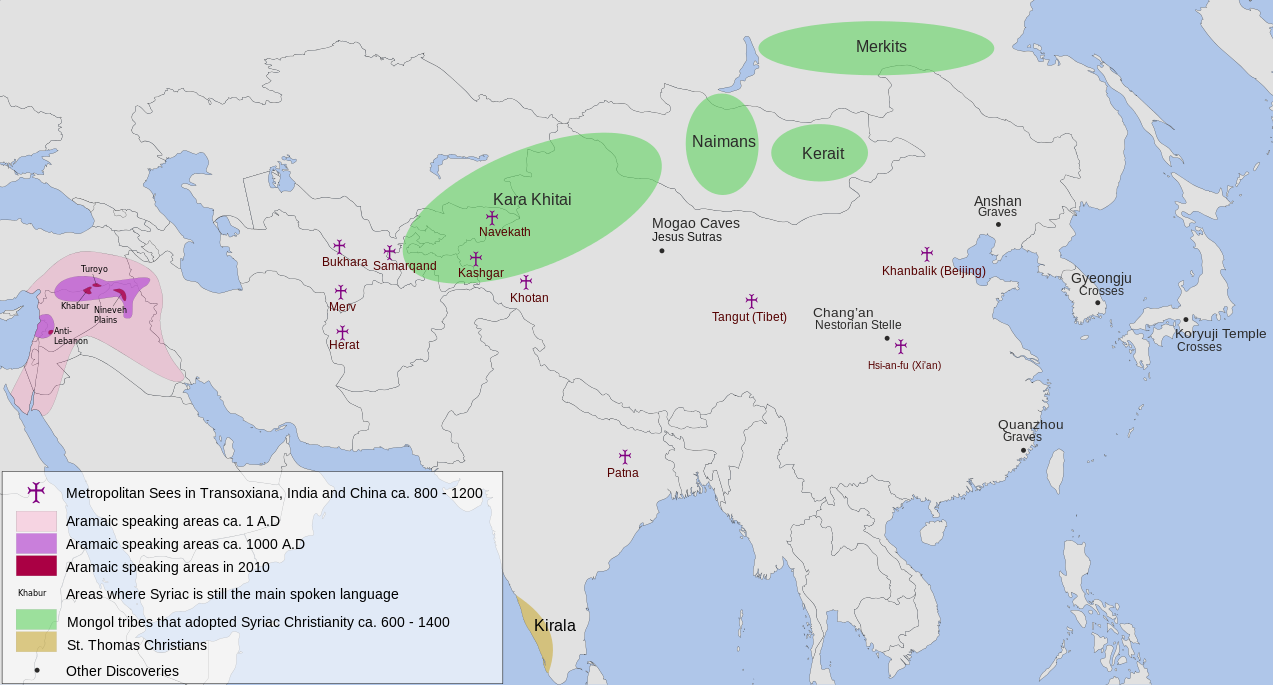
1273px-Syriac_Christianity.svg
The extent of Syriac Christianity in Asia and the Aramaic language in the Near East. Green represents Mongol tribes that adopted Christianity

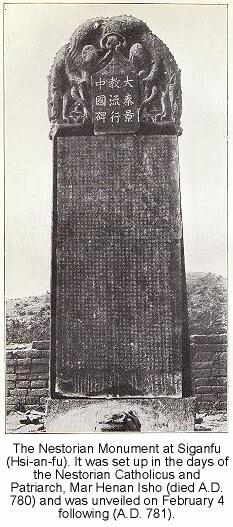
.  5235640545_805db3c6bb Nestorian-Stele-Budge-plate-III
Daqin Pagoda, a 7th century Nestorian Church near Xi’an, China  

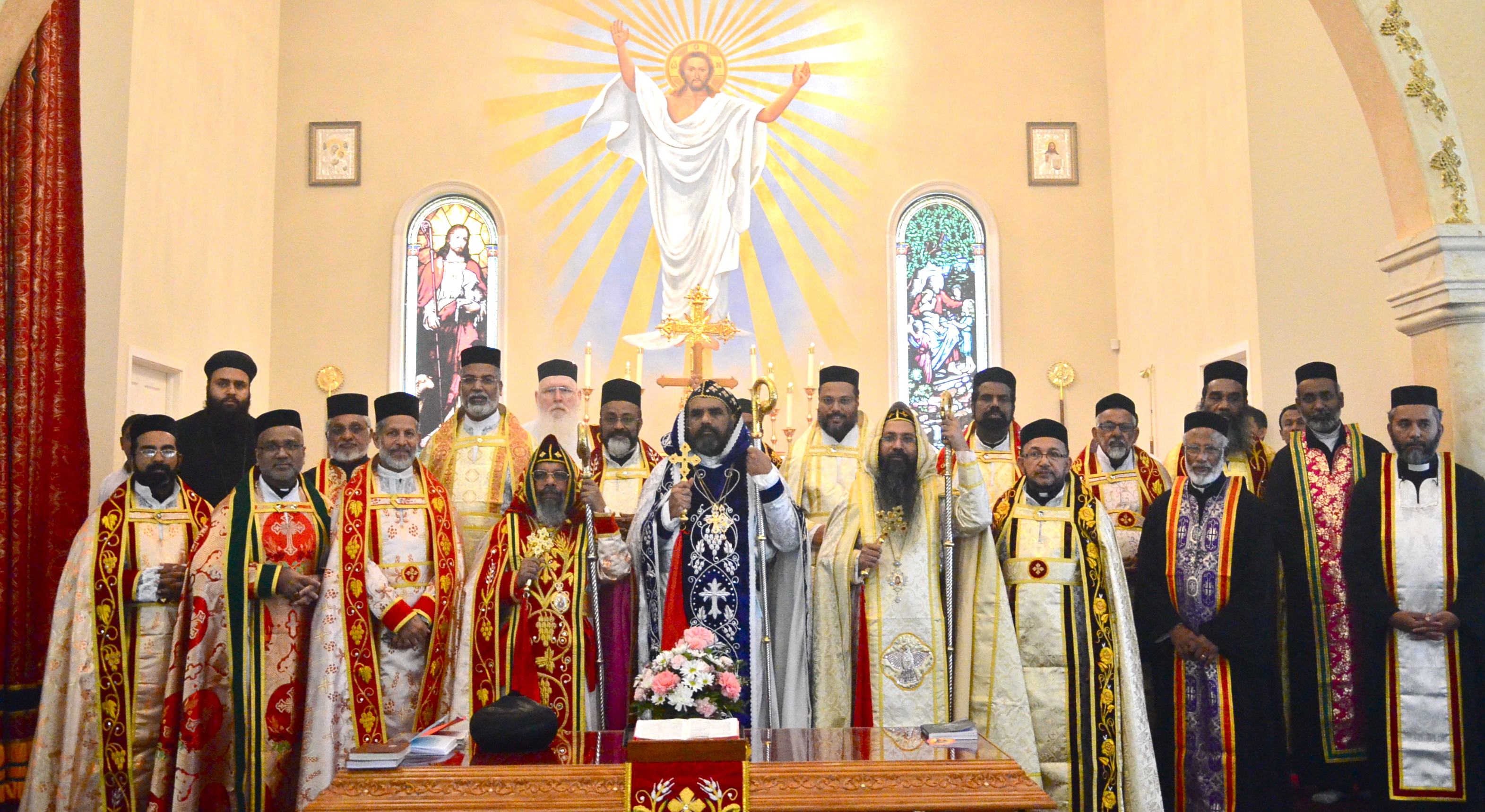
Consecration2
St. Gregorios Malankara Syriac Orthodox Church, Kerala, India. Historically the Christians of India were affiliated with the Persian Church (the Church of the East), until local Patriarchs forged relationships with the Syriac Orthodox Church in the 19th century (which, like Nestorianism, is a Non-Chalcedonian creed).

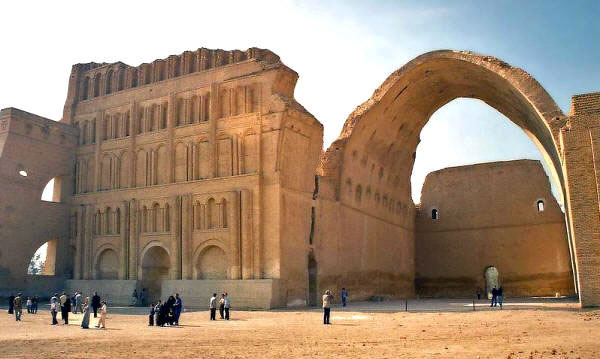
Now let us shift our lens from Constantinople to the Persian capital of Seleucia-Ctesiphon in Mesopotamia. Here on the Tigris, the Sassanians had established a world-class urban center comprised of a series of sprawling “settlements”–a spectacle that inspired the Arab Muslim invaders of the 7th century to call the city Al-Madā’in, or “The Cities.” But most important to our story here is the ethno-linguistic dichotomy of Sassanid Mesopotamia—namely, a Zoroastrian Iranian elite and a Christian, Jewish, and Sabian Aramaic-speaking bourgeois (there were also minorities of Greeks, Armenians, Arab Christians, etc.). In an attempt to deter the Christians of Persia from succumbing to Byzantine sympathies, the Iranian elite actively pursued a policy of aligning the Aramaic-speaking Christians of the Sassanian realm with the new heretical Nestorian creed from Byzantium. The goal was to anathematize the Persian Christian population from the Patriarch in Constantinople, and thereby prevent defection and collaboration with their coreligionists.  ctesiphon
Ruins of Tâq-i Kasrâ Palace at the Sassanian Persian capital, Ctesiphon (located on east shore of the Tigris, Seleucia was across from it on the west shore) in modern-day Iraq

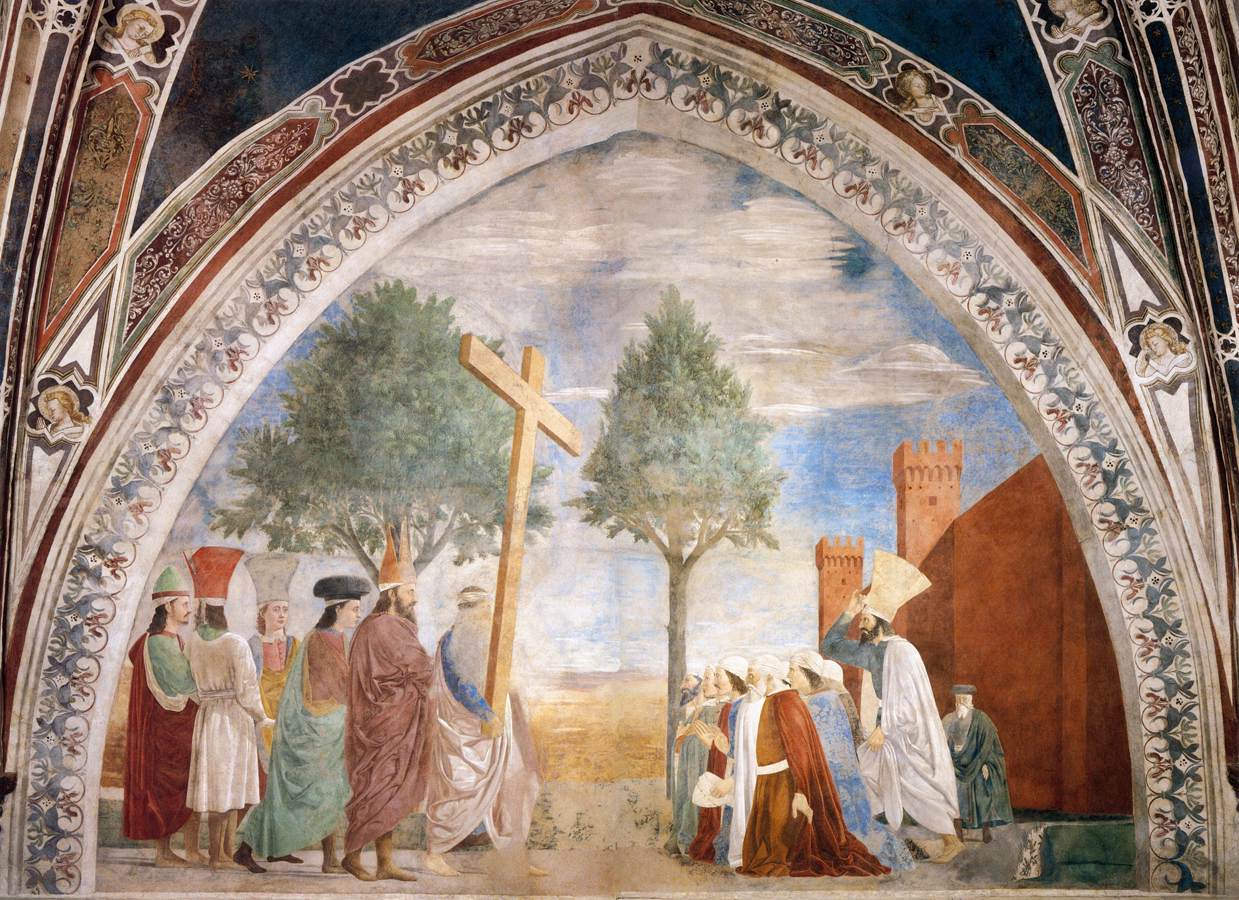
Thus under the support of Sassanian monarchs and noblemen (nakhwadârân), Nestorian refugees were welcomed from the Byzantine Empire into the Sassanid realm and were soon given authority of the Diocese of Seleucia-Ctesiphon in the capital, headed by a Catholicos later deemed the “Patriarch of the East” or the “Patriarch of Seleucia-Ctesiphon”. This was the genesis of the Persian Church, which had jurisdiction over all Nestorian Christian communities throughout the world. Of course Christian Europe would forever view the Nestorians as “false Christians”; as oriental bumpkins whose knowledge of Christ and doctrine was tantamount to paganism, and would even dispatch missionaries with the sole purpose of “converting” them to Christianity. But these ecclesiastical attitudes should not undermine our understanding of the role that Nestorianism has played in historical developments in Eurasia. For example following the conquest of Jerusalem, the Nestorian wife of Shahanshah Khosrow II, Queen Shirin, brought the holiest relic of Christendom, the Holy Cross, back to her palace in Ctesiphon. The sacred object remained at Shâhigân-i Spêd Palace until it was repatriated to the Holy Sepulchre by the Byzantine Emperor Heraclius in 628 A.D.

 Exaltation of the Holy Cross, Arezzo
Exaltation of the Holy Cross, Piero della Francesca at Arezzo, Italy. The Byzantine Emperor Heraclius returns the relic of the True Cross to Jerusalem from Ctesiphon in 628, following its capture by the Sassanian Persian King Khosrow II and his Nestorian wife Shirin fourteen years earlier.

Aramaic Languages
But who exactly were these Aramaic-speakers, soon-to-become-Nestorians? Here we have to deal briefly with some terminology. Of course prior to the Muslim invasion of the Near East and the subsequent Arab migration into that region from the Arabian Peninsula in the 7th century AD, the Near East boasted a very different ethno-linguistic landscape from that of today. Mesopotamia and Greater Syria were primarily populated by a group of people known collectively as Aramaeans or Nabataeans (from Arabic nabai, pl. anbā). The Aramaeans spoke languages of the Aramaic group, which is a Semitic language family related to Hebrew, Arabic, Ugaritic, Phoenician, Akkadian, and Amharic. The ancient Neo-Assyrian empire witnessed the spread of the Old Aramaic language which eventually displaced Akkadian, and thus Aramaeans throughout history have come to refer to themselves (somewhat nostalgically) as “Assyrians” as descendents of that people. Among Aramaeans there were Jews, Sabians (Mandaeans), Samaritans, and Christians. These non-Zoroastrians were the commoners and working class of Parthian and Sassanian Mesopotamia. The Nestorian Church or Persian Church eventually developed into the “Assyrian Church of the East”, which later underwent pro-Catholic (Chaldean) and pro-Jacobite (Syriac) schisms. In sum, the terms Aramaeans, Nabataeans, Sabians, Assyrians, Chaldeans, Syriacs, Mandaeans, all refer to ancient and modern speakers of Aramaic languages.

NENA (Iraqi Koinē) Ṭuroyo Neo-Mandaic (Khorramshahr) Standard Arabic Modern Hebrew English
āna ewin/ewan* -(a)no, -(o)no* -(a)na ana aní I [am]
shlāma shlōmo shlomā salām shalóm peace
khayūta ħaye heyyi ħayāt khayím life
shimsha shemsho shāmesh shams shamásh sun
malka malko malkā malik mélekh king
kikhwa kukwo kakuā kawkab kokháv star/planet
nāshe nōshe barnashānā nās anashím people
libba lebo lebbā lubb<(qalb) lev heart, core
lishāna lishōno leshānā lisān lashón tongue/language
resha risho rishā ra’s rosh head
khulma ħulmo ħulm khalóm dream
ida idho idā yad yad hand
brōna, bnūne abro, abne ebra, ebri ibn, abnā’;banūn ben, baním a son, sons
brāta, bnāte bartho, bnōtho berāt, benāthā ibna;bint, banāt bat, banót daughter, daughters

Language comparison table prepared by the author of modern Semitic languages showing some common cognates: Northeastern Neo-Aramaic (NENA), Ṭuroyo (Neo-Aramaic from Ṭur ‘Abdin), Neo-Mandaic, Standard Arabic, and Modern Hebrew. *NENA and Ṭuroyo distinguish between gender in the 1st person copula.

i_sas_shapI_23_rs_4
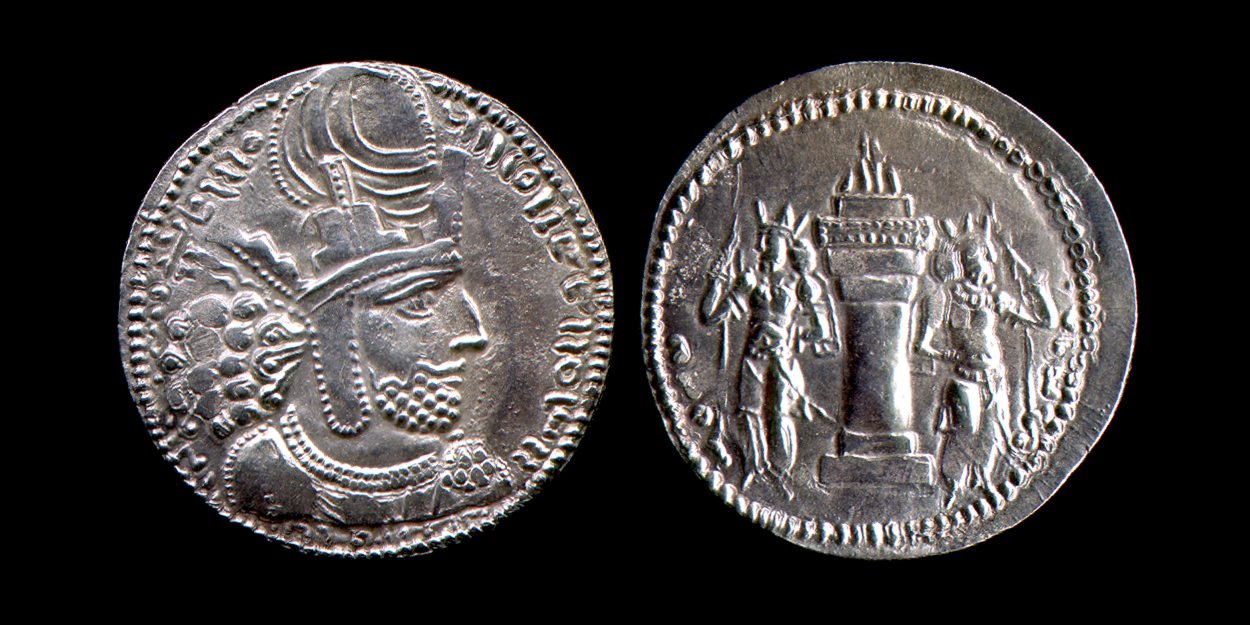
Coin (drachma) of Shapur I with Aramaic inscription, Sassanian period. Aramaic was the official administrative language of pre-Islamic Iranian dynasties, and typically numismatic inscriptions were in Aramaic. i.e Bagi Papaki Malka “Divine King Babak”; Mazdisn Bagi Artahshatr Malkan Malka Airan Minuchitri min Yazdan “The Ahura Mazda-worshipping Divine Artaxerxes, King of the Kings of Iran, heaven-descended of the Gods”.

Aramaic languages have enjoyed a great deal of political, literary, and religious patronage in the Iranian world, reaching Greece and even India. After all, Old Aramaic displaced Hebrew as the language of Israel by the 6th century BC, and was the language spoken by Jesus Christ himself. Aramaic became the lingua franca of the Achaemenid Persian Empire, and “Imperial Aramaic” became the official administrative language of pre-Islamic Iranian polities through the Sassanid period. It might come as a surprise that instead of the Iranian term Shahanshah, Parthian and Sassanian coins usually feature the Aramaic calque Malkan Malka. Before the arrival of Islam and Arabic script, many Middle Iranian languages (Middle Persian, Parthian, Sogdian, Chorasmian, with the exception of Bactrian and Khotanese) and even Avestan were written in modified Aramaic scripts, and inscriptions in these language even contain Aramaic heterograms called huzwârish. What’s more, Middle Aramaic languages like Syriac, Mandaic, and Babylonian Aramaic (the language of the Talmud) became important liturgical and scholarly languages in the pre-Islamic Near East. The School of Nisibis was a 4th century Syriac-language university, and like the Academy of Gondeshapur in Persia, is sometimes referred to as the world’s first university. With the advent of Islam in the 7th century AD, the inhabitants of the Near East soon relinquished Aramaic for Arabic, except for small pockets of Christians, Jews, and Sabians who retained their language and enjoyed dhimmi status under the Caliphate.  

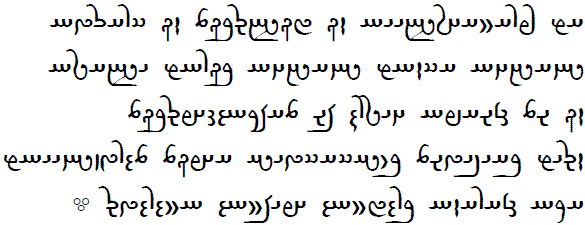
new-avestan
Yasna 45.1 from the Gathas in Avestan script. Avestan is the liturgical language of Zoroastrianism; this script was developed in the 3rd or 4th century based on Aramaic script (with Greek influences).  

Today, Northeastern Neo-Aramaic languages (NENA)–which are not derived from any classical literary Aramaic language but rather from a rural periphery group–are still spoken by Assyrians, Chaldeans, Syriacs, and Kurdistani Jews residing in Iran, Iraq, Syria, Turkey, Lebanon, Armenia, Georgia, and abroad. The standard literary version of NENA was developed in 1836 by Justin Perkins, an American Presbyterian missionary to Iran, and is based on the Urmia dialect of Iran (Urmežnaya). However the modern spoken varieties of NENA continue to exhibit a great deal of morphological, phonetic, and lexical variability resulting in strained intelligibility among groups. This situation has been in part ameliorated by the Iraqi Koinē phenomenon, but dialects remain drastically distinct along lines of religious affiliation, region, and even village. Aside from the NENA dialect continuum, the other Neo-Aramaic languages are Ṭuroyo spoken in Ṭur ‘Abdin in southeastern Turkey (also called Central Neo-Aramaic), Neo-Mandaic spoken by Mandaeans in Iraq and Iran, and Western Neo-Aramaic, spoken in a set of three small villages in the Anti-Lebanon mountains northwest of Damascus. None of these languages are mutually intelligible.

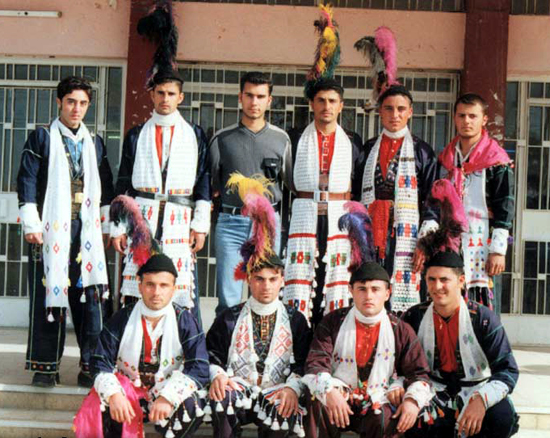
 assyrianiraq
Assyrian men in traditional garb in ‘Ankawa, Erbil, Iraq

While the impact of Iranian languages (Parthian Pahlavi, Sassanian Pahlavi, New Persian, Sorani, Kurmanji) has historically been paramount on Aramaic languages, there are at least a few examples of lexical borrowing in the opposite direction. Perhaps some of us are familiar with a few Persian words of Aramaic (Syriac) origin. For example,

1.) Sumac or Somâgh in Persian (>Arabic sumāq >Syriac summāq “red”, from root s-m-q, akin to NENA smuqa, smiqta “red” and Ṭuroyo semoqo, semaqto “red”)

2.) Yaldâ (>Syriac yaldā “birth” from the radicals y-l-d, cognate to Arabic root w-l-d via Northwest Semitic isogloss w- > y-; ArabicForm I gerund: wilāda, milād “childbirth”; Form V gerund: tawallud, “generation, engendering” → N.Persian tavallod “birth”). Thus the holiday Shab-e Yaldâ is “The Night of Birth”, celebrating the birth of the Iranian God Mithra, and the name was probably coined in the Sassanid period.

3.) Kiânâ (>Syriac kyānā “nature, Innate essence [of Christ]”, also NENA kyana, cognate to Arabic kayān “entity”, from root k-w-n). Note a false Persian etymology: “Queen”, from kiân “royal”+â (“-â” is not a Persian feminine suffix; Middle Persian had already lost grammatical gender, which only existed vestigially from Old Persian, such as in nouns of the feminine -ka declension as –əg → N.Pers –ə, which has shifted to –ê in Western Persian. i.e. O.Pers fra-zāna-ka → M.Pers Frəzânəg → N.Pers Farzâ “intelligence”; O.Pers Spaita-ka, M.Pers Spêdəg, N.Pers Sêpidê “white, clean”).  

Hormuzd.Rassam.reclined
Hormuzd Rassam (1826-1910), a native Assyrian Assyriologist from Mosul who discovered the clay tablets that contained the Epic of Gilgamesh as well as the Cyrus Cylinder at the ruins of Babylon. The name “Hormuzd” was a Sassanian-era corruption of Avestan “Ahura Mazda”, a popular name among Kings, and is still used among Aramaic-speakers today.  

Nestorian Christianity in East Asia
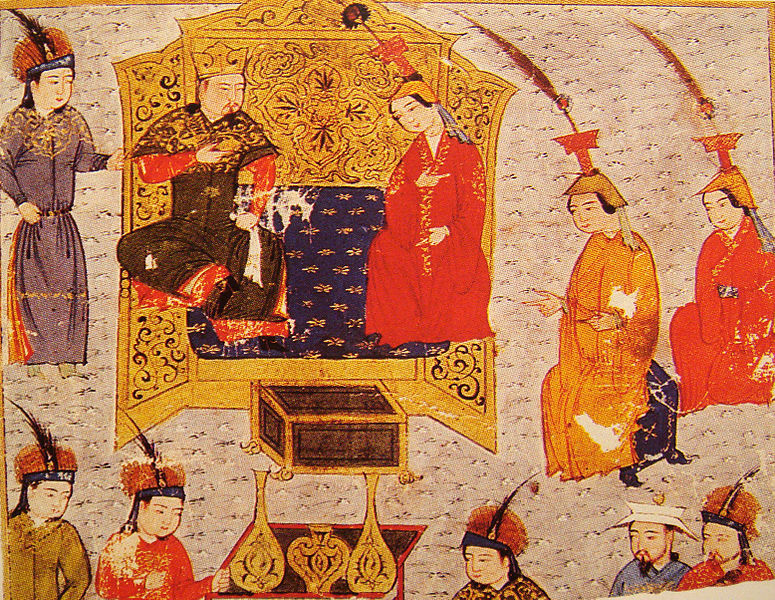
In the 12th century AD, a legend developed among European Christians about a righteous King who ruled over a true Christian nation somewhere among the pagans of the Orient. His name was Prester John, and he became the subject of ecclesiastical missions, military expeditions, and exploration by Europeans up through the 17th century. One school of speculation ascribed the identity of Prester John to the Mongolian Kereyid chief, Ong Khan. Indeed Ong Khan’s tribe, the Kereyids, had converted to Nestorian Christianity, but that did not stop Genghis Khan from marrying his son Tolui to one of Ong Khan’s nieces, Sorkhakhtani Beki. This Nestorian matriarch was mother to the four great inheritors of the Mongol realm: Kublai Khan, Hulagu Khan, Möngke Khan, and Ariq Böke. She is regarded very highly in the Secret History of the Mongols, where it is related that the Great Khan Ögedei consulted her on various matters. In 1310, she was regarded as “Empress” in a ceremony that included a Nestorian mass, and her body was enshrined in a Christian church in Ganzhou in 1335, where sacrifices were to be offered.

.  775px-TuluiWithQueenSorgaqtani
Tolui Khaqan and his queen consort, Sorkhokhtani Beki, a Mongolian Nestorian Christian and mother to the four partitioners of the Mongol Empire: Kublai Khan, Hulagu Khan, Möngke Khan, and Ariq Böke.  

Sorkhakhtani’s son Hulagu Khan, who founded the Ilkhanate in Persia, also married a Mongolian Nestorian princess by the name of Doquz Khatun. She is said to have accompanied her husband during his campaigns, and during the Siege of Baghdad in 1258, she even ordered him to spare the Christian inhabitants of that city from the bloodbath that ensued. Hulagu offered the royal palace to the Nestorian Catholicos Mar Makkikha II, and ordered a cathedral to be built for him. In this remarkable episode, the far-flung geographical extent of the Nestorian faith facilitated an unseemly alliance between peoples from Mesopotamia and Mongolia.

.  663px-Museum_für_Indische_Kunst_Dahlem_Berlin_Mai_2006_061

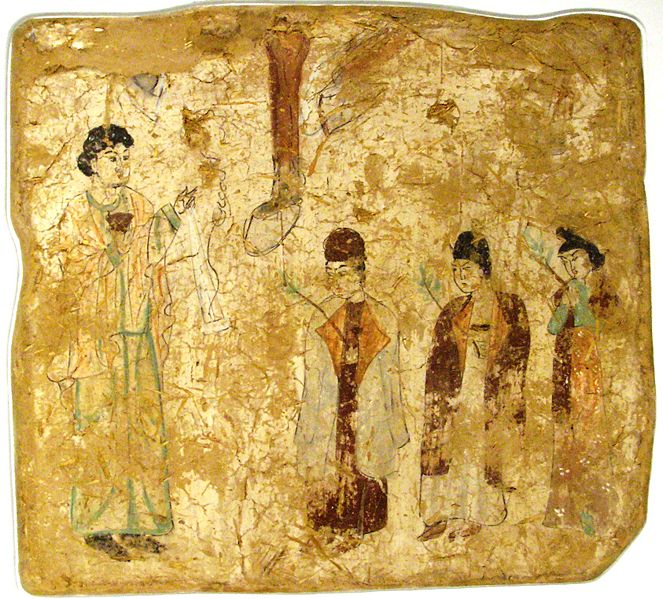
Wall painting from a Nestorian Christian Church in Qocho, China (683-770 AD)

But within centuries, Nestorianism too would succumb to the test of time. Sporadic persecution of Nestorians as well as neglect by their European coreligionists would weigh down on this already declining creed. Today Neo-Aramaic speakers are small in number, in great part due to the mass-killings of Assyrians in the Ottoman Empire and later the Assyrian Genocide committed by the Young Turks during WWI and then the Ba’athist regime in Iraq. The Assyrian Church of the East moved its Patriarchal See from Baghdad to Chicago, Illinois in 1989, where assimilation has become an imminent threat among the diaspora. But despite these calamities,  the Nestorian legacy and the Aramaic language still provides us with a kaleidoscopic view of connections between peoples and cultures; as the timeless diplomats between East and West, between our past and our present. Indeed we can make use of the texts, art, and architectural ruins to put together the pieces of this undying chapter of the human story.

Contemporary Assyrian singer Juliana Jendo singing Burbaslan Go Mdinate “We have dried up in our [own] cities”, about the dwindling Assyrian population in historic homeland, migration, assimilation abroad. 

External Links:

Juliana Jendo- Lishana Aramaya “Aramaic Language”, with George Homeh

Juliana Jendo- Lele Kul Watan Yimma  “No Country is our Motherland”, filmed at the Chaldean Nestorian Church in Kerala, India in 1994.

Juliana Jendo- Beth Yaldakh Hawe Brikha “Happy Birthday”, part of campaign to preserve Neo-Aramaic language among children of the diaspora in the Unites States.

Jualiana Jendo- Barboslan Go Mdinate “We have dried up in our [own] cities”, speaks about the dwindling Assyrian population in historic homeland, migration, assimilation abroad.