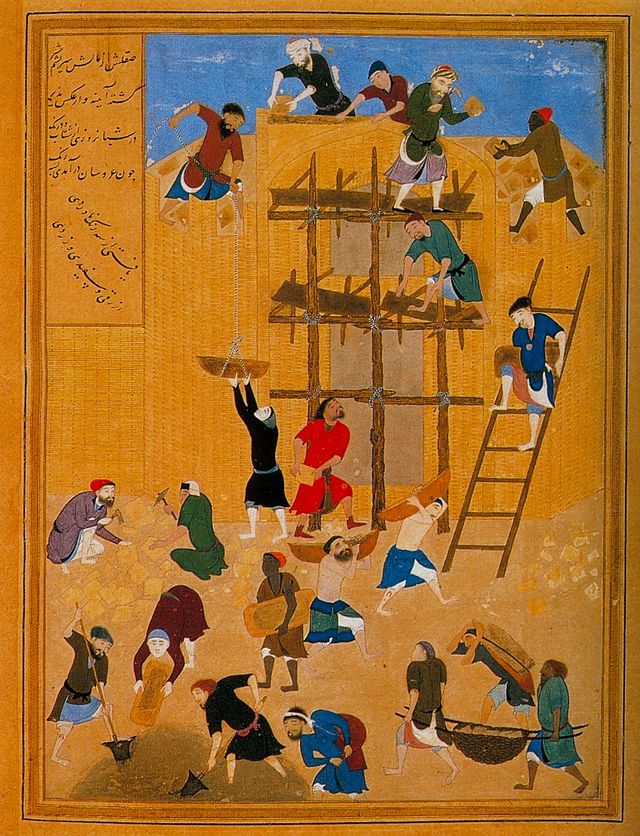
Eternal Fires of Ancient Iran–On the Sasanian-era Ādur Gušnasp Zoroastrian Temple

Written by Afsheen Sharifzadeh, a graduate of Tufts University focusing on Iran and the Caucasus. This article provides a brief history of the Zoroastrian (Mazdean) religion and the Ādur Gušnasp fire temple located at Taḵt-e Solaymān (Shīz), Iran, which served an important role in the religious and political framework of the Sasanian Persian Empire

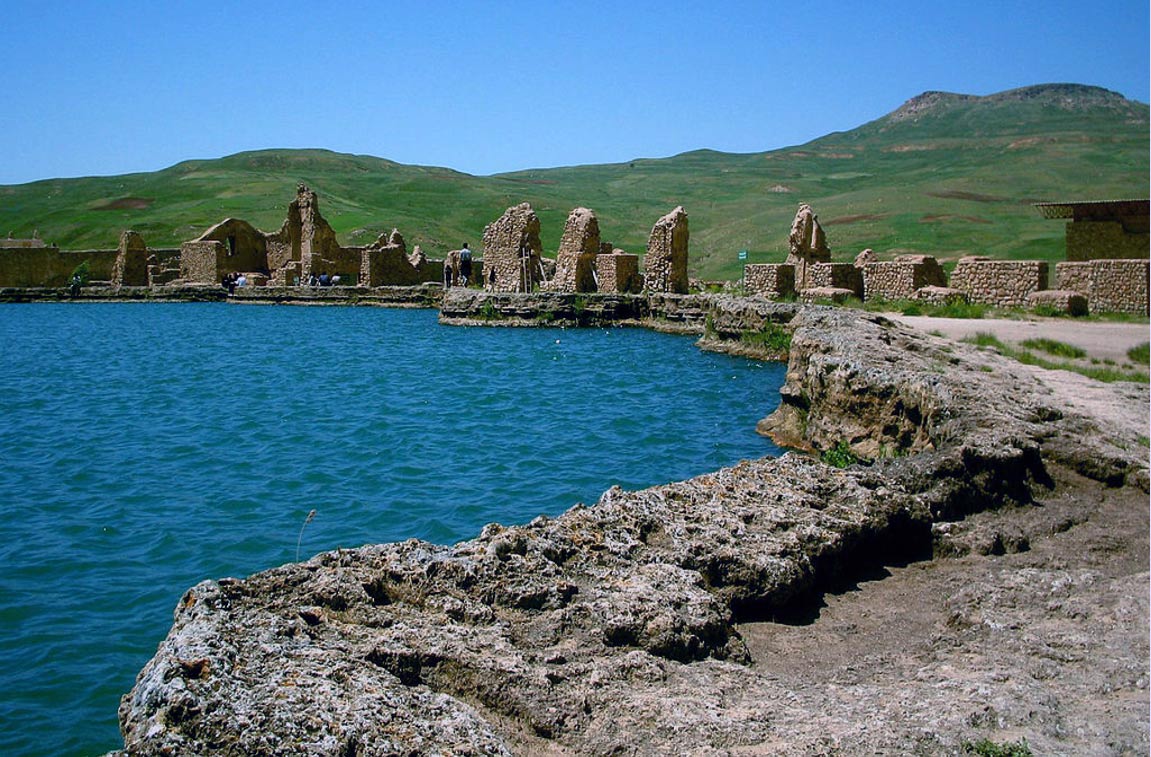
(1-5) The ruins of Ādur Gušnasp Fire Temple are situated on an extinct volcano 2,150 meters above sea level at Shīz, Iran. The complex sits atop sediments formed from the overflowing calcinating water of a thermal spring-lake (21° C) which formed in the volcano’s extinct crater. The site transports the observer to a bygone era, in which lofty passageways illuminated by the eternal fire’s soft glow would grant access to a large domed chamber housing Ādur Gušnasp in a grand stone fire-altar

Background
Immediately before the advent of Islam, a diverse range of religious beliefs existed among Iranian peoples, who once inhabited a vast region spanning from Gelonus to Seleucia-Ctesiphon to Khotan. These included native Iranian faiths such as Zoroastrianism (incl. Zurvanism), Manichaeism, Mazdakism, varieties of Iranian polytheism and the Scythian religion, as well as Indic traditions like Buddhism (Tantric Vajrayāna) and Abrahamic religions such as Christianity (Church of the East), Judaism and Gnosticism. However, Zoroastrianism (also called Behdin “the Good Religion”, Mazdaism or Mazdayasna, lit. “wisdom-celebration”) held the sole position of official patronage within the Sasanian Persian Empire beginning with Ardeshir I (r. 226–241 A.D.), the founder of the dynasty and grandson of the eponymous Zoroastrian high-priest of Staḵr, in Pārs, named Lord Sāsān (Sāsān xʷadāy). By the reign of Shapur II (r. 309–379 A.D.), it was declared the official state religion in a move, in all probability, to curtail sympathies towards the Christian state church of its archenemy, the Roman Empire. The Zoroastrian attitude of non-proselytization, however, fostered a policy of religious tolerance—a tradition started by the Persian Achaemenids and continued by the Arsacids—which facilitated strategic inclusivity of Christians, Gnostics, Jews, Manichaeans and Buddhists as a means of sustaining social harmony. Central to Zoroastrian ethics is the concept of personal agency and individual choice as a result of free thought; thus, proselytization was discouraged, while self-initiated conversion was welcomed. By contrast in the Roman Empire, coercive conversion and persecution against non-Christians was frequently used as a tool for maintaining societal cohesion.
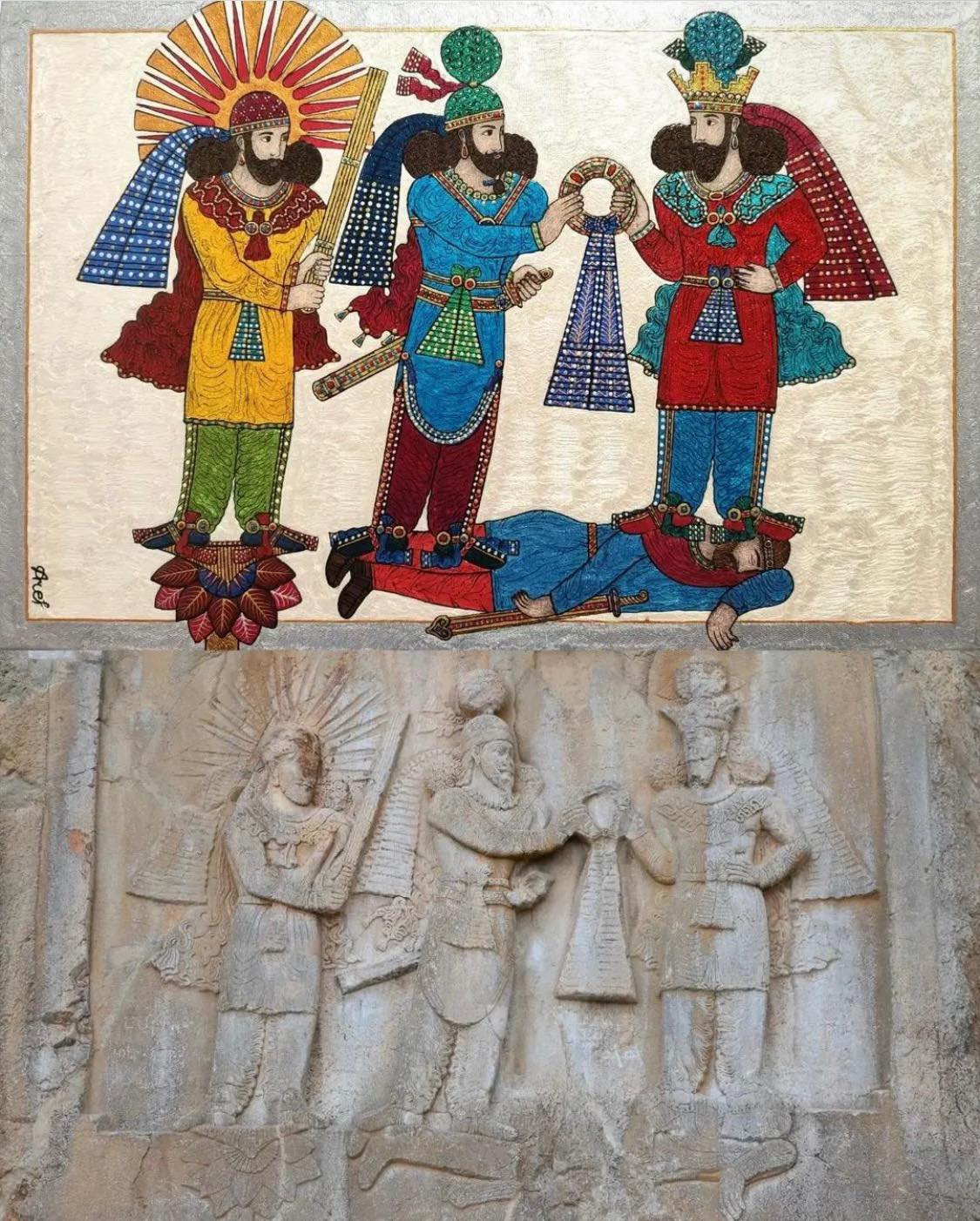
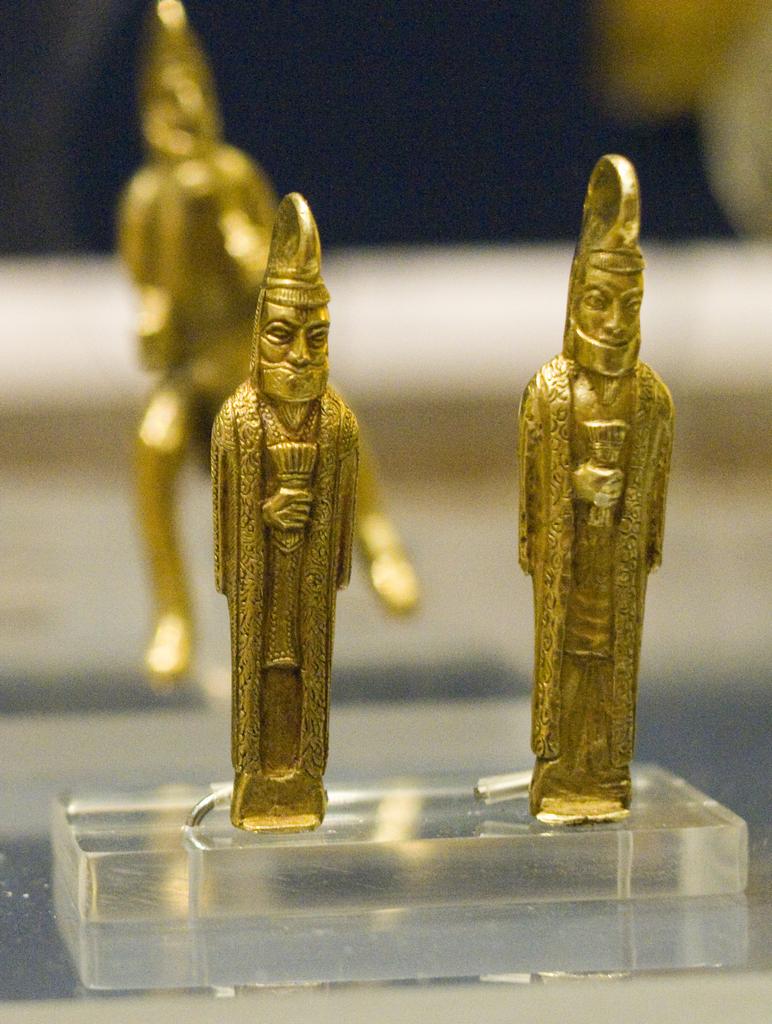
(1) A large relief of the investiture of the Sasanian king Ardashir II at Tāq-i-Bustān, Kermānshāh, Iran (c. 4th century A.D.). King Ardashir II and his predecessor Shapur II stand atop the fallen Roman Emperor Julianus Apostata (361-363 A.D.). The archangel (yazāta) Mithra stands atop a Lotus Flower on the left holding a “barsom”—a bundle of twigs from select medicinal plants used by Zoroastrian priests (Magi) in their role as traditional healers. (2) Gold statuettes carrying barsoms, a symbol of priesthood, discovered as part of the Achaemnid-era “Oxus Treasure” in Qobādiyān, Tajikistan.

As a result of gaining official status, concerted efforts were made in early Sasanian times (224-651 A.D.) to collate, edit and systematize the liturgy with the purpose of compiling a master copy of the scripture known by its Middle Persian name Abestāg (NP: Avestā; perhaps from Old Iranian *upa-stāvaka- “praise”). This so-called ‘Sasanian archetype’ canonized an assortment of written and oral traditions, many of which had been composed by priests in times far removed from the lifetime of Zoroaster (c. 1500-1000 B.C.?), in a manner deemed suitable for the likes of an organized state religion. A complete version of the holy scripture likely existed in the Achaemenid epoch (550–330 B.C.), “written on adorned ox hides with golden ink” and housed at the Fortress of Archives (diž ī nipišt) at Staḵr in Pārs. Lamentably, it and other copies were targeted and destroyed by Alexander of Macedon (ōy petyārag ī wad-baxt ī ahlomōγ ī druwand ī anāg-kardār aleksandar ī hrōmāyīg “that wretched, ill-omened adversary, the accursed, evil-doing heretic Alexander the Roman”), who also executed scores of the foremost “religious authorities (dastwarān), judges, hērbeds, mōbeds, religious leaders, and able and wise people of the land of Iran” according to the Sasanian-era Ardā Wirāz Nāmag.

The Sasanian descriptions further state that this original Avesta consisted of twenty-one Nasks or books, and must have been a sort of encyclopædia, not alone of religion, but of many matters relating to the arts, sciences, and professions, closely connected with daily life. It is speculated that among the lost materials were the descriptions of perhaps hundreds of botanical medicines, including the revered haoma (𐬵𐬀𐬊𐬨𐬀 “ephedra”[?], Zoroastrian Dari: هم hōm; a powerful stimulant). This is reflected in the Magi’s ancient renown as physicians and healers who are frequently depicted holding twig bundles (𐬠𐬀𐬭𐬆𐬯𐬨𐬀𐬥 barəsman; MP: barsom), a symbol of priesthood, which they used to prepare a wide array of plant-based extracts.

(1-2) Remnants of murals found in the fire sanctuary gallery at Kūh-e Xʷāja, Sistān, Iran. It appears in the Sasanian period, sacred Zoroastrians precincts had a wealth of luxurious decorations. Aurel Stein observed a three-headed creature and an ox-headed mace (gorz) held by a partially-obliterated seated figure in the first painting, identified as the hero Rostam with his weapon (3) The imposing south façade of the fire sanctuary bears the remnants of a stucco relief that portrayed a contest between a horseman and a lion (4-5) The Kūh-e Xʷāja complex sits on a basalt lava island in the historic Lake Hāmūn. Offerings to water, seen as nurturing the cosmic integrity and strength of the natural element, serves as the culmination of the daily Zoroastrian act of worship

Judging from the table of contents of the Nasks, it would seem that not more than a quarter, perhaps less, of the ancient monument of the Avesta could be restored even at the time of the Sasanian council. Nonetheless, reformists contend that this move on the part of the Sasanian monarchy introduced a host of stringent laws and disagreeable practices—particularly in the form of the Vīdēvdād (lit. “Given against Demons”) ecclesiastical code—that reflect contemporary attitudes among the clerics and communities who conceived of them rather than the abstract, progressive and morally profound tenets set forth by Zoroaster in the Gāthās over a thousand years prior. Indeed, the spirit of the Gāthās is largely non-prescriptive in that it promotes self-dependent righteousness as a result of freethinking and free will, as well as ecological stewardship in nurturing the cosmic integrity of water, earth, the animal and plant kingdoms, air and fire. The immortal personal spirit (Av. 𐬟𐬭𐬀𐬎𐬎𐬀𐬴𐬌 fravaṣ̌i; OP *fravarti- –> MP frawahr –> NP فروهر farvahar, forūhar) of each individual, residing somewhere in the intangible universe (Av. 𐬨𐬀𐬌𐬥𐬌𐬌𐬎‎ mainiiu “spirit [realm]”; MP 𐫖𐫏𐫗𐫇𐫃‎ mēnōg –> NP مينو mīnū), sends out the urvan (𐬎𐬭𐬬𐬀𐬥 ‘soul’; NP روان ravān) to take transient bodily form (𐬙𐬀𐬥𐬎‎ tanu; NP تن tan) in the material world (Earth; MP 𐫃𐫏𐫤𐫏𐫃 gētīg –> NP گيتى gītī)) which serves as the final battlefield in the eternal struggle between the forces of light, truth and intelligence and those of darkness, falsehood, and ignorance. On Earth, the individual possesses free will to act as a co-worker—rather than a slave—of Ahura Mazda and the forces of light or of his demonic adversary, Angra Mainyu (𐬀𐬢𐬭𐬀⸱𐬨𐬀𐬌𐬥𐬌𐬌𐬎; NP: اهريمن Ahrīman), without dooming repercussions, given the predicted final victory of good over evil and the universal salvation of souls. The Gāthās speak naught to matters such as disposal of corpses, bodily defilement and ritual purification, sodomy, and gender roles as outlined in the Vīdēvdād, whose authors were Magi writing in an unknown geographic location at a time far removed from that of their prophet, when Avestan had already ceased to be spoken, in a deliberately imitative but degenerate form of the Gathic language (Artificial Younger Avestan).

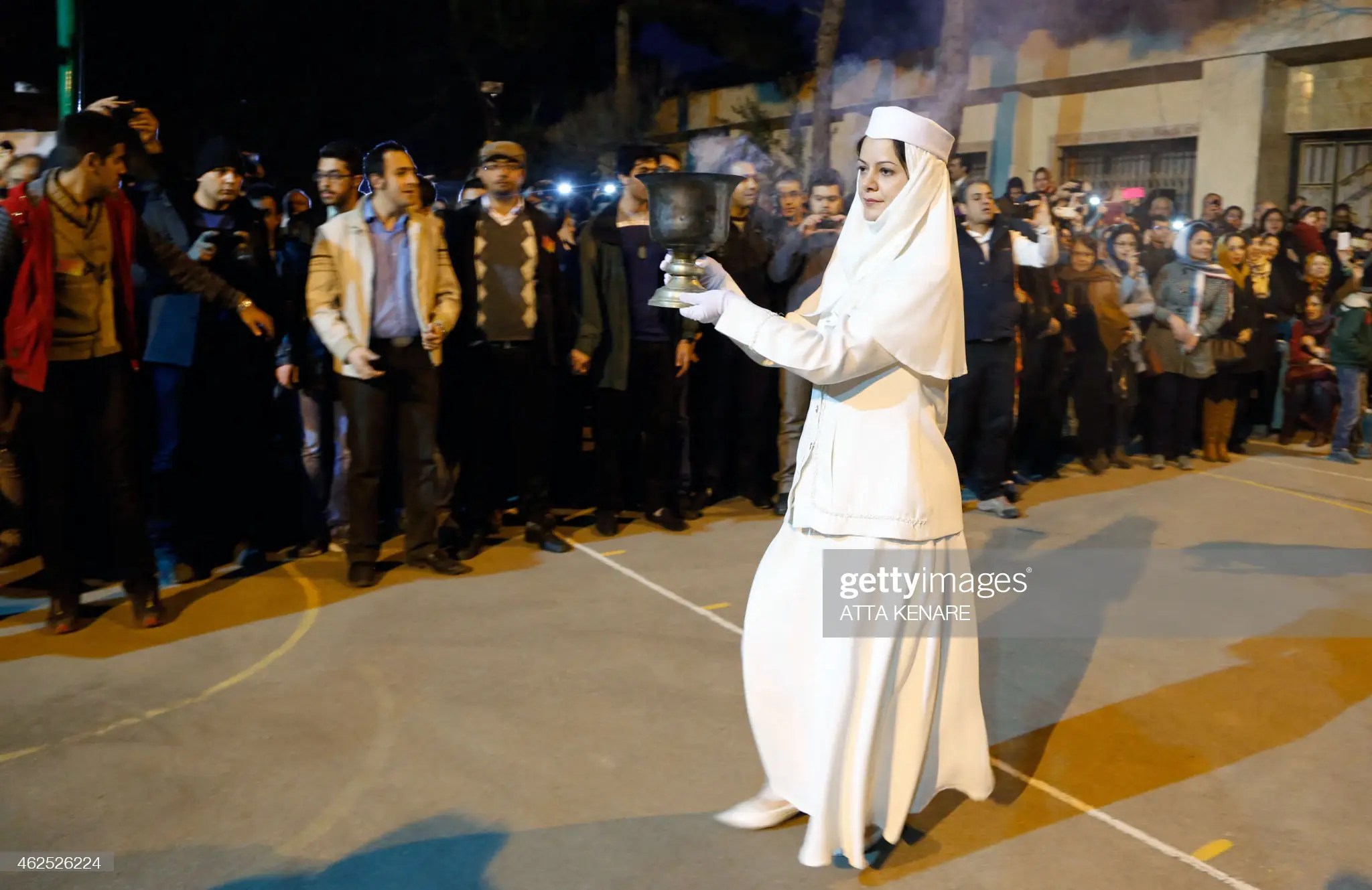
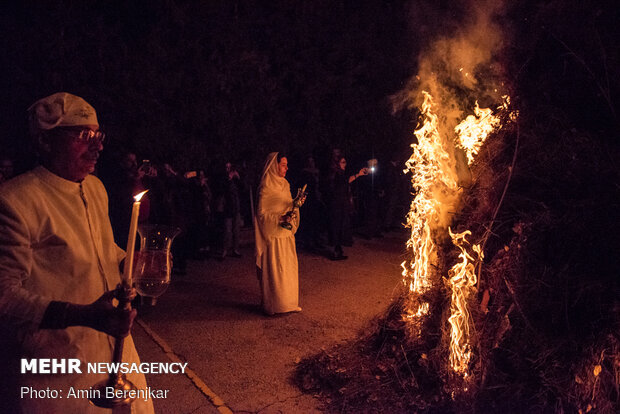
(1) A Zoroastrian priestess directs worship towards God (𐬀𐬵𐬎𐬭𐬋 𐬨𐬀𐬰𐬛𐬃 Ahurō Mazdā̊, lit. “Lord of Wisdom/Intelligence”) before the soft glow of an eternal fire during the ‘Sadeh’ festival, Tehran, Iran (c. 2020) (2) A priestess carries a vase of coals in order to set firewood ablaze for the expansion of an eternal fire for ‘Sadeh’ (3) Sadeh (lit. “one hundred”) is celebrated one hundred days and nights past the end of the summer. A massive bonfire is ignited using embers from a sacred temple fire to symbolize the ultimate triumph of light and positivity over darkness, cold and frost.

Since the establishment of the temple cult of fire likely in the late Achaemenid period (detailed below), Zoroastrians have frequently been known among followers of other faiths as “fire-worshippers”. However, Zoroastrians themselves have consistently rejected this title, asserting that fire instead serves as an icon, directing their thoughts towards God (Ahura Mazda), positivity and truth (𐬀𐬴𐬀 aṣ̌a) as described by their prophet. Indeed, perhaps the warm, animated and seemingly sentient nature of fire inspires veneration with greater immediacy than the static icons found in other traditions. Fire serves as a tangible embodiment of both the illuminated mind and the divine presence, symbolizing the ‘cosmic fire’ or life force in all animate things, plants, animals and men. Zoroastrian ‘eternal fires’—burning uninterruptedly since creation and consecration, sometimes for centuries or even millennia—are invested with an immense aura of sanctity among the faithful. It can be further stated that Zoroastrian liturgy places as much importance in sustaining the purity and integrity of water and the animal and plant kingdoms as it does fire. Special reverence for nature has undeniably bestowed a distinctive quality upon Zoroastrian worship, enriching its spiritual tapestry.

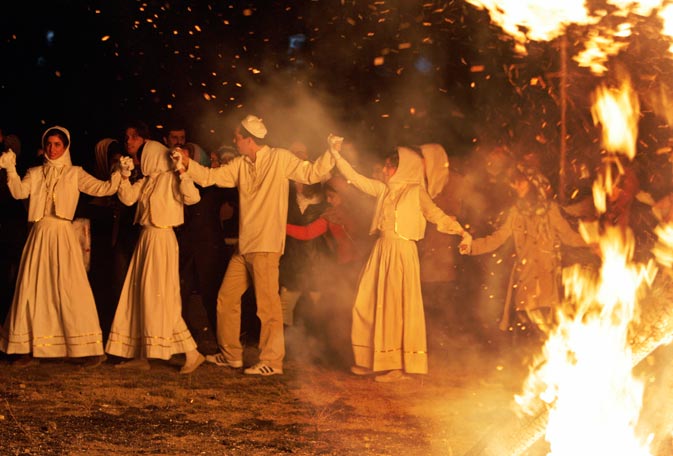
Zoroastrians in Shirāz observe the ancient festival of ‘Sadeh’. In ancient times, the fire was kept burning all night. The following morning, women would take a small portion of the blessed fire back into their homes to make new household fires. At the end of the year (Nowruz), remnants of the fire were returned to the eternal temple fire (c. 2020)

During the Sasanian period (226-651 A.D.), apparently three preeminent fires known as Ātaš Bahrāms (lit. “Flames of Victory”), existing since creation presumably in late Achaemenid or Parthian times, were assigned the highest grade of sanctity in the Zoroastrian religion. According to tradition, an Ātaš Bahrām is consecrated by purified embers from sixteen different sources, including the fire created by a lightning bolt. They therefore symbolized the utmost sanctity and purity, eclipsing other ritual fires (NP آتش ātaš > Avestan 𐬁𐬙𐬀𐬭𐬱 ātarš; regular MP 𐭭𐭥𐭥𐭠 ādur, whence NPآذر āar) in the realm, and each was in turn associated with a specific region and class of individuals. Each quarter of Iran thus had its own great fire, namely: Ādur Gušnasp in Media dedicated to warriors and nobility, Ādur Farnbāg in Pārs dedicated to the priest class, Ādur Burzēn-Mihr in Parthia dedicated to farmers, and a fourth much venerated great fire was that of Karkūy in Sistān.

After the 5th century A.D., it became customary for each Sasanian king to make a pilgrimage on foot to Ādur Gušnasp temple after his coronation at Seleucia-Ctesiphon. There, the kings lavished the temple with royal gifts, sought counsel from the priests, and received blessings from Ohrmazd through Ādur Gušnasp‘s gentle radiance. Lamentably, following the Arab-Islamic conquest of Persia, Muslims gradually extinguished sacred fires and either demolished fire temples or converted them into mosques (such as the Magok-i ʿAṭṭār Mosque in Bukhara). However, it is likely that an Ātaš Bahrām established in the Yazdi plain around the 13th century A.D. and which is now housed in the Zoroastrian Fire Temple of Yazd represents the union of two preeminent fires from Sasanian times, namely Ādur-Anāhīd from Staḵr and Ādur Farnbāg, whose embers were secretly removed from their original sanctuaries and safeguarded by priests in hiding for centuries.

A Zoroastrian priestess leads the rites to the Ābāngān festival at the Zoroastrian Fire Temple of Yazd, Iran. In this ritual called āb-zōr (from Avestan 𐬀𐬞 𐬰𐬀𐬊𐬚𐬭𐬀 ap-zaoθra, lit. “offering to the waters”), which is also part of the daily liturgy, a mixture called parahōm (from Avestan *para-haoma; lit. “before haoma [ceremony]”) consisting of cow’s milk, consecrated water, haoma (ephedra), and crushed leaves from a pomegranate tree is offered to a flowing body of water whilst reciting the Ābān-yašt. This is a symbolic gesture offering strength and gratitude to the waters for nourishing the plant and animal kingdoms–the fruits of which are to be found in the ingredients of the parahōm mixture. Āb-zōr, much like ātaš-zōr, is viewed as part of humanity’s responsibility in maintaining the cosmic integrity of the four natural elements created by Ahura Mazda on this planet–fire, water, earth (the plant kingdom), and air. Thus every fire temple must be built beside water, whose guardian divinity (yazāta) is Arədvī Sūrā Anāhitā.

History of the Role of Fire in Zoroastrianism
The religion of the prophet Zoroaster (as attested in the Gāthās ​​𐬔𐬁𐬚𐬁 lit. “hymns”; the oldest portion of the Avesta attributed to Zoroaster himself) was the world’s first monotheistic religion, although there remains no historical evidence pointing to the Zoroastrians’ awareness of this point. Even a hypothetical sect of the religion, Zurvanism, declared the existence of a single transcendental, neutral and passionless deity of infinite time and space that made no distinction between good and evil (Zurvān; from Avestan 𐬰𐬭𐬬𐬀𐬢 zruvan-, lit. ”time”). Zoroastrianism is thus characterized by a dualistic cosmology of good and evil within the framework of a monotheistic ontology and an eschatology which predicts the ultimate conquest of evil by good. Throughout history, the distinctive characteristics of Zoroastrianism, including its monotheistic nature, messianism, emphasis on free will and the notion of posthumous judgment, the concepts of heaven, hell, angels, and demons, among others, have deeply influenced Christianity, Judaism, Gnosticism, Northern Buddhism, and even Greek philosophy.

The veneration of fire within the Zoroastrian tradition can be traced to the Indo-Iranian cult of the hearth fire in Central Asia, in all probability having its origins in Indo-European times in the Pontic-Caspian Steppe (compare the analogous sacred eternal flame of Vesta in Rome, tended to by the Vestal virgins). The hearth fire, serving as a source of warmth, illumination, and solace, held profound significance for the ancient Iranians, who perceived it as a visible embodiment of the divine entity known as Ātar (Avestan 𐬁𐬙𐬀𐬭; of unknown origin). Celestial fires, present in the forms of the sun and moon, were also venerated by facing them and directing worship towards them in open-air, especially if a terrestrial fire was out of reach. This perception positioned Ātar as both the devout servant and the commanding master of humanity, reflecting an enduring reciprocal relationship. As an expression of gratitude for Ātar’s assistance, regular offerings of incense or fragrant woods and sacrificial animal fat (causing the flames to leap up) were presented through a ritual referred to as ātaš-zōhr (from Avestan 𐬁𐬙𐬀𐬭𐬱 𐬰𐬀𐬊𐬚𐬭𐬀 *ātarš-zaoθra “offering to fire”). Moreover, natural elements such as fire and water assumed a pivotal role in various religious ceremonies. The ancient Yasna Haptaŋhāiti ritual (Yasna 35–41) is believed to trace its lineage to a pre-Zoroastrian liturgical practice involving priestly acts of devotion directed towards fire and water.

The Aṣ̌əm vohū (Avestan: 𐬀𐬴𐬆𐬨 𐬬𐬊𐬵𐬏) manthra, among the most important prayers found in the Avesta, recited by High Priest (dastūr) Mehrabān Firuzgari. The lyrics translated from Old Avestan: aṣ̌əm vohū vahištəm astī / uštā astī uštā ahmāi / hyat̰ aṣ̌āi vahištāi aṣ̌əm “Righteousness is the best good and it is happiness. Happiness be to him who is righteous for the sake of righteousness.” Zoroastrians view goodness for the sake of goodness and as a result of free thought and free will, rather than goodness driven by God’s surveillance and promises of reward or punishment, to be a central tenet of their worldview and code of conduct.

Zoroaster further elevated this Indo-European cultural inheritance by associating fire to the creation of Aṣ̌a Vahišta (𐬀𐬴𐬀 𐬬𐬀𐬵𐬌𐬱𐬙𐬀 “Best Truth”; NP: ارديبهشت Ordibehešt > MP 𐭠𐭥𐭲𐭥𐭧𐭱𐭲𐭩‎ Ardwahišt) and recognizing it as the instrument through which God’s judgment would be executed on the Last Day. According to his teachings, a cataclysmic event, symbolized by a fiery flood of molten metal, would engulf the earth, subjecting humanity to a final judgment (referred to as Frašō-kərəti 𐬟𐬭𐬀𐬱𐬋⸱𐬐𐬆𐬭𐬆𐬙𐬌; MP:  𐭯𐭫𐭱𐭠𐭪𐭥𐭲 Frašagird ) before evil is destroyed once and for all, and the universe will be in perfect unity with Ahura Mazda. For Zoroaster, the cult of fire thus held profound moral and spiritual significance. As expressed in Yasna 43.9, he proclaimed, “I shall diligently contemplate truth (aṣ̌a) during the offering made with reverence to fire,” and he instructed his followers to always pray in high places and in the presence of fire—whether earthly fire or the celestial bodies of the sun and moon (as indicated in Mēnōg-ī xrad, chapter 53.3-5). At this early stage, it is thought that the cult of fire coexisted with other cults, particularly that of water (representing the yazāta Arədvī Sūrā Anāhitā).

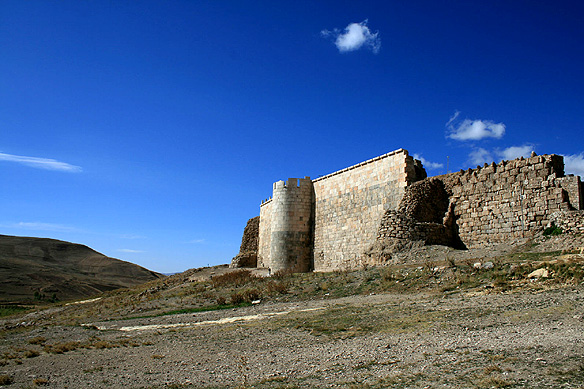
A fortified wall forming an oval with semi-cylindrical bastions (38 total) positioned at regular intervals surrounds the entire site. This wall was constructed during the Sasanian period, Ādur Gušnasp Temple, Shīz, Iran
A semi-cylindrical bastion and part of the fortified wall from the Sasanian-era has been restored, Ādur Gušnasp Temple, Shīz, Iran

The cult of terrestrial fire comprised both hearth fires and ritual fires, each serving distinct purposes. In the traditional setting, individuals would establish their own hearth fire upon founding a household, ensuring its continuous burning throughout their lifetime. This domestic fire, symbolizing perpetual warmth and vitality, held great significance for Iranian families. Notably, the Greeks also revered the hearth fire, and while Herodotus acknowledged the Persians’ deep reverence for it, he did not singularly label them as “fire-worshippers” and he made no mention of temples among them. However, in all probability during the later Achaemenid period, a Zoroastrian temple cult dedicated to fire emerged. This development, possibly instigated by the orthodox faction, served as a response to the introduction of temple cults with statues of Anāhīta.

The temple cult of fire, an extension of the domestic fire cult, involved a sacred fire enthroned on an altar-like stand (ātašdān; these were traditionally hewn of stone until the 19th century, when the Parsi community took to putting their sacred fires in big metal vases made of brass or German silver, which they then introduced to their coreligionists in Iran). It retained the traditional wood fire and continued to receive prescribed offerings five times a day, meticulously administered by a priest who safeguarded its purity. Details about the classification and constitution of sacred fires during the Achaemenid period are scant. Nevertheless, it is plausible that the temple cult was instituted with utmost grandeur and dignity, aiming to rival the majestic image-cult of Anāhīta. Consequently, the most revered type of sacred fire (Ātaš Bahrām) likely traces its origins to the earliest periods. According to a post-Sasanian tradition, this fire is created by combining purified embers from numerous fires, including lightning fire, in an elaborate consecration ritual. Once consecrated, the sacred fire is ceremoniously carried in procession to its sanctuary, a triumphant act known as pad wahrāmīh “towards victory”. Accompanying priests brandish swords and maces, and upon completion of the ceremony, some of these weapons are hung on the sanctuary walls, symbolizing the fiery entity’s warrior nature and its unwavering battle against all forces opposed to truth (aṣ̌a).

A hirbod or mugh (Old Persian 𐎶𐎦𐏁 maguš —> Ancient Greek μάγος magos “Zoroastrian priest; sorcerer, magician”, whence English “magi”, “magic”) tends to an Ātaš Bahrām housed in the Zoroastrian Temple of Yazd, Iran. This highest-grade fire was consecrated in the 13th century A.D. through the union of two preeminent fires from Sasanian times, namely Ādur-Anāhīd and Ādur-Farnbāg. Both great fires were originally installed in Pārs and were safeguarded by Zoroastrians in hiding following the Islamic conquest of Sasanian Persia

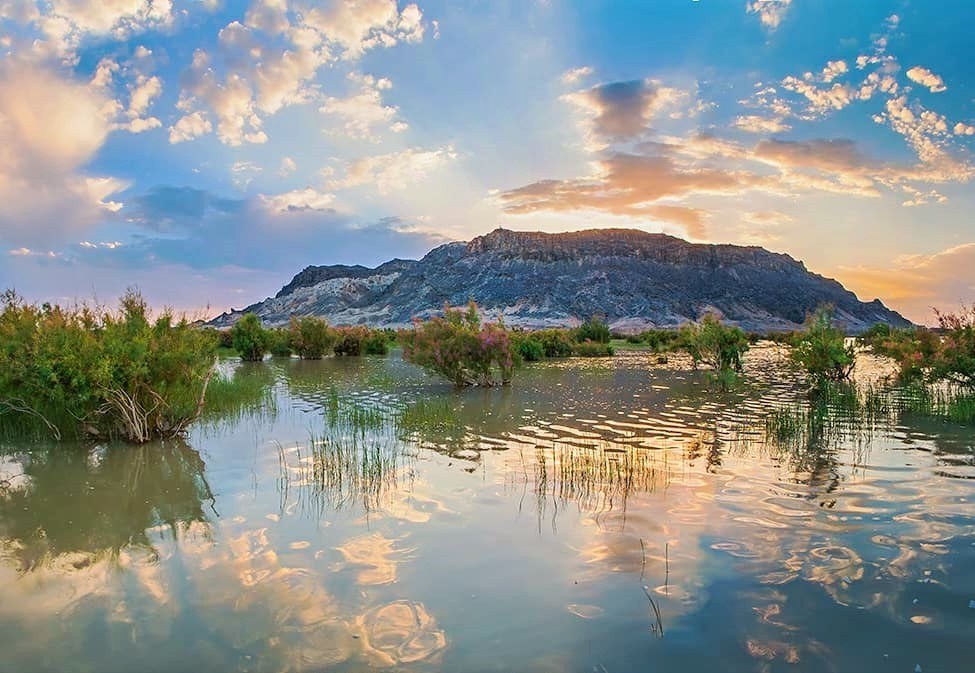
The temple site offers a view of what was called Zendān-e Solaymān since Mongol times; it is a cone-shaped hollow mountain built up of limestone during millions of years by a hot spring underneath. The mountain is 97 to 107 meters tall while its crater is 65 meters wide and around 80 meters deep. The crater was at one time full of water, fed by floor springs, but it dried centuries ago. Shīz, Iran

Ādur Gušnasp Fire Temple
The historical knowledge of Ādur Gušnasp surpasses that of the other two prominent fires, namely Ādur Farnbāg and Ādur Burzēn-Mihr, due to two key factors. Firstly, its temple in Azerbaijan was located near the western border of Iran, attracting the attention of numerous foreign visitors. Secondly, the Sasanian kings showed favor towards it starting from the early 5th century. As a result, it received frequent mentions in the later part of the royal chronicle, known as the Xwadāy-nāmag, and in the Šāh-nāma, where it was also referred to as Āḏar-Ābādagān (>”Azerbaijan”). Although the exact original location of Ādur Gušnasp remains uncertain, it appears that it was relocated to a remarkably beautiful site in Azerbaijan, known as Taḵt-e Solaymān during Islamic times, but likely called Mount Asnāvand by the Median magi. This site features a hill of mineral deposits formed by a spring within it, creating a picturesque lake atop the hill that is elevated above the surrounding landscape. A new temple was constructed for Ādur Gušnasp at this location, and its association with the Sasanian royalty was emphasized to the extent that it became customary for each king, following their coronation, to embark on a pilgrimage to the temple on foot (although accounts in the Šāh-nāma suggest that the monarch only walked from the base of the hill as a gesture of deep reverence). The shrine received generous offerings from the kings, and a legend developed claiming that the first monarch to enrich it was Kay Ḵosrow himself, who sought divine assistance against Afrāsīāb while praying at the temple alongside his grandfather Kāvūs.

(1) A recently restored fire temple (ātaškada) known as Qal’a-i Mugh, with a symbolic fire established on the fire-altar, near Istaravshan in the Sughd region, Tajikistan (2019). The structure features characteristic Zoroastrian architectural vocabulary and exterior decorations from Sasanian times, including a domed sanctuary (gombad) with intricate brickwork surrounded by a courtyard (2) The baked brick fire-altar (ātašdān) has a traditional three-step pedestal and long shaft decorated with recessed panels. Ātašdāns holding preeminent fires were historically hewn of solid blocks of stone, with lower-grade fires frequently held in mud-brick altars. However, they were replaced by metal vases per a Parsi trend in the 19th century

There are several references in the epic mentioning visits by Bahrām V (421-39 A.D.) to the fire temple. It is said that he spent the Nowrūz and Sadeh festivals there and, on another occasion, entrusted an Indian princess, his bride, to the high priest of the temple for conversion to the Zoroastrian faith. According to Ṯaʿālebī, upon Bahrām’s return from his campaign against the Turks, he offered the ḵāqān’s crown to the shrine and dedicated his wife and her slaves as servitors. Ḵosrow Anōšīravān is also said to have visited Ādur Gušnasp before embarking on a military campaign. Later, he bestowed a substantial amount of treasure from tribute received from Byzantium on the fire temple. Ḵosrow Parvēz prayed at Ādur Gušnasp for victory in battle and subsequently offered a generous portion of the spoils to the sanctuary. It was not only the kings who made petitions and offerings at the temple, as evidenced by a prescription in the Bundahišn, which states that those praying for the restoration of eyesight should vow to send a golden eye to Ādur Gušnasp, or those seeking an intelligent and wise child should send a gift to the temple.

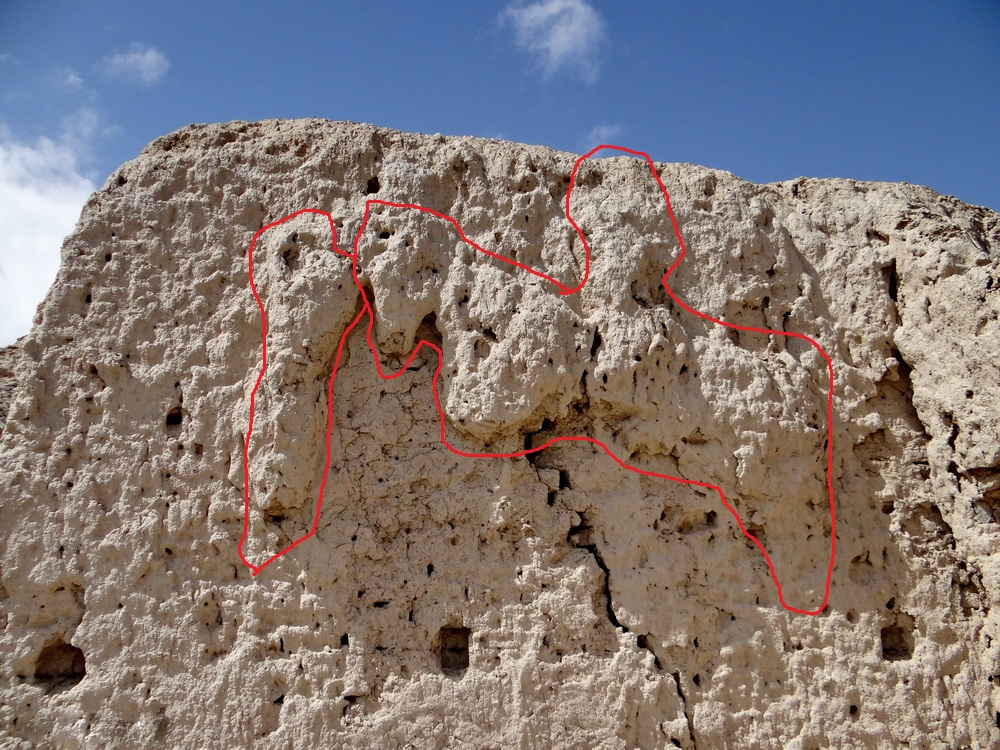
(1) Ruins of the main domed sanctuary that housed Ādur Gušnasp, which was apparently adorned with a stucco frieze in high relief. Beneath the dome was found the three-stepped pedestal of a great fire-altar, as well as the base of its rounded, pillar-like shaft
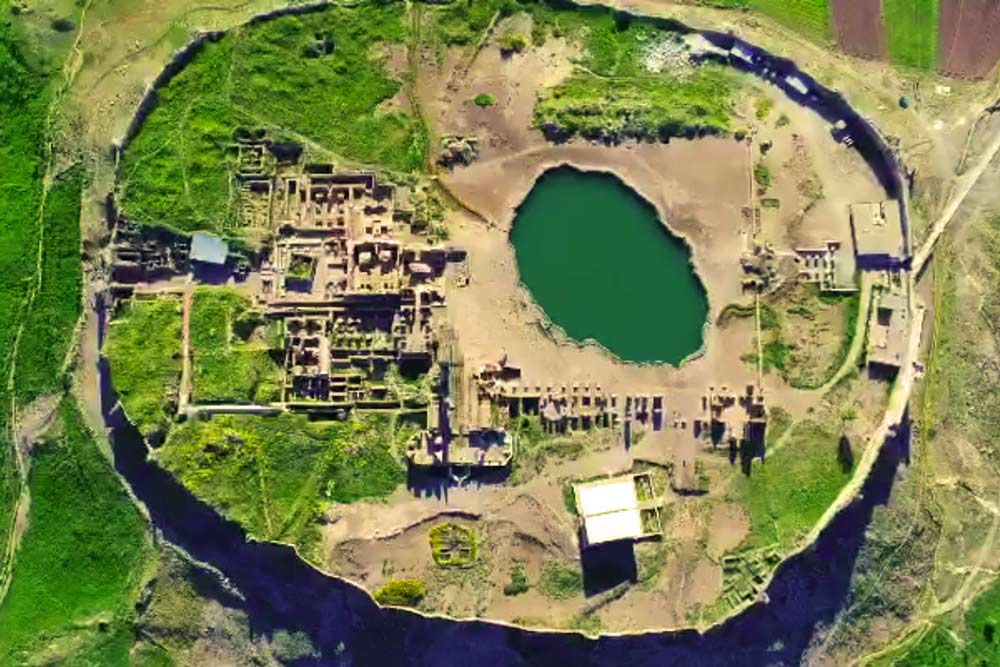
An overhead view of the Taḵt-e Solaymān complex, including the Sasanian-era Ādur Gušnasp temple, various other religious buildings including a sanctuary devoted to Anāhīta, and the royal quarters, as well as Mongol-era buildings Shīz, Iran

The grandeur of the ruins of Ādur Gušnasp aligns with the accounts found in literary records and exceeds that of any surviving Zoroastrian place of worship. To safeguard the sanctuary, the hilltop was enclosed by an immensely thick mud-brick wall. Later, during the Sasanian period, a stone wall measuring 50 feet in height and 10 feet in thickness was erected along the rim of the hill, featuring thirty-eight towers at regular intervals. The temple precinct itself was surrounded on three sides by an additional wall, while the south side remained open to the lake. Extensive excavations have unveiled the layout of this grand complex. Approaching from the north, one would enter a spacious courtyard suitable for accommodating numerous pilgrims. From there, a processional path led towards the lake, featuring a square, domed room that faced north and south. This lavishly adorned room possibly served as a space for prayer and ceremonial ablutions, culminating in a large open portico that offered a lovely view of the waters. A covered pathway extended along the front of the building, leading to a remarkable sequence of pillared halls and antechambers that stretched from south to north on the western side of the processional way. It is believed that the sanctuary of Ādur Gušnasp itself occupied the northernmost end of these halls. Initially, the sanctuary took the form of a flat-roofed, pillared structure made of mud-brick, but it was later replaced by a stone construction with a domed roof. The walls of this sanctuary were adorned with a prominent stucco frieze in high relief, and judging by the elaborate Sasanian-era decorations found at the fire temple at Kūh-e Xwāja in Sistān, may have once featured an intricate scheme of paintings and bas reliefs. Beneath the dome, archaeologists discovered a three-stepped pedestal for a grand fire-altar (ātašdān) made of stone and the base of its cylindrical shaft. Fragments of smaller altars and ritual vessels have been unearthed within and near the pillared halls that led to the sanctuary, indicating the ongoing devotional activities, including offerings, prayers, and religious ceremonies.

A passageway at the ruins of the Ādur Gušnasp complex. The walls were covered in dressed stone during Sasanian times. Shīz, Iran

The vast temple complex included numerous additional rooms, such as smaller shrines and the temple treasury, which likely held valuable and priceless offerings. Objects that can be precisely dated have not been found in the ruins prior to the reign of Pērōz (A.D. 457-84). However, a room near the main entrance yielded a collection of over 200 clay sealings, including eighteen inscribed with the title “high-priest of the house of the fire of Gušnasp” (mowbed ī xānag ī Ādur ī Gušnasp). In A.D. 623, during his campaigns against Ḵosrow Parvēz, the Byzantine emperor Heraclius sacked the temple of Ādur Gušnasp, destroying its altars, setting fire to the entire structure, and mercilessly killing all living beings present. Nevertheless, the great fire itself was evidently rescued and later reinstated. The destruction of Ādur Gušnasp‘s shrine may be alluded to in a pseudo-prophecy found in the Persian Zand ī Vahman Yašt, which predicts the removal of Ādur Gušnasp from its original location due to the devastation caused by the invading armies, implying its relocation to Padašxwārgar. After being reinstated in its temple on the hill, Ādur Gušnasp continued to burn for many generations following the arrival of Islam. However, the temple faced increasing persecution, and the great fire was likely extinguished by the end of the 10th century or, at the latest, the early 11th century A.D. The ruins of the temple were subsequently utilized as a quarry for constructing a palace on the hilltop for a local Mongol ruler.

The Iranian Presence in Classical Arabic and Medieval Islamic Learning

Written by Afsheen Sharifzadeh, a graduate of Tufts University focusing on Iran and the Caucasus. This article surveys the Iranian presence in pre-Islamic Arabia and the medieval Islamic world and addresses Classical Arabic loans in Modern Persian. It features an exclusive English-language appendix of 200 Middle Iranian loans into Classical Arabic and their etymologies, compiled by the author.

house_of_wisdom_big
A library in present-day Baghdad with the Persian four-ayvān courtyard scheme, named after Bayt al-ikma; courtyard view, Abbasid-era portion.

On the Prevalence of Classical Arabic Loanwords in Modern Persian

Whereas pre-Islamic Iranian languages are virtually free of Semitic vocabulary, Aramaic, Syriac, Hebrew, and Arabic have borrowed a remarkable number lexical items from Iranian (as did late Babylonian, Achaemenid Elamite, Old Armenian, and Georgian). Historical linguists have afforded the majority of these languages comprehensive pedigrees of Iranian borrowings, but regrettably few authors have paid attention to the Iranian loans in the Arabic language and literature, and in doing so, have neglected a rich narrative of cultural contact whereby Persian and Byzantine antecedents formed the creative backbone of early Islamic material and visual culture.

1024px-Sassanian_Empire_621_A.D
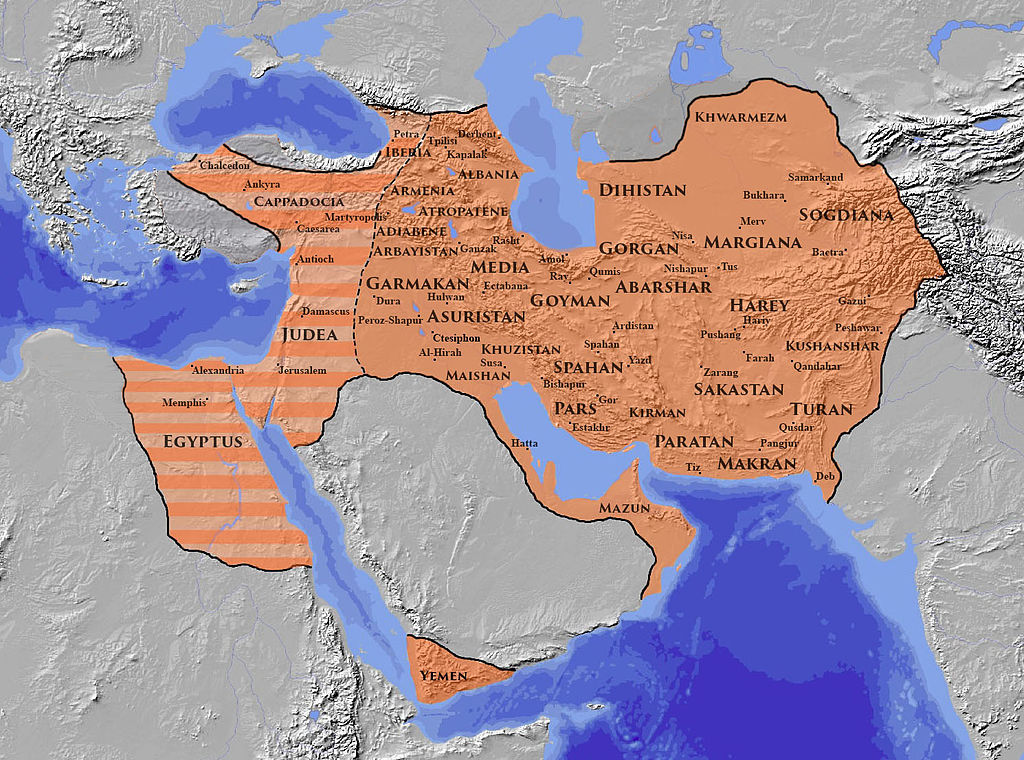
The Sassanid Empire (224 A.D.-651 A.D.) was the last Zoroastrian Iranian polity before the arrival of Islam. Sassanian and Byzantine antecedents formed the creative backbone of early Islamic material and visual culture. 

It is no mystery that following the conquest and Islamization of Sassanid Persia throughout the 7th and 8th centuries A.D., Iranian languages were shot through, even to the most far-flung dialects, with Arabic loanwords. Yet Arabic never attained currency as a lingua franca in the Iranian world. Instead, knowledge of the Classical Arabic language throughout the Islamic period was limited to educated city-dwelling Muslim circles, and it was from this stratum of society that Classical Arabic lexica were gradually and purposefully incorporated—often undergoing abstract semantic shifts—into “erudite speech”, which became the basis of New Persian literature, scholarship, and poetry. These Iranian religious figures, literati, linguists, poets, historians, mathematicians, chemists, alchemists, astronomers, physicians, geographers, musicians, and philosophers became preeminent contributors to the canonization of the Arabic language and its transformation from a regional nomadic tongue into a universal vehicle of both doctrinal and secular learning. Acculturation was taking place along the same vector– whereby medieval Islamic architecture, horticulture, cuisine, attire, court culture, political offices, etc. were systematically appropriated from earlier Persian and Byzantine models.

USSR 198355294463
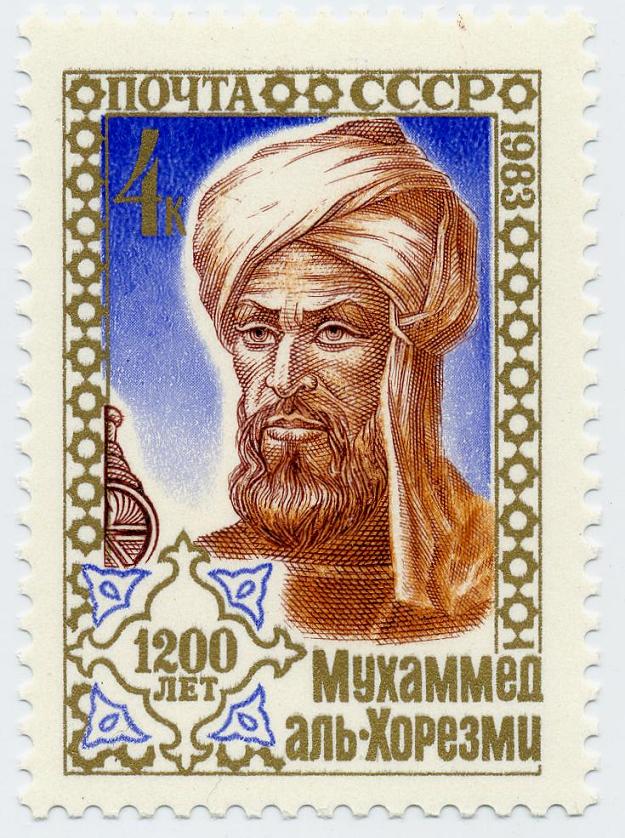
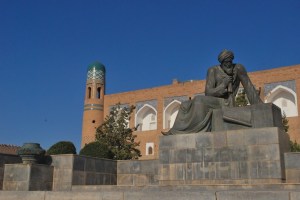
Al-Khwārizmi was an Iranian mathematician, astronomer, and geographer during the Abbasid Caliphate. The English word “algorithm” is his namesake, and the word “algebra” derives from al-jabr, an operation he used to solve quadratic equations. Here he is pictured on a postal stamp issued by the USSR in 1983 (left) and immortalized in statue form at Khiva, Uzbekistan (right).

Knowledge of Classical Arabic was essential and indispensable for religious worship, and the correct reading of the Qur’an was impossible without it. But in the first century of Islamic ascendancy, the Arabs did not produce anything of literary value. If any poetry was composed, it was on the old pagan models and celebrated the poets’ amatory adventures, in stereotyped fashion, rather than the victories of Islam. As Reinhart Dozy notes:

Mais la conversion la plus importante de toute fut celles des Perses. Ce sont eux, et non les Arabes qui ont donné de la fermeté et de la force à l’Islamisme, et en même temps, c’est de leur sein que sont sorties les sectes les plus remarquables. (Dozy, L’Islamisme, p. 156)

It follows that the first grammar of the Arabic language, al-Kitāb (الكتاب), was written by the Persian author Sībūyeh (سيبويه; Arabic: Sībawayh) in the 8th century AD. Many of his Iranian contemporaries with masterful command of Arabic, including Ibn al-Muqaffa’, translated thousands of Indian, Greek, Syriac, and Persian literary works from Middle Persian into Classical Arabic. The epicenter of these intellectual activities was Bayt al-Ḥikma (بيت الحكمة; literally “House of Wisdom”) in Baghdad, which was the Abbasid Caliph al-Ma’mun’s appropriation of the Sassanid Persian Academy of Gundishāpur, the world’s first center of both religious and secular higher-learning. The Caliph had the contents of Gundishāpur and its world-renowned hospital transported en masse to Bayt al-Ḥikma, which was staffed by graduates of the Academy of Gundishāpur and wherein the methods of the older Persian academy were to be emulated. The Bukhtishu-Gundishāpuri family were Nestorian physicians from this university in Persia who served at the Abbasid court through the 7th, 8th, and 9th centuries, spanning six generations. The Caliph al-Mansur’s new capital and crown jewel, Baghdad (“God-Given” in Middle Persian), was no exception to this trend; the city had been modeled on the quintessential Sassanid round city plan (such as at Firuzābād) by a Persian architect and planner, Mashallah ibn Athari, and the astrologically-auspicious location for the imperial city had been chosen by none other than Nawbakht, a Zoroastrian priest. The Abbasid and Fatimid bourgeoisie were patrons of Persian garments, etiquette, court culture, and cuisine, and relied heavily on Persian viziers such as the Barmakid family (برمكيان) to oversee crucial matters pertaining to finance and state administration. As such, they adopted the Sassanid postal system and bureaucratic system (ديوان diwān).

c7 c2alhambra
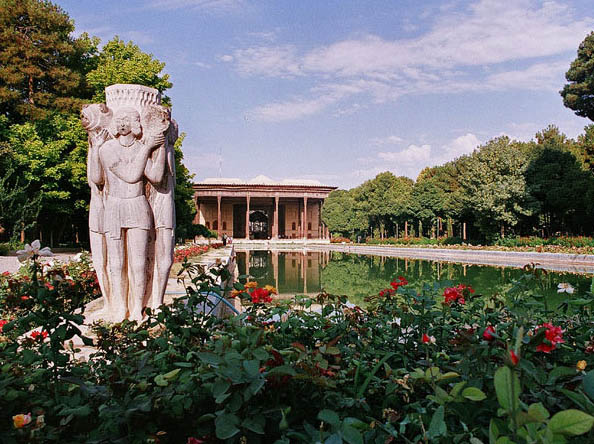
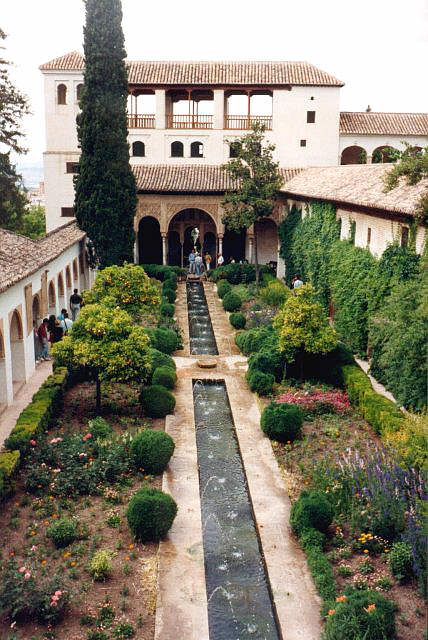
Persian gardens (top) have influenced the design of gardens from Andalusia to India and beyond. The gardens of the Alhambra show the influence of Persian Garden philosophy and style in a Moorish Palace scale, from the era of Al-Andalus in Spain (bottom). 

Persian influence increased at the Court of the Caliphs, and reached its zenith under al-Ḥādi, Harun al-Rashid, and al-Ma’mun. Most of the ministers of the last were Persians or of Iranian extraction. Afshīn Kheydār b. Kāvūs, the all-powerful favorite of the Caliph al-Mu’tasim and a scion of the Buddhist princes of Osrushana in modern-day Uzbekistan, was appointed Abbasid Supreme General and Governor of Sindh, Jebāl, Libya, Armenia and Azerbaijan. In Baghdad, Persian fashions continued to enjoy an increasing ascendancy, and the old Persian festivals of Nowruz and Mihrigān (origin of the modern Arabic مهرجان mahrajān “festival, celebration”) were celebrated. Persian raiment was the official court dress, and the tall black conical Persian hats (qalansuwa) were already prescribed as official by the second Abbasid caliph in 770 A.D. At the court, the customs of Sassanians were imitated and garments decorated with golden inscription were introduced which it was the exclusive privilege of the ruler to bestow.

The Islamic Golden Age reached its peak during the 10th and 11th centuries, during which Persia was the main theater of academic activity, eclipsing al-Andalus (Muslim Spain) in volume and significance. Persian scholars and polymaths in various fields produced their masterpieces in Arabic—an Arabic whose lexicon they had made applicable to their respective fields in pioneer ways and for which they had popularized new phraseology, word forms, and grammatical structures through the dissemination of their works. Among the most prominent of these individuals were al-Khwārizmi, Abu Sinā (Avicenna), al-Tusi, al-Biruni, Omar Khayyām, al-Haitham, al-Shirāzi, and Nāer Khusraw. Ironically, one can imagine that a rather pure, literary Classical Arabic vernacular was probably in use among Iranian scholarly circles in Khorāsān and Khwārezm (a historic Iranian region roughly corresponding to modern day Uzbekistan and Turkmenistan) during the Abbasid period, while the vernaculars spoken in major Arab-inhabited urban centers around the realm such as Baghdad, Damascus, and Cordoba were of colloquial provenance and were undergoing gradual deviation from Classical pronunciation, grammar and lexicon under the influence of regional linguistic factors. These colloquial transformations are reflected in contemporary literary productions such as 13th century manuscripts of “1001 Nights” (Arabic: الف ليلة و ليلة Alf Leyla wa Leyla, based on an earlier Persian work Hazār Afsāna, literally “1000 Myths”) recovered from Syria and Egypt.

scheherazade
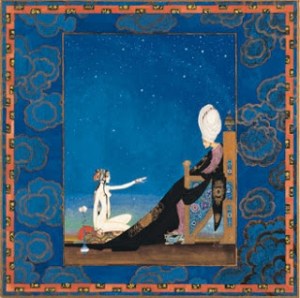
The story of “1001 Nights”, also popularized under an orientalist misnomer “Arabian Nights”, is a series of adapted stories based on a mythical Persian king Shahryār and a storyteller Shahrzādeh. The core characters and structural framework of the Arabic language version are inextricably akin to an earlier Persian work, Hazār Afsāna, with the addition of a few Arabic given names, Abbasid-era stories and motifs such as the Jinn.

This trend did not escape the observation of the 14th century Arab historiographer, Ibn Khaldun, who elaborately explains the primacy of Iranian culture and learning in the nascent Islamic world:

It is a remarkable fact that with few exceptions, most Muslim scholars…in the intellectual sciences have been non-Arabs. Thus the founders of grammar were Sibawayh and after him, al-Farisi and Az-Zajjaj. All of them were of Persian descent…they invented rules of (Arabic) grammar…great jurists were Persians… only the Persians engaged in the task of preserving knowledge and writing systematic scholarly works. Thus the truth of the statement of the Prophet becomes apparent, ‘If learning were suspended in the highest parts of heaven, the Persians would attain it…The intellectual sciences were also the preserve of the Persians, left alone by the Arabs, who did not cultivate them…as was the case with all crafts…This situation continued in the cities as long as the Persians and Persian countries, Iraq, Khorasan and Transoxiana (modern Central Asia), retained their sedentary culture. [Translated by F. Rosenthal (III, pp. 311-15, 271-4 [Arabic]; Frye, R.N. (1977). Golden Age of Persia, London: Weidenfeld & Nicolson, p.91)].

taj-mahal-1
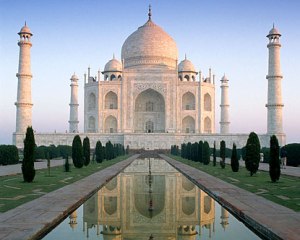
Mughal India, like the Ottoman Empire and the Timurid Empire, was a Persianate society (a society that is either based on, or strongly influenced by the Persian language, culture, literature, art, and/or identity.). Emperor Shāh Jahān (literally “King of the World” in Persian), commissioned a Persian architect from Badakshān named Ustād Ahmad Lāhauri to construct the Tāj Mahal (“Crown Place” in Persian) for his Persian wife and lover, Mumtāz Mahal (née Arjumand Banu Begum.) The Taj Mahal is one of the largest Persian Garden interpretations in the world.

It was via this initially exclusive medium of scholarly and artistic expression promulgated by Muslim Iranian intelligentsia that Middle Persian transformed into New Persian in the urban centers of Khorāsān, Khwārezm and Transoxiana throughout the early Islamic period. Many Middle Persian words were rendered archaic and thence obsolete in favor of abstract Classical Arabic loanwords–a feature that was characteristic of the speech of the Muslim Persian city-dwelling elite. A modified Arabic orthography was applied to this transforming tongue in place of the Pahlavi scripts used to record Middle Persian. This new form of the Persian language became a prestige dialect throughout the Iranian world, spreading from Central Asia throughout the Iranian plateau, and would later enjoy widespread patronage and even official currency in the royal courts of the Ottomans, the Timurids, and the Mughals in India. What are modern-day Turkey and the Indian subcontinent even became important centers of Persian literary and poetic production. In Persianate societies, Arabic words were indirectly transmitted via Persian influence into languages such as Urdu, Turkish, Uzbek, Azerbaijani, Kurdish, Turkmen, Pashto, Uyghur, as evidenced by the retention of Persian phonological modifications to Classical Arabic pronunciation in these languages. Sarti Uzbek (but not Khorezmian or Kipchak Uzbek) even lost vowel harmony—a rudimentary feature of Turkic phonology—as a result of Persian substratum and bilingualism.

But this was by no means the first golden age for the Persian language—pre-Islamic Iranian languages likewise exerted a remarkably pervasive influence on neighboring tongues under the aegis of Iranian suzerains and civilized elite in those territories. Classical Armenian contained an impressive sixty percent of its general vocabulary derived from Iranian languages, and most Aramaic languages had been heavily Persified by the time of the Islamic conquest—even serving as media of transmission for Iranian borrowings into Arabic.

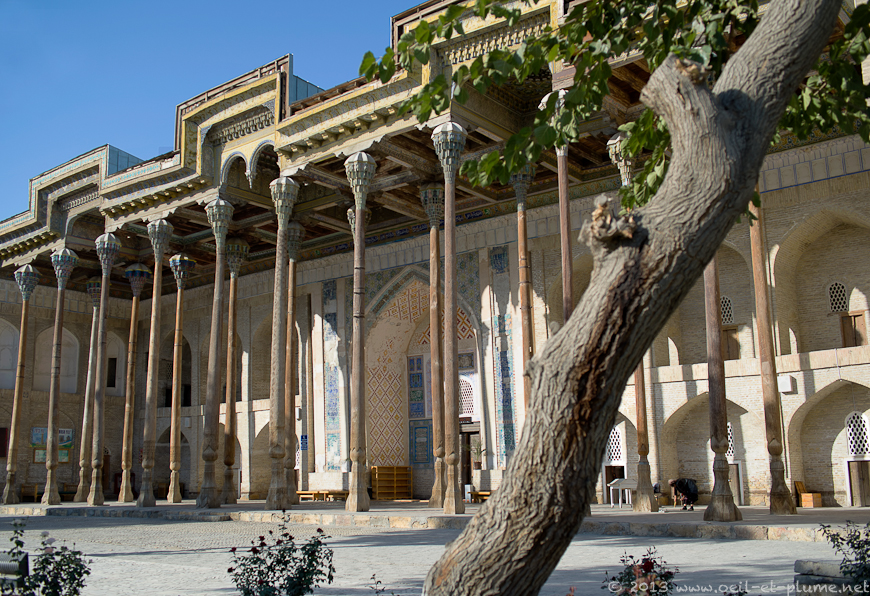
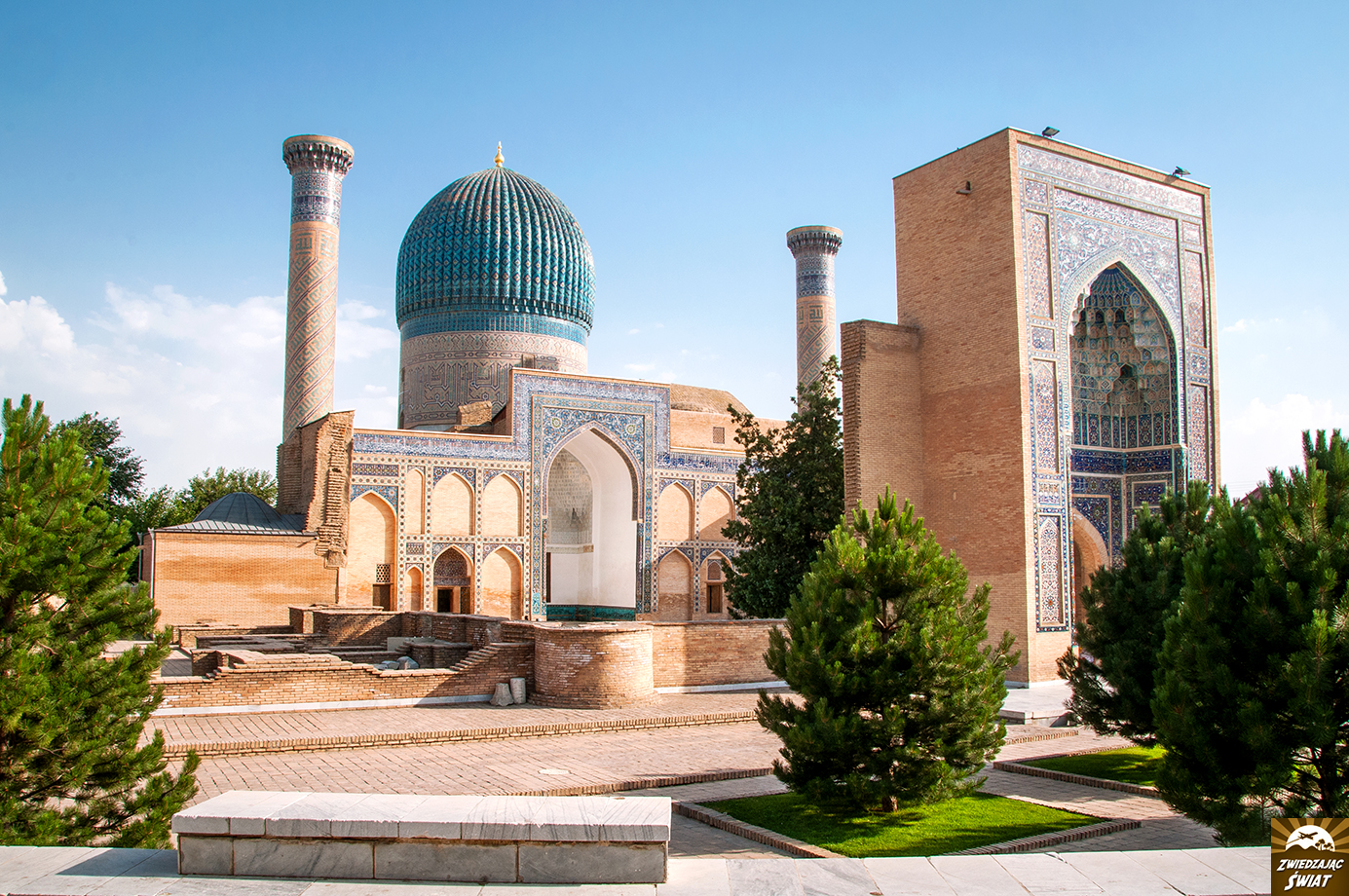
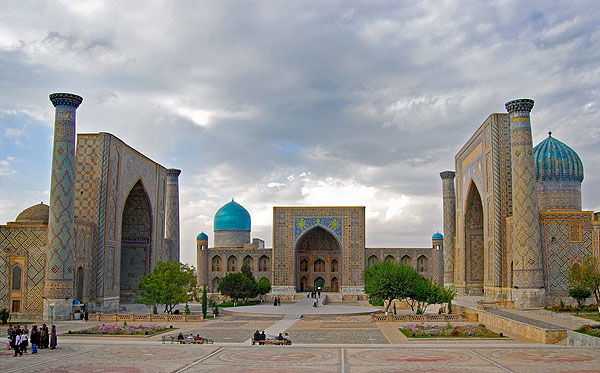
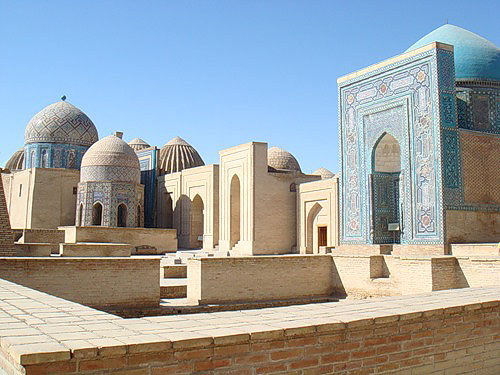
486e2d09a6dApaxT 631fc995ad Khanaka (Sufi monastery) of Nadir Divan-Beghi {1620}, Bukhara09-Bukhara-2013raw1640b registan-v-samarkandeshahi-zinda-samarkand022_Klub_puteshestviy_Pavla_Aksenova_Uzbekistan_Samarkand_Registan_Medrese_Sherdor_Foto_efesenko_-_Depositphotos-1024x623
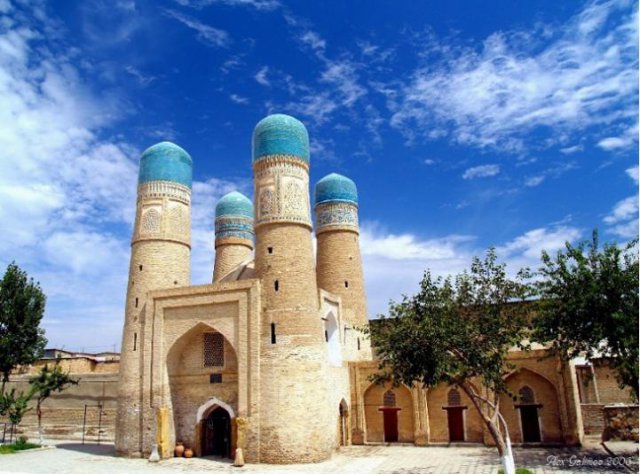
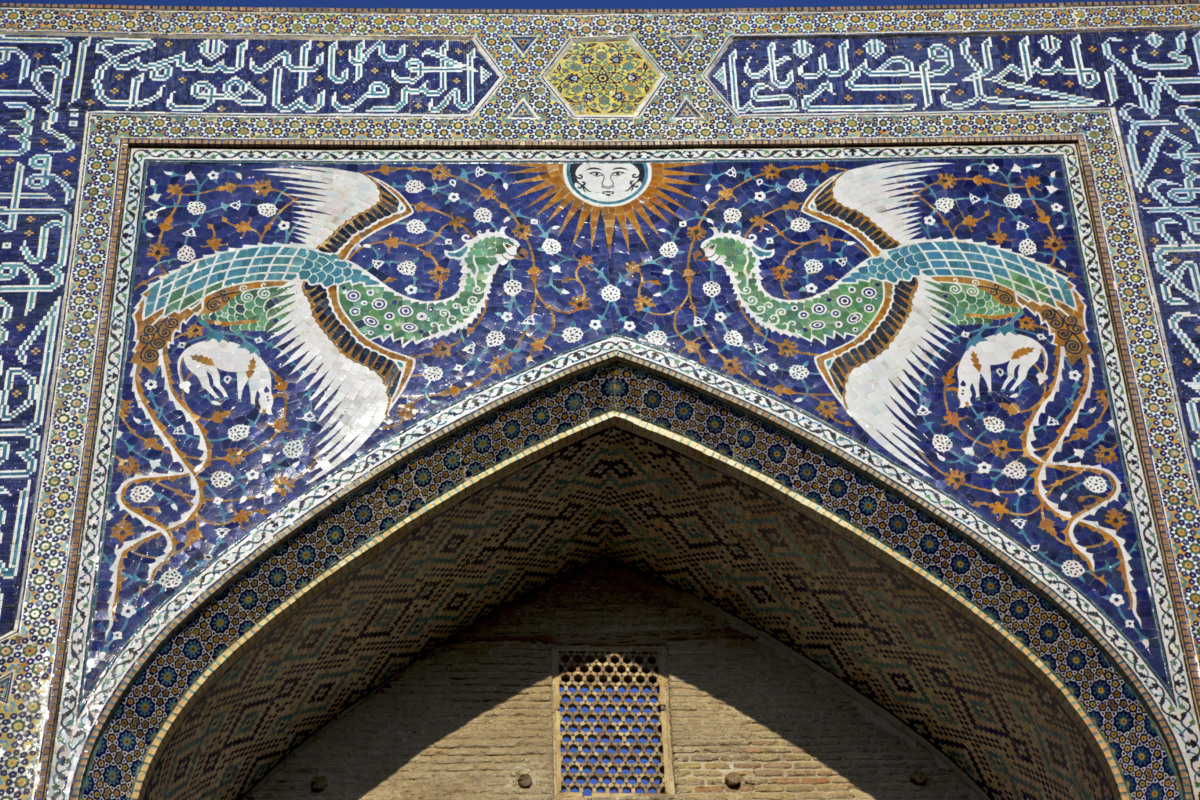
[From top, left-right: 1. Chahār Minār, Bukhara  2. Bukhara, view of old city and wall  3. Nādir Divan-Begi Khānaqāh, a Sufi monastery featuring depictions of Simurgh from Ferdowsi’s Shāhnāmeh on its pishtaq, Bukhara  4. Bālā-Hauz, Bukhara  5. Gūr-i Amīr, Tamerlane’s mausoleum, Samarqand  6. Rēgistān square, Samarqand  7. Shāh-i Zinda, Samarqand  8. Shērdār Madrasa at Rēgistān, Samarqand]
Bukhara and Samarqand are still natively Persian-speaking (Tajik) cities in modern-day Uzbekistan; the former traditionally boasted a sizable Persophone Jewish element as well that has since relocated to Israel. The structures depicted are architectural heirlooms to the region’s robust Persianate past and former economic prosperity under the Samanid, Ghaznavid, and later Timurid empires. From a philological standpoint, we can imagine that it was in urban centers like these that incoming Turcophone groups interacted with the autochthonous settled Persian-speaking populations in Transoxiana, in turn giving rise to the modern Uzbek yoke, and wherein the Uzbek language (Sart dialect; progenitor of the modern literary language) gradually lost features typical of Turkic—notably the vowels /ü/, /ö/ and vowel harmony—and adopted thousands of Persian words and phrases. (*note the Khorezmian Uzbek language is of Oghuz provenance but features a heavy admixture of Uyghur-Uzbek elements; the Kipchak Uzbek language is closely related to Kazakh. Both of these languages are vowel-harmonized and feature relatively fewer Persianisms in their lexicon and morphology) 

Thus the prevalence of Classical Arabic loanwords in New Persian is largely the fruit of a medieval scholarly tendency among Iranian intelligentsia who composed their works in Classical Arabic to then incorporate Arabic words and phrases into their speech, perhaps in an attempt to “enrich” the non-Islamic Middle Persian tongue and thereby emphasize their elevated stratum in society (city-dwelling, educated Muslim families) on the basis of their prestigious vernacular. Iranian scholars and polymaths also played a pivotal role in the standardization and diffusion of Classical Arabic, and Persians, Greeks and Syriacs served as cultural brokers in the Abbasid court. 

Persian Islamic Scholars Composed All Six of the Major Sunni Hadith Collections (al-Kutub as-Sittah

During the 9th century, all of the six canonical collections of the Sunni ḥadith, venerated by Sunni Muslims as al-Kutub as-Sittah (الكتب الستة) and second in importance only to the Quran, were composed by Persian authors. Their names and places of origin are listed below:

1. Sahih Bukhari, collected by Imam Bukhari (d. 256 AH, 870 CE), born in Bukhārā
2. Sahih Muslim, collected by Muslim b. al-Hajjaj (d. 261 AH, 875 CE), born in Nishāpur, Khorāsān
3. Sunan al-Sughra, collected by al-Nasa’i (d. 303 AH, 915 CE), born in Nisā, Khorāsān
4. Sunan Abu Dawood, collected by Abu Dawood (d. 275 AH, 888 CE), born in Sistān
5. Jami al-Tirmidhi, collected by al-Tirmidhi (d. 279 AH, 892 CE), born in Termez, Khorāsān
6. Either:
Sunan ibn Majah, collected by Ibn Majah (d. 273 AH, 887 CE), born in Qazvīn
Sunan ad-Dārimī , collected by Imam Al-Darimi (181H–255H), born in Samarqand

List of Middle Iranian Loanwords in Classical Arabic (Compiled by the Afsheen Sharifzadeh)

Ahmad Amin writes “at a glance one can see that the Arabs in every point or every way they turned or for every necessity of life were obliged to use Persian words. Besides the words themselves they adopted the phrase-making ideas and expressions used by the Persians in explaining various matters or in defining things.”

Hundreds of Iranian words and terms began to enter into Arabic language, sometimes via an Aramaic milieu, and were Arabicized (تعريب ta’rīb) in eccentric ways according to the phonetic and morphological system of that language. Verb derivatives were even formed from Iranian nouns according to the Arabic patterns (اوزان awzān). It follows that Iranian lexical borrowings in Classical Arabic (معربات mu’arrabāt) pertained to all domains of civilized society, including botany, culinary matters, administration, architecture, minerals, philosophy, zoology, musical instruments, and items of luxury and power adopted from Sassanian Persia. The following are some notable and readily-recognizable Eastern Iranian/Parthian, Middle Persian (MP) loans, and Early New Persian (NP) that remain in Modern Standard Arabic (اللغة العربية الفصحى) as well as most dialects, although borrowings in Classical Arabic and Mesopotamian/Gulf dialects are more varied and numerous.

LIST


abad- eternity (MP: a-pād “without foot, endless”)

‘abqari- genius, highest perfection, unsurpassed (MP: abargar “superior, highest”)

adab– literature; courtesy, civility (constructed from MP: dab)

‘anbar- ambergris (MP: hambar)

anbār– warehouse, depot (MP: hambār)

argīla– waterpipe (NP: nārgīl “coconut”)

‘askar, ‘askari- army, military (constructed from MP: lashkar)

‘ar, ‘aar, mu’aar– perfume, perfumist (constructed from MP: atr)

azraq, zarqā’- yellow (constructed from MP: zargōn “golden”)

Baghdād (MP: baga+data “Given by God”)

bahlawān- clown, gymnast (MP: pahlawān “champion”)

bakht- luck (from MP: bakht)

banafsaj- purple, violet (MP: wanafshag, NP: banafsha)

bandar– port, harbor (MP: bandar)

baqshish- tip, gratuity (MP: bakhshish “gratuity”)

bāriz, baraza– prominent; to elevate (constructed from MP, Parthian: borz “high; elevate”)

barīd– post, mailing (constructed from MP: burida-dum “a docked mule appointed for the conveyance of messengers”)

barnāmaj- program (MP: abarnāmag)

bas- (coll.) but, enough, stop (NP: bas)

bashkīr– hand towel (MP: pēshgir)

bathinjān- eggplant (MP: bādengān)

ba duck (MP: bat)

bayān- statement, report, accouncement (MP: payām)

baydaq– a footman [in chess] (constructed from MP: payādag, NP: piyāda)

bulbul- bird (MP: bulbul)

bulūr- crystal (MP: bolur)

bunduq– hazelnut (MP: pondik)

bunj- anaesthetic (MP: pōng)

burj– tower (MP: burg)

burwāz- frame (MP: parwast “enclosure”)

bustān- garden (MP: bostān)

bāmiya- okra (MP: bamiya)

bārija- battleship, flagship (MP: bārūja “flower pot”< “a deep-hulled vessel”)

bāzār– market (Parthian: wahāchār, MP: wāzār, NP: bāzār)

būsa- kiss (MP: bōs)

dabīr, dabbara- manager; to oversee, plot (constructed from MP: dipīr)

daftar- notebook, office (MP: dabtar)

darb- gate (MP: darpân “gatekeeper”, Arabic reflex of this term)

darwīsh- ascetic, particularly Sufi (MP: dreyosh “one who lives in holy indigence”)

dashin, yadshin– dedicate (constructed from MP: dashn “gift”)

dumbek– drum (MP: tumbag)

dukkān– shop (MP: dukan)

dulāb– wheel (MP: dol-ab “water wheel [machine]”)

dunyā- world (MP: dunya)

dustūr- constitution (MP: dastwar, NP: dastūr)

dīn, diāna, tadayyun- religion, piety (constructed from MP: dēn> OP: daēna)

dīnār– unit of currency (MP: denār)

dīwān- high governmental body, council (MP: dēwān “archive”)

falak- orb, sphere (MP: parak “the star Canopus, brightest star”)

Fārsī, Bilād al-Furus– Persian, Persia (MP: Pārsīg)

fattash, taftīsh, mufattish- inspect (constructed from MP: pitakhsh “viceroy”>p-t-kh-sh>f-t-sh)

fayj– courier (MP: payg, NP: payk)

fayrūz- turquoise (MP: pērōzag, NP: firuza)

fihris, fahrasa- index, register (constructed from MP: pahrist)

finjān- cup (MP: pengân)

firdaws- paradise (MP: pardēs)

fifia- alfalfa (MP: ispist)

fustuq- pistacchio (MP: pistag)

fīl- elephant (MP: pil)

filfil– pepper (MP: pelpel)

fūlādh– steel (MP: polad)

a- towel (MP: pusha)

handasa, muhandis- engineer (constructed from MP: [h]andāzag “measure, quantity”, NP: andāza)

hawā’- air, atmosphere (MP: havā> OP: hvayāv “good current”)

haykal- framework, outline (MP: paykar)

Hind- India (Persian name for Sindh, product of h>s Iranian/Indo-Aryan isogloss)

hindām– symmetry (MP: [h]andām “symmetry, arrangment”)

ibrīq- jug (MP: abrēk)

īwān- a chamber or vault, often at the exterior entrance of a building (MP: aywān)

jāmūs– buffalo (MP: gāwmēsh)

janzīr– chain (MP: zanjīr)

ja, jaās- gypsum; plasterer (MP: gach)

jawhar- essence, substance (constructed from MP: gōhr)

jawhara, jawahir- jewel (constructed from MP: gōhr)

jawz- walnut (MP: gōz)

jazar– carrot (MP: gazar; descendents Larestani: gazrak, Armenian: gazar))

jund, jundīyya, tajannud, tajnīd- army, military service, enlistment (constructed from MP: gund “army”)

jāsūs, tajassus- spy, espionage (constructed from MP: goshash>g-sh-sh>j-s-s, “hearer, listener”)

julnār- pomegranate blossom (MP: gulnār)

jūrāb- socks (NP: jawrāb)

ka’ak– a type of pastry (MP: kāk)

kabāb, kubba- roasted meat on skewers (MP: kabāb)

kahrabā’- electricity (MP: kāhrubā, “yellow amber”)

kamān, kamānja- a musical instrument (MP: kamān “bow”, kamāncha “little bow”)

kānūn- campfire, furnace (MP: kānun)

kanz- treasure (MP: ganj>OP: ganza)

khām- raw [materials], ore (MP: khām “raw, crude”)

khandaq- moat, pit (MP: kandag)

khanjar- dagger (MP: khōngar)

kharj, kharrāj– tribute, duty, work (constructed from MP: harg)

khiār- cucumber (MP: khyār)

khurda- scraps, fragments (MP: khurdag)

khammana, takhmin- guess, speculate, value (constructed from MP: gumān g-m-n > kh-m-n)

khān- shelter, rest stop (MP: khān “house”)

khashin, khushūna- rough, harsh; severity (constructed from MP: khashen)

khazīna, makhzan- treasury (constructed from MP: ganjēna g-j-n > kh-z-n)

kīmīā’– chemistry (MP: kimiā)

kīs- bag (MP: kisag)

kisra- idol (from MP: Kasra, Khosrow)

kūz- vase, storage vessel (MP: kōz)

laymūn: lemon (MP: lēmōg)

lāzaward: lapis lazuli (MP: lajward)

lubiya- bean (MP: lobiya)

mahara, muhr- stamp, seal (MP: muhr)

mahrajān- festival (MP: Mihrigân, Zoroastrian autumnal equinox celebration)

al-Māristān– premier hospital complex of Abbasid-era Baghdad (from MP: wēmāristān; NP: bimārestān)

marj – field (Parthian: marg, MP: marv)

marjān- pearl, coral (MP: margān)

mās– diamond (MP: almās)

masaka, massaka, amsaka, tamassak– adhere, stick, cling, take hold (constructed from MP: mashk “musk”)

mask– musk (MP: mashk)

mawz– banana (MP: mōz)

maydān- city square, field (MP: mēdān)

mezza– taste, starter (MP: mizag, NP: mazza)

mihrāb- niche in the wall of mosque indicating the qibla or direction of Mecca (MP: Mihrāba “Mithraeum”)

miswāk– toothpick, toothbrush (constructed from MP: sawāk, from MP sūdan “to rub, scrape”)

muzarkash, zarkash- colorful, decorated (constructed from MP: zarkesh “gilded”)

nabāt- sugar crystals, “sugar candy” (MP: nabat)

nabīdh– wine (MP: nabēd)

nadhar, intidhār, munādhir, mandhūr– to look, watch, wait (constructed from MP: negar, negaristan)

nafoil, petroleum (MP: naft)

namr- cushion, pillow (Parthian: namr “meek”, NP: narm)

naqsh, munāqasha, niqqāsh, naqqāshi, manqūsh- painter, artist (constructed from MP: nakhsh)

narjis- narcissus flower (MP: nargis)

nasrīn- sweetbriar flower (MP: nasrēn)

nishān- badge (MP: nishan)

numūdhaj- exemplary (MP: namudag)

nākhudhā- ship captain (MP: nāv-khudā)

nāranj: orange, clementine (MP: narang)

nāy: reed flute (MP: nay)

nīlūfar: nenuphar, lotus, water lily (MP: nilōpal)

qabr- grave, coffin (MP: gabr “hollow, cavity”)

qafa– cage (MP: kafas)

qahramān- champion (MP: kār-framān, “manager, overseer”)

qas’a- serving pot (MP: kāsa)

Qazwīn- Caspian (MP: Kasbīn)

qirmiz– crimson, scarlet (MP: kermest)

qubba- vault, dome, cupola (MP: gunbad)

qumbula- bomb (MP: kumpula)

raālead, tin (constructed from MP: arziz > Parth: archich)

rizq, razaqa, istarzaqa, rezzāq- daily wage, sustenance; to bestow or endow (constructed from MP: rōzig, Parthian: rōchik “daily bread”)

aidala, aidaliyya– pharmacy (constructed from MP: chandal “sandalwood”)

aqr- hawk (MP: chark)

alīb- cross (MP: chalipa)

andal- sandals, sandalwood (MP: chandal “sandalwood”)

andūq– chest, crate; treasurer’s office (MP: sandūk)

anj– harp (MP: chang)

sarādiq- pavillion, canopy (MP: srādag)

sardāb- basement (MP: sardāba)

sarīr- throne, bed (MP: sarir)

sawsan– lily (MP: sōsan)

shakush- hammer (MP: chakuch)

shāhīn- falcon (MP: shāhēn)

shatranj- chess (MP: chatrang)

shā’ib, shā’ibа, ashīb – grizzly (constructed from MP: āshub)

shāwīsh– sergeant (MP: chāwush “seargent, herald; the leader of a caravan”)

shāy- tea (MP: chāy)

shibbith– dill (MP: sheved)

shīsha- waterpipe (NP: shīshag “bottle, flask”)

siāl, sayl, musīl– flowing, runny (constructed from MP: sayl, i.e. saylāb)

sifir- zero (MP: zifr)

simsār, samsara- middleman, broker (MP: samsar)

sirāj- lamp, light (MP: chirāgh)

sirā– path, way, custom (MP: srat, “street”)

sirdāb- tunnel, cellar (MP: sardāb)

sirwāl- pants, trousers (MP: shalwār)

sufra- dining table (MP: supra)

sukkar- sugar (MP: shakar)

Aīn- China (MP Chin, name for China, from the Qin dynasty)

sādej- plain, simple (MP: sādag)

sīkh- skewer (MP: sikh)

īnīyya- tray (MP: chini, in reference to imported chinaware from the East)

sīra: juice (MP: shirag)

abaq- plate, dish (MP: tābag “frying pan”)

ābūr- line, queue (MP: tabur)

arāz- type, brand (MP: taraz)

arbūsha– a type of hat, “red fez” hat (NP: sar “head” + pūsh “wear”)

takht, takhta- platform, bench (MP: takht “throne”)

tanbal- lazy (MP: tanparvar)

tannūr- oven (MP: tanūr)

tannūra- skirt, dress (MP:tanvar)

tarjuma, mutarjim– translation (constructed from MP: targumān)

tarzī- tailor (MP: darzi)

tāj- crown (MP>Parthian: tāg)

āzej– fresh, new (MP: tāzag)

tūt- mulberry, berry (MP: tut)

ustuwāna- disc, cylinder (NP: ostovāna)

ustādh- teacher, master (NP ostād>MP: avistād “master, skillfull man”)

waqt- time (from Parthian, Eastern M.Irn: bakht)

ward, warda- flower, rose (Parthian: ward, Early MP: varda> OP: varda)

wazīr, wizāra- vizier (MP: vichira “bureaucrat, member of Sassanian court”)

yasmīn- jasmine (MP: yasmēn)

yāqūt- ruby (MP: yākand)

Yūnān- Greece (MP: Yonan, Persian name for Ionia)

za’farān– saffron (MP: zarparōn)

zaman, zamān- time [abstract] (MP: zamān, zamanāg, Parthian: zhamān, zhamānak)

zandīq- heretic (MP: zandik)

zanjabīl- ginger (MP: singibir)

zayt, zaytūn– olive (MP: zayt)

zilzāl- earthquake (MP: zilzilag)

zinzāna- prison, dungeon (MP: zindānag)

zumurrud– emerald (MP: uzumburd)


Persian Factors in pre-Islamic Arabia and the days of the Prophet Muhammad

The contacts between Arabia and the Sassanian Persian Empire were very close in the period immediately preceding Islam. The Arab Kingdom centered at al-Hira on the Euphrates had long been under Persian influence and was a headquarters for the diffusion of Iranian culture among the Arabs. Throughout the titanic struggle between the Sassanids and the Byzantine Empire, where al-Hira had been set against the Kingdom of Ghassan, other Arab tribes became involved in the conflict and naturally came under the cultural influence of Persia. The Court of the Lakhmids at al-Hira was in pre-Islamic times a famous center of literary activity, and Christian poets such as Adi ibn Zaid lived long at this court and produced poems containing extensive Persian loanwords. But the Iranian influence was not merely felt along the Mesopotamian areas; it was an Iranian general and Iranian influence that overthrew the Abyssinian suzerainty in southern Arabia during Muhammad’s lifetime.

640px-Kamal-ud-din_Bihzad_001
A Persian manuscript from the 15th century describing the construction of Al-Khornaq castle In Al-Hira, the Arab Lakhmids’ capital city. The Lakhmids were a Christian Arab tribe of Yemenite stock who established their center in southern Iraq in 266 A.D., near the Sassanid capital of Seleucia-Ctesiphon.

In the early days of the Prophet’s mission, there were only seventeen men in the tribe of Quraysh who could read or write. It is said that an Iranian man, known as Hammad ar-Rawiya, seeing how little the Arabs cared for poetry and literature, urged them to study poems. In fact it was Hammad who selected the Mu’allaqāt, the seven Arabic poems written in pre-Mohammedan times and inscribed in gold on rolls of coptic cloth and hung up on the curtains covering the Ka’aba. In this period, Hammad knew more than any one else about the Arabic poetry. According to Edward Browne, before the advent of Islam, the Arabs had a negligible literature and scant poetry. It was the Iranians who after their conversion to Islam, feeling the need to learn the language of the Qur’an, began to use that language for other purposes.

Ph. Gignoux hypothesizes that the Quranic phrase bismi’llahi’l-rahmani’l-rahim was modeled on the Middle Persian pad nam-i yazdan. Although there were antecedent Jewish and Christian parallels, a similar formula was also current among Zoroastrians and Manichaeans.

In The Vocabulary of the Quran, Arthur Jeffrey enumerates over 40 words of Iranian origin in Qur’an, among them the following: ebriq, estabraq, barzakh, burhan, tanur, jizya, junah (from gonah), dirham, din, dinar, rezq, rauza, zabania, zarabi, zakat, zanjabil, zur, sejjil, seraj, soradaq, serbal, sard and zard, sondos, suq, salaba, ‘abqari, efrit, forat, firdaus, fil, kafur, kanz, maeda, al majus, marjan, mask, nuskha, harut and marut, wareda, wazir, yaqut.

In addition, many terms in Classical Arabic literature are transliterations or calques of the Persian: Khamsa Mustaraqa from Panjeh-ye DozdidehMushahira from MahianehNisf an-Nahar from Nim-ruzan-Namal al-fares from Murcheh-SavariMaleeh (origin of Levantine Arabic mniih “good, well”) from NamakinBeyt an-Nar from AteshkadehBalut al-Moluk from Shah-balutSamm al-Himar from Khar-zahrehLisan al-thawr from Gav-zabanReyhan al-Mulk from Shah-Esperam.

Sources: 

Eilers, Wilhelm. Iranisches Lehngut im arabischen Lexikon: Über einige Berufsnamen und Titel. Gravenhage: Mouton, 1962.

Lane, Edward William. An Arabic-English Lexicon.
http://www.perseus.tufts.edu/hopper/text?doc=Perseus%3Atext%3A2002.02.0021%3Aroot%3Dxmn

Hovannisian, RIchard G.; Sabagh, Georges. The Persian Presence in the Islamic World. Cambridge University Press, 1988.

Tafazzoli, A. Arabic Language ii. Iranian loanwords in Arabic.
http://www.iranicaonline.org/articles/arabic-ii.

Browne, Edward. A Literary History of Persia, Vol. I. 

MacKenzie, D.N. A Concise Pahlavi Dictionary. Psychology Press, 1971.

Shir, Addi. Al-Alfâz Al-Fârsîyya Al-Mu`arraba (A Dictionary of Persian Words in the Arabic Language). Library of Lebanon, 1980.

Gharib, B. Sogdian Language i. Loanwords in Persian.
http://www.iranicaonline.org/articles/sodgian-language-i-loanwords

Agius, Dionisius A. Classic Ships of Islam: From Mesopotamia to the Indian Ocean. Brill Academic Pub, 2007.

Cheung, Johnny. Etymological Dictionary of the Iranian Verb. Brill Academic Pub, 2007.

علي الثويني. التائه بين التأثيرات اللسانية و عقدة الخواجة 2-9/محمد مندلاوي
http://www.hekar.net/modules.php?name=News&file=print&sid=8603

تاثیر زبان فارسی بر زبان و ادبیات شبه قاره هند. محمد عجم.
http://www.hozehonari.com/PrintListItem.aspx?id=22896